


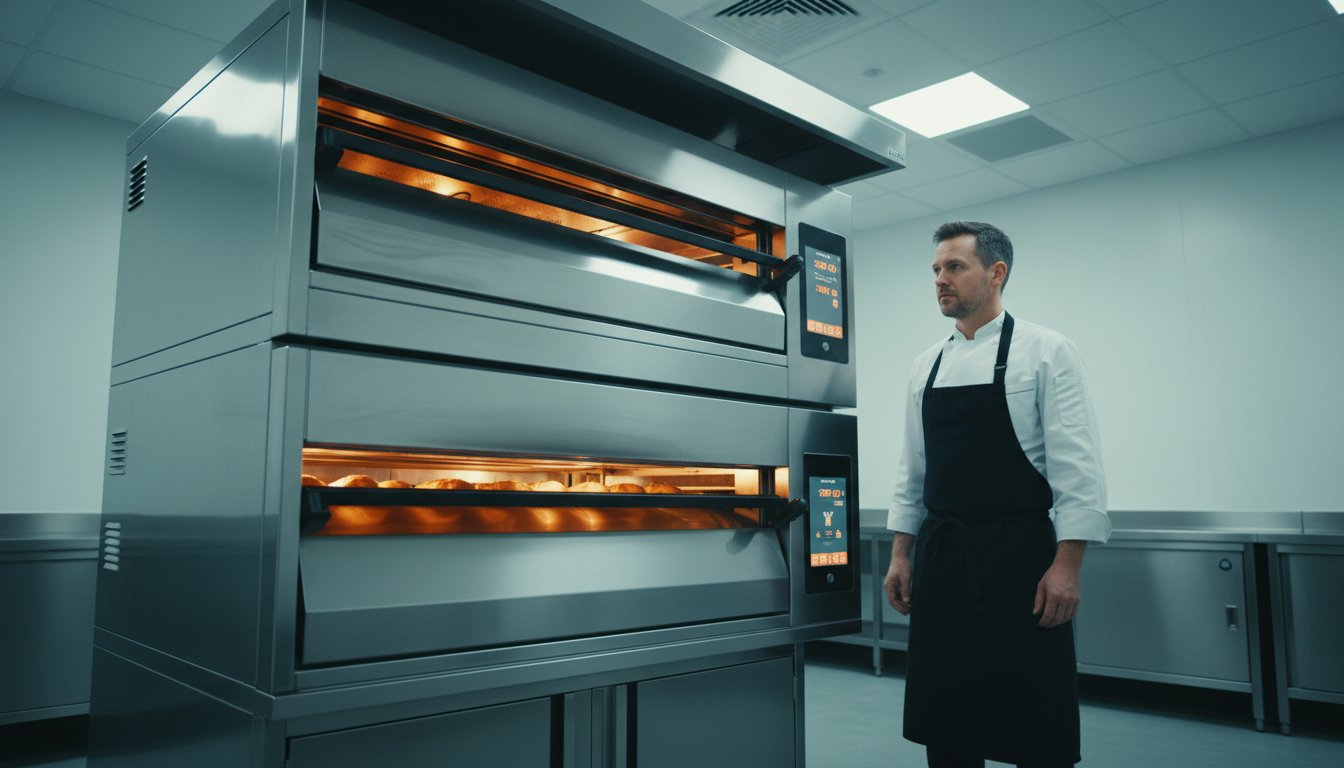
What if your most expensive piece of machinery isn’t the one you paid $15,000 for last month, but the one that stops working at 7:00 PM during a holiday rush? In a high-volume kitchen, a single hour of downtime can cost a restaurant $2,800 in lost revenue and lasting reputational damage. You already understand that a kitchen’s heartbeat is only as strong as its weakest link. When you decide to buy restaurant equipment, you’re looking for more than just stainless steel; you’re investing in the 24/7 reliability your team deserves. At Southern Select Equipment, we believe that true hospitality starts with a seamless foundation where your tools never let you down.
This 2026 guide provides a curated framework to help you bypass confusing spec sheets and those $500 hidden shipping fees that often surprise operators. We promise to move beyond the sticker price to focus on real-world throughput and durability. You’ll gain a clear understanding of the performance gaps between top oven brands and learn how a dedicated sourcing partner can manage your national equipment needs with expert integrity. We’re going to explore the technical requirements for the modern Gulf Coast kitchen to ensure your next investment is a lasting one.
The landscape for operators looking to buy restaurant equipment has shifted toward long-term resilience. As of January 2026, 74% of high-volume pizzerias have prioritized hardware durability over flashy, unproven software features. We define “Investment-Grade” equipment by its ability to handle 18-hour daily cycles without structural fatigue. While light-duty alternatives might save money upfront, they often lack the heavy-gauge 304 stainless steel required for the heat retention and stability your kitchen needs. Reliability is now the primary driver of the market because a single day of downtime can cost a Gulf Coast kitchen upwards of $4,500 in lost revenue and wasted ingredients.
Identifying high-caliber machinery requires looking for specific certifications. The NSF (National Sanitation Foundation) mark ensures the unit meets strict hygiene standards, while UL (Underwriters Laboratories) certification confirms it’s safe for intense electrical or gas loads. Working with a specialized distributor provides a seamless bridge between national manufacturing power and your local storefront. This partnership offers you a “Select” experience, combining expert sourcing with the neighborly integrity that defines Southern hospitality. It’s about finding a partner who understands the local climate and the unique demands of our coastal communities.
You must calculate your peak-hour demand to ensure your kitchen doesn’t stall during a rush. If your data shows a need for 90 large pizzas between 6:00 PM and 7:00 PM on a Friday, a residential-grade or under-specced oven will fail to maintain its temperature. These units lack the thermal mass to recover heat quickly, leading to soggy crusts and frustrated guests. We recommend matching your equipment capacity to a projected 15% annual growth rate over the next five years. This forward-thinking approach ensures your kitchen remains efficient as your community grows, preventing the need for a premature and costly upgrade in 2028.
Modern operators look past the initial price tag to evaluate how a machine affects their monthly bank statement. Energy efficiency ratings are vital, especially since utility rates in coastal regions have increased by 12% since 2024. Equipment designed with maintenance accessibility in mind allows your team to perform routine cleaning without a $200-per-hour technician. Total Cost of Ownership is the sum of purchase price, energy use, and downtime costs. By choosing brands with modular parts, you ensure that repairs are quick and your doors stay open. This focus on stability reflects the reliable, high-quality service that the Gulf Coast lifestyle is built upon.
The oven and mixer act as the rhythmic heartbeat of any high-output kitchen. They are the primary engines that determine your production ceiling and the ultimate quality of your product. When you prepare to buy restaurant equipment for a busy pizzeria or bakery, these two pieces of machinery represent your most significant investments in consistency. A 12% improvement in prep speed often starts at the mixing bowl, and a 15% reduction in waste is usually the result of a precise bake. These tools don’t just cook food; they manage your workflow and protect your margins.
Modern pizza operations have seen a massive shift in conveyor technology. In the 1990s, many shops relied on slower deck ovens that required constant tending. Today, the focus is on automated precision that allows your staff to focus on hospitality rather than watching a timer. This evolution ensures that every crust receives the exact same heat treatment, regardless of how many orders are in the queue.
Hobart mixers have maintained their position at the top of the industry since 1919 because of their rugged engineering. Unlike belt-driven alternatives that can slip or wear down under the strain of heavy dough, Hobart utilizes a gear-driven transmission. This design provides fixed speeds under heavy loads, ensuring your dough hydration remains identical from the first batch to the last. Whether you’re starting with a Hobart 20 qt model for specialty batches or moving up to a 140 qt floor model for massive production, the reliability remains the same. To understand which model fits your 2026 growth plan, read our Hobart Mixers guide.
The science behind modern conveyor ovens centers on “Impinger” technology. This system uses pressurized hot air jets to strip away the “cold halo” that naturally surrounds a cold pizza. This method transfers heat 3 to 5 times faster than traditional radiant heat. Speed is only half the story; scaling is the other. Stackable configurations allow you to triple your output without expanding your kitchen’s physical footprint. Additionally, the latest models feature tool-less cleaning. This design allows your team to remove finger panels and belts for deep cleaning in under 15 minutes, which is a 50% time savings compared to older models.
Integrating your refrigeration and freezing units into this workflow is the final step in creating a seamless operation. Keeping your dough at a steady 38 degrees Fahrenheit before it reaches the mixer ensures the yeast activates exactly when it should. If you are looking to buy restaurant equipment that reflects the high standards of your business, we invite you to browse our curated selection of professional tools designed for the modern kitchen.
Choosing the right conveyor oven is a cornerstone of your kitchen’s long-term success. When you prepare to buy restaurant equipment, you’ll find that XLT, EDGE, and Lincoln Impinger represent the gold standard of the industry. Each brand offers a distinct approach to heat management and mechanical reliability. XLT focuses on a quiet, user-friendly experience; EDGE prioritizes modular efficiency; and Lincoln maintains its status as the veteran workhorse found in 70% of high-volume pizza chains globally. Your decision depends on whether you value the longest warranty in the business, the most precise energy controls, or a legacy of proven performance.
XLT has built its reputation on making the kitchen a more pleasant place to work. Their ovens utilize magnetic cooling fans that significantly reduce ambient noise, keeping your staff focused and comfortable during a 200-order Friday night rush. The patented “Fast-Bake” technology uses high-velocity air to cook pizzas up to 35% faster than traditional deck ovens without sacrificing crust integrity. Maintenance is straightforward because XLT designs their parts for quick access; you won’t need a specialized technician for basic belt adjustments or filter cleanings. While most manufacturers provide a standard 12 to 24-month parts and labor guarantee, XLT offers a 10-year parts and labor warranty that sets a benchmark for long-term security. This commitment to longevity is why XLT dominates the US market for independent pizzerias seeking a “set it and forget it” solution.
If your menu evolves frequently, the EDGE i-Series provides the modular flexibility you need to grow. These ovens allow you to stack up to three units high, with each chamber operating on independent controls to manage varying bake times simultaneously. This means you can run a slow-baked lasagna in the bottom deck while crisping thin-crust pizzas at 550 degrees in the top deck. When you buy restaurant equipment with this level of sophistication, you’re investing in energy efficiency. The i-Series controls utilize modulated burners that maintain temperatures within 2 degrees of your set point. In comparison, legacy Lincoln models often see fluctuations of 10 to 15 degrees during heavy loading. EDGE ovens typically reduce gas consumption by 30% compared to older atmospheric burner systems, which keeps your utility costs predictable and your kitchen cooler. This precision ensures that every guest receives the same high-quality meal, regardless of how busy your kitchen becomes.

Choosing the right conveyor oven requires looking past the glossy brochures. You have to consider how a machine interacts with your physical space and your utility budget. In urban kitchens where every square foot costs a premium, a compact XLT double-stack might provide 40% more throughput than a single-deck EDGE without increasing your footprint. You should measure your entryways carefully; a 32-inch wide oven won’t fit through a standard 30-inch door without expensive disassembly.
Utility requirements often dictate your final choice. While gas ovens are preferred for their lower operating costs in most regions, they require sophisticated ventilation and a 120V connection for the blowers. Electric models might simplify installation but often demand 208V or 240V three-phase power. If your building only has single-phase service, upgrading the electrical panel can cost upwards of $5,000, which is a vital factor when you buy restaurant equipment for a new location.
Logistics are the final hurdle. These machines often weigh over 800 pounds. Southern Select manages national shipping logistics by utilizing air-ride suspension trucks to prevent internal component rattling. We ensure your investment arrives safely, whether you are located on the Gulf Coast or across the country.
Investing in a refurbished XLT or Hobart unit often provides better long-term reliability than purchasing a brand-new budget model from an unknown manufacturer. Our liquidation process involves a rigorous 30-point inspection where we replace worn bearings, belts, and sensors. This ensures the gear performs at 98% of its original factory efficiency. For more insights on growing your operation, check out our commercial restaurant equipment guide for scaling tips.
Your oven generates massive heat, which directly impacts your refrigeration. Top-mount compressors are ideal for dusty environments, but bottom-mount units stay cooler because they pull air from the floor. In kitchens where ambient temperatures exceed 95 degrees, digital temperature monitoring is a requirement for health code compliance. You can find detailed technical comparisons in our Commercial Refrigerators guide. When you are ready to buy restaurant equipment that stands the test of time, we are here to help.
Ready to upgrade your kitchen with expert guidance? Explore our curated inventory at Southern Select today.
Choosing the right partner for your kitchen is just as critical as choosing the oven itself. At Southern Select, we believe that the high-stakes world of commercial food service deserves a dose of genuine hospitality. When you decide to buy restaurant equipment, you’re making a capital investment that dictates your operational flow for the next decade. We don’t view this as a cold transaction. Instead, we approach every consultation with the warmth and reliability you’d expect from a trusted neighbor who understands the pressure of a Friday night rush.
Our curated approach is born from years of hands-on experience in the field. We’ve intentionally limited our inventory to brands that have proven their worth in the most demanding environments. You’ll only find names like XLT, EDGE, and Hobart in our catalog because these manufacturers share our obsession with durability. For instance, XLT’s standard 7-year parts and labor warranty isn’t just a marketing point; it’s a testament to the engineering we trust to protect your investment. We only stock what we would be proud to run in our own kitchens.
Distance shouldn’t compromise the quality of your support. We function as a Trusted Local Guide on a national scale, providing the same level of detail to a pizzeria in Seattle as we do to our partners on the Gulf Coast. Every piece of equipment we offer undergoes a rigorous vetting process for high-volume readiness. We verify that an oven can maintain consistent bake times even when loaded to 90% capacity during a 4-hour peak window. Since 2014, this meticulous selection process has helped our clients experience 30% fewer emergency service calls in their first three years of operation compared to standard industry averages.
Your kitchen’s efficiency is the heartbeat of your brand. Whether you’re upgrading a single unit or designing a ground-up facility, the right equipment ensures your consistency remains unshakable. When you’re ready to buy restaurant equipment that stands the test of time, our team is here to lead the way. We invite you to start a professional consultation today to secure the high-end ovens and mixers that will define your success for years to come. Let’s build something exceptional together.
Your kitchen’s efficiency in 2026 depends on the strategic decisions you make today. You’ve explored how top-tier brands like XLT and EDGE provide the 99.9% uptime required for high-volume pizza operations, and why a Hobart mixer remains the industry gold standard for dough consistency. Investing in your business is about more than just a transaction; it’s about securing a legacy of quality for your community. When you decide to buy restaurant equipment, you deserve a partner who values integrity as much as you do.
At Southern Select, we bring a family-owned approach to every piece of expert-vetted inventory we ship across the 50 states. Our specialists focus on XLT, EDGE, and Hobart brands because we know these machines can handle the 500-order rushes that define your success. We’re here to ensure your transition to new technology is seamless and supported by decades of hospitality expertise. Discover our curated selection of high-performance restaurant equipment.
We look forward to helping you build a kitchen that serves your vision and your guests for years to come.
XLT is widely considered the most reliable brand of commercial pizza oven, boasting a 99% uptime rating among high-volume franchises like Domino’s. Their patented quiet-fire burners reduce noise by 10 decibels while maintaining consistent heat. When you choose to buy restaurant equipment from a trusted manufacturer like XLT, you’re investing in a 5 year parts and labor warranty that sets the industry standard for peace of mind.
You should consider buying a used Hobart mixer because these machines are engineered to last 40 to 60 years with basic maintenance. A refurbished Legacy series model often costs 40% less than a brand-new unit while providing the same planetary mixing action. Just ensure the gear oil was changed within the last 12 months to guarantee the internal components remain in peak condition for your bakery’s daily dough production.
The primary difference lies in their heat management systems; XLT uses a standard sandwich-style belt while EDGE utilizes a patented i-Series system that reduces gas consumption by 30%. XLT ovens are known for being 15% quieter than traditional models, making your kitchen a more pleasant environment for your team. While XLT offers a broader range of sizes, EDGE provides a specialized internal cooling system that extends the life of electronic components beyond 10 years.
Commercial refrigerators typically require dedicated 115 volt, 20 amp circuits equipped with NEMA 5-20R outlets to handle the initial compressor surge. Standard residential outlets often lack the amperage to support the 1/2 horsepower motors found in reach-in coolers. It’s essential to verify your building’s electrical capacity before you buy restaurant equipment, as upgrading a panel can cost between $1,500 and $3,000 depending on your local Gulf Coast building codes.
You can expect a commercial conveyor oven to last 15 years if you perform quarterly belt tensioning and monthly blower motor cleanings. High-volume shops that run their ovens 18 hours a day might see a lifespan closer to 10 years. Replacing the $250 ignition module or the $400 conveyor motor every few seasons ensures your equipment remains a reliable partner in your kitchen’s daily success.
You cannot use a residential oven in a commercial kitchen because it lacks the NSF certification required by health departments in all 50 states. Residential units aren’t designed to handle 8 hours of continuous use, which often leads to heating element failure within 6 months. Additionally, standard home ovens don’t meet the fire safety clearances required by NFPA 96, potentially voiding your business insurance policy if a fire occurs.
You must check the data plate for a manufacture date within the last 5 years to ensure parts are still readily available for any repairs. Always factor in the 15% buyer’s premium and the 8% local sales tax into your final bid price to avoid overextending your budget. It’s a smart strategy to bring a licensed technician to inspect the compressor or heating elements before the bidding starts on high-ticket items.
Shipping heavy equipment nationally typically costs between $300 and $1,200 depending on the weight and distance. Expect to pay approximately $650 to ship a 500 pound oven from a Midwest warehouse to the Gulf Coast via LTL freight. If you require a liftgate delivery or inside placement, carriers will add $75 to $150 in accessorial charges to your bill. These costs vary based on the current national fuel surcharge, which has fluctuated between 18% and 25% over the last 12 months.




Leave a Reply