


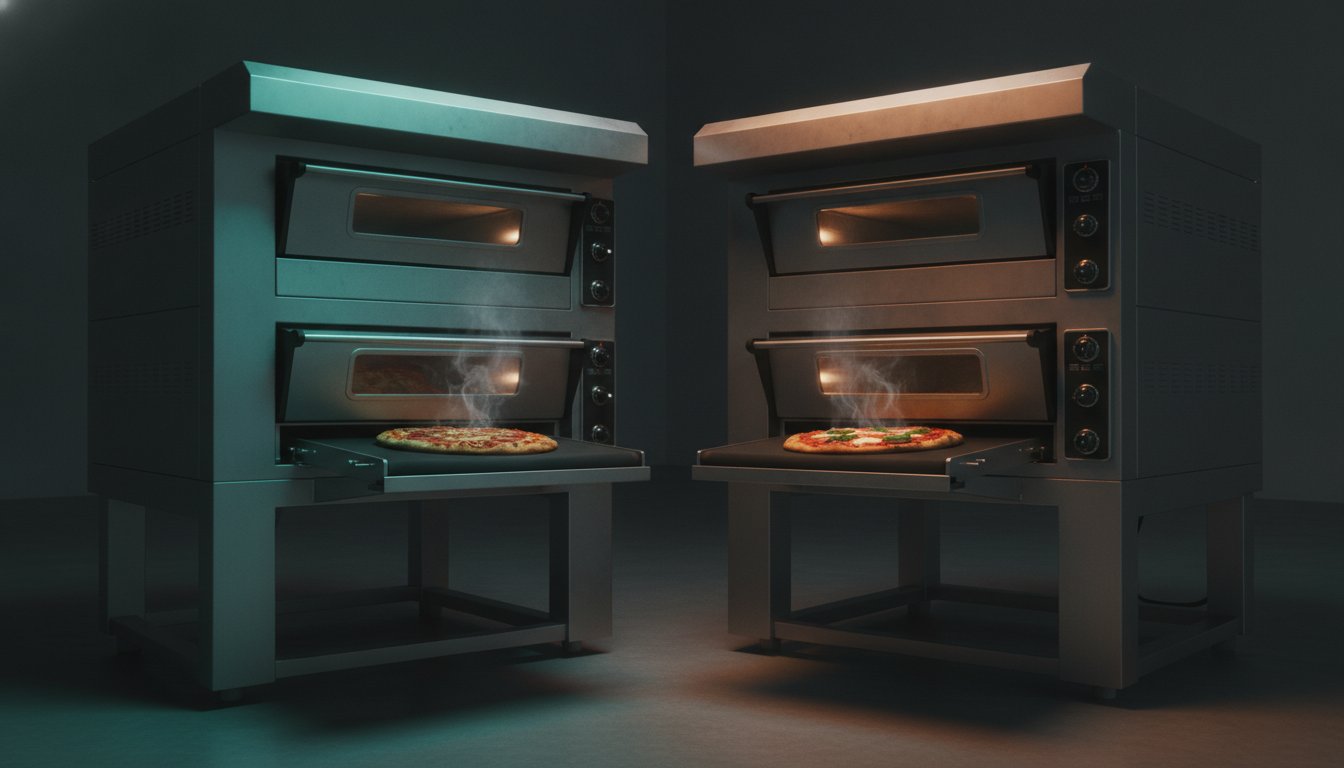
What if the oven that defined the modern pizza industry isn’t actually the one that will save your profit margins this year? You’ve likely spent years relying on the steady hum of a conveyor to keep your kitchen moving, yet the pressure of 2026 feels different. With labor harder to find and energy prices climbing, you need a partner in the kitchen that works as hard as you do without the threat of a Friday night breakdown. Deciding between a Lincoln Impinger vs XLT pizza oven is about more than just a brand name. It’s about finding a “Select” fit for your specific team and your community.
We understand that your equipment is the heartbeat of your business. You deserve a reliable guide to help you navigate these high-stakes decisions with confidence and expert care. This comparison will show you exactly how to maximize your kitchen’s efficiency and pizza quality while keeping long-term costs low. We will examine the legendary air impingement of Lincoln alongside the modular, easy-to-clean design of XLT. By the end of this guide, you will know which powerhouse oven will provide the seamless performance your staff needs and the consistent bake your customers expect.
The pizza industry has seen its share of changes, but the core of your kitchen’s success still rests on the quality of your bake. As we move through 2026, choosing between a Lincoln Impinger vs XLT pizza oven is one of the most significant decisions you’ll make for your business. It’s a choice that impacts everything from your monthly utility bills to the stress levels of your kitchen staff. Both brands have spent decades refining their craft, yet they offer distinct paths to achieving the perfect crust. While traditional deck ovens require a master’s touch and constant monitoring, modern conveyor systems utilize advanced impingement oven technology to deliver high-velocity heated air directly to the product. This process strips away the cold “boundary layer” of air that naturally surrounds dough, resulting in a bake that is significantly faster and more consistent than radiant heat alone.
In 2026, the hospitality industry continues to face significant labor hurdles. You need equipment that acts as a force multiplier for your existing team. A reliable conveyor oven doesn’t just cook pizza; it provides a predictable workflow that allows your staff to focus on guest hospitality rather than hovering over a pizza peel. Whether you’re running a bustling shop on the Gulf Coast or a high-volume franchise, finding the “Select” fit for your operation means looking beyond the stainless steel exterior to the engineering underneath. Both Lincoln and XLT have adapted to modern demands, offering smarter controls and better insulation to combat the rising energy costs we’re seeing this year.
Lincoln essentially pioneered the impingement category, and their reputation for reliability is why they remain a staple in high-volume chains across the country. Their “set it and forget it” philosophy is perfect for standardized franchises where consistency is the highest priority. In the 2026 market, models like the Lincoln Impinger II Express and the larger 1600 series offer a range of footprints to fit any kitchen layout. These ovens are built for the long haul, providing a predictable outcome that ensures your signature recipe tastes exactly the same in every location. It’s a seamless experience that provides peace of mind for owners who need to know their equipment won’t let them down when the Friday night orders start stacking up.
XLT has earned its place as a top-tier contender by focusing on what operators actually need: simplicity and quiet operation. If you’ve ever worked in a loud, frantic kitchen, you’ll appreciate how XLT has engineered their ovens to minimize noise; it’s a favorite for open-kitchen concepts where atmosphere matters. Their modular construction is a breath of fresh air for maintenance teams because it reduces the total number of moving parts. This engineering-first approach means fewer things can go wrong over the life of the machine. XLT ovens are designed to be intuitive, allowing new staff members to become experts in minutes. When you’re comparing the Lincoln Impinger vs XLT pizza oven, the XLT often stands out for its ease of use and the calm environment it helps maintain.
Your menu is your signature. Every crust that emerges from your kitchen carries your reputation, so the precision of your oven’s engineering is never a minor detail. When you weigh the Lincoln Impinger vs XLT pizza oven, you’re looking at two different philosophies of airflow management. Lincoln’s Advanced Air Impingement system is designed to deliver that coveted “crisp and chew” consistency. It uses a series of high-pressure air fingers that blast away the cold air surrounding the dough. This allows the heat to penetrate the crust immediately, locking in moisture while creating a perfectly browned exterior. It’s a level of precision that has made Lincoln a favorite for kitchens that can’t afford a single inconsistent bake during a rush.
XLT takes a sophisticated approach to heat transfer by focusing on laminar flow and noise reduction. Their engineering team has successfully maximized thermal energy transfer while keeping the decibel levels remarkably low. In a busy kitchen, the roar of multiple ovens can be exhausting for your staff. XLT’s design ensures that the air moves efficiently across the product without the turbulent whistle often found in older conveyor models. This makes for a more hospitable work environment, allowing your team to communicate clearly without shouting. If you’re looking to upgrade your setup, you can explore our curated selection of professional ovens to see which engineering style suits your rhythm.
Air impingement is vastly superior to standard convection because it’s targeted. While convection simply moves hot air around a chamber, impingement uses nozzles to direct that air exactly where it needs to go. Both Lincoln and XLT allow you to adjust the top-to-bottom heat ratios, which is vital if you’re serving “heavy” pizzas with high-moisture toppings like fresh mozzarella or thick-cut vegetables. By fine-tuning the airflow, you can ensure the bottom of the crust is fully baked before the cheese begins to separate or burn. This balance is what separates a professional result from a soggy disappointment.
The true secret to a perfect bake lies in the “fingers,” the removable air ducts located above and below the conveyor belt. You can customize these finger configurations to match your dough’s hydration levels. A high-hydration Neapolitan-style dough requires a different air pattern than a dense, buttery Chicago thin crust. Modern 2026 models from both brands also feature precise belt speed controls. This flexibility allows you to diversify your menu by perfectly cooking wings, toasted sandwiches, or even cookies in the same machine. When you’re modern restaurant kitchen planning, consider how stacking these units can maximize your vertical space. Triple-stacking is common in high-volume shops, providing three separate bake profiles in the same footprint as a single oven. This modularity is a game-changer for businesses that need to scale their output without expanding their square footage.
The real cost of an oven isn’t just the purchase price; it’s the time your team spends scrubbing it at midnight. Every restaurant owner knows the heavy sigh that comes at the end of a long shift when it’s time to break down the kitchen. When you evaluate the Lincoln Impinger vs XLT pizza oven, the maintenance experience is often the deciding factor for staff morale and long-term operational costs. While both machines are built to withstand 18-hour daily use, they approach serviceability from different angles. Lincoln has traditionally favored a front-loading access point, which is a lifesaver in narrow kitchens where side clearance is a luxury. In contrast, XLT focuses on side-access panels that allow for a deeper reach into the mechanical heart of the machine.
In 2026, the supply chain for Lincoln parts remains incredibly robust because of their massive global footprint. You’ll rarely find a technician who isn’t familiar with their internal layout. However, XLT has countered this by simplifying the machine so much that you might not need a technician as often. Their design philosophy centers on reducing the number of moving parts that can fail during a peak rush. Whether it’s a motor, a belt, or a temperature sensor, the goal is to keep your kitchen running without the threat of unexpected downtime.
XLT has built a loyal following by addressing a specific frustration: the need for a toolbox just to clean your oven. Their “No-Tool” advantage allows your staff to remove the conveyor, fingers, and crumb trays by hand. This turns a task that once took hours into a manageable routine. Lincoln ovens utilize removable crumb trays and conveyor assemblies as well, though some models may require a bit more finesse to disassemble. Keeping your commercial restaurant equipment clean isn’t just about hygiene; it’s about protecting your investment. Grease buildup is the primary cause of airflow issues and premature part failure, so an oven that is easy to clean is an oven that will last.
From our perspective at Southern Select, reliability is about more than just a sturdy belt. It’s about how quickly you can get back up and running if something goes wrong. XLT offers an industry-leading warranty that reflects their confidence in their modular design. They’ve engineered their ovens to be intuitive, so even a junior manager can often identify a minor issue before it becomes a major repair. Lincoln’s strength lies in its legacy; parts for older units are widely available, ensuring that a ten-year-old oven can still perform like a new one with the right care. When comparing the Lincoln Impinger vs XLT pizza oven, consider who will be doing the daily work. If you want to empower your staff and reduce service calls, the simplicity of a “no-tool” system is hard to beat.

Managing a high-volume kitchen in 2026 means watching every kilowatt and therm with expert precision. Utility costs have become a primary concern for operators, making the choice between a Lincoln Impinger vs XLT pizza oven a matter of long-term financial health. While older conveyor models were often criticized for being “energy hogs,” the latest versions of these machines are built to meet rigorous modern standards. For instance, ENERGY STAR certified gas ovens can save an operator approximately $2,000 annually on utility bills compared to standard models. This level of efficiency is achieved through superior insulation and refined burner technology that ensures heat stays inside the tunnel where it belongs, rather than bleeding out into your workspace.
Heat emission management is particularly vital for our partners operating in warmer climates like the Gulf Coast. A poorly insulated oven forces your air conditioning system to work twice as hard, creating a “double-dip” on your energy expenses. XLT has made significant strides in this area with their latest insulation wraps, while Lincoln continues to refine their heat retention through high-grade stainless steel construction. When your kitchen stays cool, your staff remains focused and hospitable, even during the most demanding shifts. If you are ready to modernize your line with more efficient equipment, you can view our current inventory of energy-efficient conveyor ovens to find the perfect fit for your footprint.
Calculating the true cost of ownership requires looking past the initial transaction to the next ten years of operation. XLT’s insulation technology is designed to minimize exterior surface temperatures, which directly impacts the return on investment through reduced HVAC load. Lincoln units are equally robust, often maintaining their thermal efficiency for over a decade with proper maintenance. Smart-Idle technology is a 2026 industry standard that automatically reduces energy consumption during periods of inactivity without compromising the oven’s ability to return to bake temperature quickly. This feature alone can drastically lower the operational costs for shops that experience significant lulls between lunch and dinner rushes.
The latest digital controls have turned these ovens into sophisticated pieces of smart technology. Lincoln’s FastBake technology is a standout feature in 2026, allowing you to reduce cook times by up to 35% without sacrificing the quality of the crust. This speed is a game-changer for high-volume delivery operations. Meanwhile, XLT focuses on the user experience with intuitive touchscreens that look and feel like modern smartphones. These interfaces reduce training time for new staff, ensuring that even a first-day employee can operate the machine with confidence. As we look toward the future, IoT connectivity is becoming more common, allowing multi-unit operators to monitor oven performance and temperature consistency remotely from a single dashboard. This level of oversight ensures that your “Select” quality remains consistent across every location you manage.
Deciding between a Lincoln Impinger vs XLT pizza oven is a defining moment for your business. It is about more than just stainless steel and conveyor belts; it is about choosing the rhythm of your kitchen for the next decade. You have seen how these two powerhouses compare in airflow precision, maintenance ease, and energy conservation. At Southern Select, we believe there is no “one size fits all” answer, but there is a perfect choice for your specific goals. Our team is here to ensure that your investment feels like a seamless extension of your hospitality, backed by expert knowledge and neighborly care.
When you are looking at a small footprint, the Lincoln Impinger II Express is often the ideal choice for tight spaces that still require high-volume output. However, if you are looking to scale vertically, XLT’s modular stacking options provide incredible flexibility without adding to your noise levels. Your menu breadth also plays a role. While both ovens handle wings and sandwiches beautifully, the intuitive touchscreens on modern XLT models can make switching between menu items faster for a rotating staff. Part of the Southern Select promise is providing expert guidance through the commercial kitchen design process to ensure your equipment fits your workflow perfectly.
A professional pizza oven is the heart of your operation, and its health depends on a correct start. We highly recommend professional installation to ensure your gas lines, electrical connections, and ventilation are optimized for long-term performance. This expert touch prevents the minor calibration issues that often lead to premature wear. Whether you are leaning toward the legacy of Lincoln or the modern engineering of XLT, we are ready to help you take the next step. Contact Southern Select Equipment today for expert advice on your next pizza oven. We will provide a personalized quote and the peace of mind that comes from working with a partner who values your success as much as you do.
Choosing the right equipment is about more than just a purchase; it’s about securing your business’s future and supporting your hardworking team. The decision between a Lincoln Impinger vs XLT pizza oven ultimately settles on your specific operational priorities. Whether you value the time-tested air impingement legacy of Lincoln or the streamlined, quiet serviceability of XLT, you’re investing in a more efficient workflow. Both brands now offer the smart technology and insulation needed to thrive in a high-cost energy market.
At Southern Select, we treat your kitchen with the same care we’d give a neighbor. We provide an expertly curated inventory of high-performance brands, all backed by our family-owned hospitality and reliable southern service. We offer national shipping and professional support to ensure your experience is as seamless as possible. Explore our curated selection of XLT and Lincoln Impinger ovens at Southern Select Equipment. We’re here to help you find the “Select” fit for your community and your craft. We look forward to helping you bake your best.
XLT is often the preferred choice for small shops with open kitchens because of its remarkably quiet operation and modular stackability. These ovens allow you to maximize your vertical space without creating a noisy environment for your guests. However, the Lincoln Impinger II Express is specifically engineered for small footprints, providing the same high-volume output as larger models in a much more compact frame.
XLT ovens are generally engineered to be significantly quieter than traditional Lincoln models. XLT utilizes laminar flow technology to reduce the turbulent “whistle” often associated with high-velocity air. While Lincoln has made great strides in noise reduction for their 2026 models, XLT remains the industry leader for maintaining a conversational noise level that helps your team stay focused and hospitable.
Yes, you can cook a wide variety of menu items including chicken wings, toasted sandwiches, and even appetizers. The precise belt speeds and temperature controls allow you to bake cookies or toast subs with the same consistency as your signature pizzas. This versatility makes the Lincoln a powerhouse for businesses looking to diversify their menu without adding more equipment to the line.
With a consistent maintenance schedule, an XLT oven typically lasts between 10 and 15 years. Their modular design and heavy-duty stainless steel construction are built for the rigors of 18-hour daily use. Because XLT focuses on reducing the total number of moving parts, there are fewer points of potential failure over the long-term life of the machine.
You should perform a deep cleaning of the internal fingers and the conveyor belt at least once a month. Daily cleaning of the crumb trays is essential to prevent grease buildup and potential fire hazards. In high-volume environments, you might find that a bi-weekly cleaning of the air fingers helps maintain the precise airflow needed for a perfect “crisp and chew” crust profile.
No, one of XLT’s biggest advantages is that many parts are designed for easy, “no-tool” replacement by the operator. Most of the electrical components are “plug and play,” which empowers your managers to handle minor issues without waiting for an expensive service call. This design philosophy is a cornerstone of the Lincoln Impinger vs XLT pizza oven debate for owners who value self-sufficiency.
Lincoln’s FastBake technology currently offers some of the quickest bake times available, often reducing cook times by up to 35% compared to standard impingement. While XLT provides an incredibly fast and even bake, Lincoln’s specialized airflow patterns are specifically optimized for raw speed in high-delivery environments. The best choice depends on whether your priority is the absolute fastest ticket time or the quietest kitchen atmosphere.
Yes, smart controls are a vital investment for managing the high labor and energy costs of 2026. Features like Smart-Idle technology and remote monitoring allow you to track performance across multiple locations while reducing utility waste during slow hours. These digital interfaces also make training new staff much simpler, ensuring your “Select” quality remains consistent regardless of who is working the oven.




Leave a Reply