


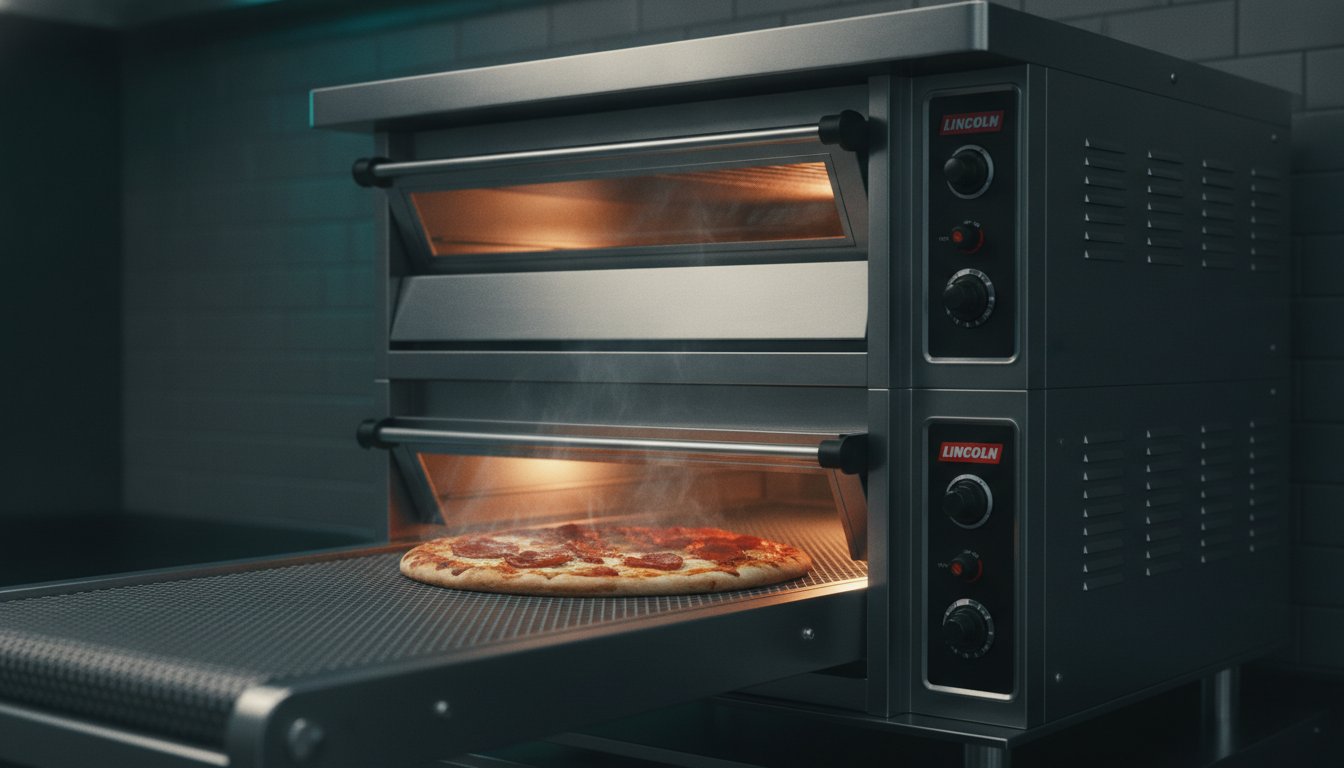
Is your kitchen prepared for the September 1, 2026, Department of Energy efficiency mandates, or is your current equipment simply burning through your profits? At Southern Select Equipment, we understand that a busy kitchen is the heart of your community, and there’s no room for equipment that falters when the orders pile up. That’s why choosing the right Lincoln Impinger Ovens is about more than just buying a machine; it’s about investing in a seamless, reliable partner for your staff that reflects the high standards of Southern hospitality.
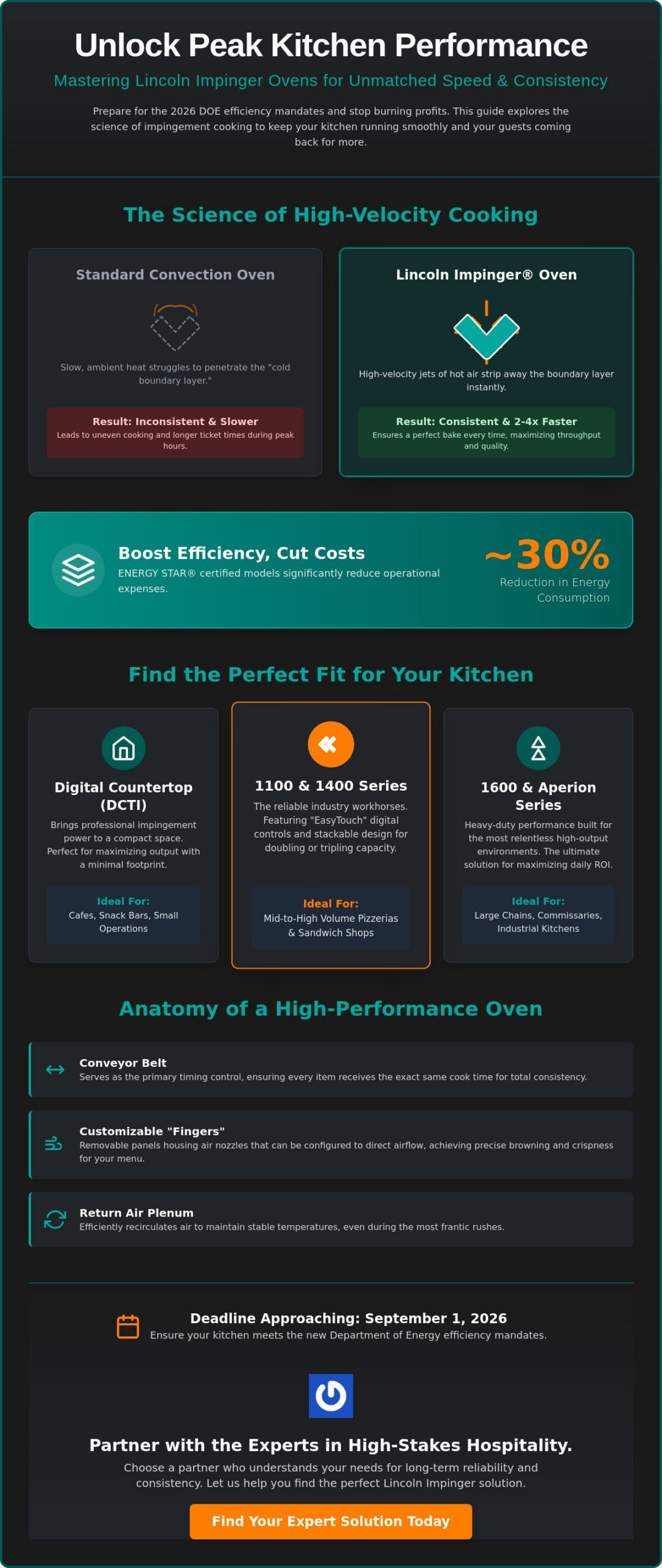
You likely already know that inconsistent bake quality during peak hours can turn a loyal customer into a one-time visitor. This guide will help you master the science of impingement cooking to ensure your menu stays crisp and consistent while maximizing your daily throughput. We’ll walk you through the latest FastBake Advance technology, compare the compact Aperion series for tight footprints, and show you how ENERGY STAR certified models can reduce your energy consumption by roughly 30 percent. It’s time to find the expert solution that keeps your kitchen running smoothly and your guests coming back for more.
You’ve likely felt the frustration of a busy Friday night rush where your ovens just can’t keep up with the tickets. Understanding the technology behind Lincoln Impinger Ovens is the first step to reclaiming your kitchen’s rhythm and ensuring every guest receives a perfect meal. Unlike traditional ovens that rely on slow, ambient heat, these machines use a sophisticated, pressurized system to deliver results that are both faster and more consistent. It’s about moving beyond basic baking into a world of precision airflow.
At the heart of The Science of High-Velocity Cooking is the concept of breaking the “boundary layer.” Every piece of cold dough or protein that enters an oven is naturally surrounded by a thin envelope of stagnant, cool air. In a standard convection oven, this layer acts as insulation, slowing down the cooking process and often leading to uneven results. Lincoln’s technology uses high-velocity jets of hot air to strip away this layer immediately. This allows heat to transfer directly to the food, resulting in a bake that’s significantly faster than traditional methods without the common pitfall of drying out your product.
A Lincoln oven isn’t just a box with heat; it’s a precision instrument designed for the high-stakes hospitality environment. The conveyor belt serves as your primary timing control, ensuring every item spends the exact same amount of time under the heat for total consistency. Inside, you’ll find “fingers,” which are removable panels that house the air nozzles. These fingers are customizable, letting you direct airflow patterns to suit your specific menu needs. The return air plenum ensures heat stability by recirculating air efficiently, which maintains a steady temperature even when your staff is working at a frantic pace.
Think of standard convection as a gentle breeze. It moves air around, but it’s passive and easily interrupted. Impingement is active, focused, and pressurized. By directing air through small jets, Lincoln Impinger Ovens achieve a level of moisture retention that standard ovens simply can’t match. This is vital for dough, where you want a crisp exterior and a soft, airy crumb. Lincoln pioneered this technology for the pizza industry back in 1982, and it remains the gold standard for high-volume kitchens today. It’s the difference between waiting for heat to find your food and delivering heat exactly where it’s needed most.
Choosing the right equipment for your kitchen is much like finding the perfect home; it needs to fit your current lifestyle while leaving room for your future dreams. Within the family of Lincoln Impinger Ovens, there’s a specific model designed to meet the unique rhythm of every kitchen, whether you’re running a quiet coastal cafe or a bustling regional pizza chain. Understanding these differences ensures you invest in a partner that provides the reliability your staff deserves and the quality your guests expect.
For those managing smaller footprints, the Digital Countertop Impinger (DCTI) is a remarkable solution. It brings professional power to a compact space, making it ideal for cafes or snack bars that need consistent results without the bulk of a full-scale floor model. For mid-sized pizzerias and sandwich shops, the 1100 Series serves as the reliable workhorse of the industry. If your volume demands even more, the 1400 and 1600 Series offer heavy-duty performance built to withstand the relentless pace of high-output environments. These models all rely on the science behind impingement cooking to deliver rapid results that keep your ticket times low and your customers happy.
These series have earned their reputation through years of dependable service in high-stakes environments. The “EasyTouch” digital control interface is a standout feature, offering a user-friendly way for your team to maintain precise control over cook times and temperatures. This simplicity reduces training time for new staff, which is vital for maintaining a seamless operation. To maximize your kitchen’s vertical space, these units are designed with stacking capabilities, allowing you to double or triple your capacity without expanding your footprint. You can choose between 18-inch and 32-inch belt widths to match your specific menu items and volume requirements. If you’re ready to see how these units can transform your workflow, you can explore our curated selection of professional equipment to find the ideal configuration for your space.
The Aperion platform represents a significant leap forward in kitchen technology. Unlike legacy models that require physical “finger” adjustments to change airflow patterns, the Aperion features independent top and bottom variable-speed airflow controls. This means you can adjust the crispness of a crust or the melt of a cheese topping through the digital interface alone. It eliminates the need for manual teardowns when you want to experiment with new menu items. Additionally, the Aperion includes energy-saving idle modes that automatically reduce consumption during slower periods, helping you lower utility costs without sacrificing the ability to jump back into action when the next rush hits.
When you’re designing a kitchen that feels like home for your staff and a haven for your guests, understanding the raw performance of your equipment is essential. Choosing between different Lincoln Impinger Ovens isn’t just about the initial setup; it’s about how that machine handles the pressure of a Saturday night rush. The throughput you achieve depends heavily on the conveyor width you select. A 16-inch belt is often the perfect companion for small cafes focusing on appetizers or toasted sandwiches, while a 32-inch conveyor is the heavy hitter required for high-volume pizzerias that can’t afford a bottleneck in the kitchen.
Your choice of utility power also plays a vital role in your daily operational rhythm. Gas models are often favored for their rapid recovery times during back-to-back orders, while electric units provide a level of installation flexibility that’s hard to beat. This engineering pedigree is rooted in the long history of Welbilt Corp., the parent company that has refined Lincoln’s technology over decades. If you’re operating in a non-traditional location like a shopping mall or an airport, ventless electric options allow you to serve high-quality food without the massive investment in traditional ductwork. Just remember that multi-stack configurations increase the heat load in your kitchen, so your HVAC system must be sized to keep your team comfortable and productive.
High-BTU gas models are the gold standard for kitchens that never stop, as they offer the fastest heat recovery after the oven door is opened or a heavy load is introduced. On the other hand, 208V or 240V electric impinger units are incredibly easy to place in varied kitchen layouts without needing specialized gas lines. To ensure peak performance in a high-demand environment, a standard 1400 series gas oven typically requires 120,000 BTU per hour. Selecting the right power source ensures your energy bills stay manageable while your output remains high.
One of the most effective ways to grow your business is by doubling or even tripling your production capacity without expanding your physical footprint. Stacking kits allow you to add units vertically, which is a smart move for any growing brand focused on scaling your kitchen for success. You’ll want to consider the ergonomics of your team; in a triple-stack setup, the middle belt is usually the primary workspace, while the top and bottom belts are reserved for specialized items. This keeps the workflow steady and prevents your staff from overreaching during the busiest parts of the day.
Selecting the right equipment is a personal journey that begins with your menu. While Lincoln Impinger Ovens are world-renowned for pizza, their versatility extends far beyond the local slice shop. The way you configure your oven determines whether you’ll achieve a delicate golden toast on a brioche bun or a deep, blistered char on a traditional pepperoni pie. At Southern Select, we believe in helping you find a partner that respects the craft of your kitchen while meeting the demands of your busiest shifts.
The most common mistake we see is purchasing for your current volume rather than your peak capacity. It’s tempting to save space today, but a bottleneck during a Saturday night rush can cost you more in lost reputation than the extra cost of a larger unit. You must also consider the precision of your belt speed. For delicate items like seafood or bagels, a fraction of a minute makes the difference between a signature dish and a wasted product. Customizing your internal “finger” configurations allows you to control exactly how much top and bottom heat hits your food, balancing thorough cooking with perfect browning.
If your heart is in the dough, the 1600 series is often the best choice for maintaining consistency across 18-inch pies. By adjusting the airflow through specific finger patterns, you can actually replicate that sought-after “deck-oven” char while enjoying the speed of a conveyor. This setup ensures that every crust is crisp and every topping is perfectly melted without requiring a master baker to stand by the oven door. For more insights on organizing your line for peak performance, take a look at our guide on modern restaurant kitchen efficiency.
For protein-heavy menus or diverse appetizer lists, the Aperion series is a game-changer. Its independent top and bottom airflow controls allow you to manage a multi-product flow on a single belt without constant manual adjustments. This is where Lincoln’s FastBake technology truly shines, as it can reduce cook times by as much as 35 percent compared to standard models. Whether you’re toasting subs or finishing salmon fillets, this speed allows your staff to stay ahead of the tickets. If you’re ready to upgrade your kitchen’s capabilities, view our current inventory of professional Lincoln ovens to find your perfect match.
At Southern Select Equipment, we view every commercial kitchen as a vital part of the local community. Your success is our success, and that is why we don’t just sell boxes; we provide the heavy-duty machinery required to keep your business thriving. When you’re looking for Lincoln Impinger Ovens, you’re looking for a tool that can survive the relentless pressure of a dinner rush. We’re here to ensure you find the exact model that fits your dream and your footprint. Our approach is rooted in the same neighborly hospitality you show your own guests every day.
We prioritize high-performance brands like Lincoln, XLT, and EDGE because we’ve seen them perform in the field under the most demanding conditions. There is no room for residential-grade mimics in a professional kitchen. You need equipment that carries the integrity of a long-term partnership. Our curated inventory is designed specifically for those who value durability and consistent results over the allure of a lower price tag. We understand the high-stakes nature of the hospitality industry, and we aim to make your procurement process as seamless and reassuring as possible.
Our commitment to expert sourcing means we’ve already done the heavy lifting for you. We help our clients navigate the complex world of sourcing of professional kitchen equipment by focusing on brands that have proven their worth in high-volume environments. By choosing a partner with deep roots in the industry, you’re gaining an insider’s knowledge that protects your investment. We don’t just look at the numbers; we look at how a piece of equipment will impact your staff’s workflow and your kitchen’s overall atmosphere.
Upgrading your kitchen is a significant step, and you shouldn’t have to take it alone. We encourage you to consult with one of our experts to determine your specific BTU requirements and the belt width that will best serve your menu. Getting these details right from the start prevents costly bottlenecks later on. It is also vital to remember that professional installation is the best way to protect your warranty and ensure your new Lincoln Impinger Ovens operate at peak efficiency from day one. If you’re ready to see the difference that professional-grade equipment can make, we invite you to view our current inventory of commercial ovens and find the perfect addition to your kitchen family.
Mastering high-velocity airflow ensures your kitchen remains the heart of your business, even during the most demanding rush. By selecting the right series and customizing your finger configurations, you’ve taken a significant step toward delivering the perfect bake every time. Investing in Lincoln Impinger Ovens is about more than just speed; it’s about the long-term reliability of your hospitality. At Southern Select Equipment, we specialize in high-volume commercial kitchen solutions that respect your staff’s workflow and your guests’ expectations.
We’re here to provide professional guidance wrapped in genuine Southern hospitality, helping you navigate every utility and belt requirement with ease. Our curated inventory ensures you receive machinery that stands the test of time, and we’re ready to help you find the perfect Lincoln Impinger Ovens for your unique footprint. We invite you to Browse Our Selection of Professional Lincoln Impinger Ovens today. Your team deserves a partner that works as hard as they do, and Southern Select Equipment is honored to help you find it.
Lincoln Impinger Ovens can cook your products up to 40 percent faster than traditional convection methods. By using high-velocity jets to break through the cold air surrounding your food, these machines deliver heat directly where it is needed most. This speed allows your staff to handle high-volume orders without the long wait times that frustrate hungry guests. It is a reliable way to keep your kitchen moving smoothly during the busiest parts of the day.
You can cook a wide variety of menu items beyond pizza, including toasted sandwiches, seafood, and diverse appetizers. The precision airflow makes it easy to finish proteins or bake bagels to perfection. This versatility is why many hospitality professionals choose these units to anchor their entire hot food line. Whether you are melting cheese on a sub or crisping up wings, the results stay consistent for every single order your kitchen produces.
The primary difference lies in the throughput capacity and physical belt width of the machines. The 1100 series features an 18-inch wide conveyor belt, which is perfect for mid-sized operations. In contrast, the 1400 series offers a much larger 32-inch belt designed for high-volume regional chains. Choosing the right one depends on your peak hour requirements and the physical size of the largest items on your signature menu to avoid kitchen bottlenecks.
Most standard gas and electric models require a professional hood and ventilation system to manage heat and grease laden vapors. Local building codes almost always mandate this for safety and air quality in professional kitchens. It is vital to consult with your local inspector or a trusted guide before installation. Ensuring your ventilation is properly sized protects your staff’s comfort and helps your equipment maintain peak performance over the long term.
Yes, Lincoln offers specific electric models designed for ventless operation in locations where traditional ductwork is not feasible. These units are ideal for non-traditional spots like shopping malls, airports, or historic buildings. They use internal filtration systems to manage emissions, giving you the flexibility to serve high-quality food anywhere. This technology allows you to bring your unique hospitality to new communities without the heavy cost of a full kitchen renovation or expensive ductwork.
You should clean the fingers by removing them from the oven and using a mild, non-abrasive detergent to clear away any debris. Regular maintenance prevents grease buildup from clogging the air nozzles, which can lead to uneven cooking. It is a simple process that your staff can easily master to keep the machine running like new. Clean fingers ensure the pressurized air jets remain focused and effective for every signature dish you serve to your guests.
A double-stack Lincoln 1400 setup requires independent utility connections for each oven to ensure they both receive full power. For gas models, this means providing a total of 240,000 BTU per hour to handle the demand. Electric setups will need two separate circuits, typically 208V or 240V, depending on the specific model. Having these utilities ready before your equipment arrives ensures a seamless and professional installation for your growing business as you scale your operations.
It typically takes between 20 and 30 minutes for the oven to reach its full programmed cooking temperature. We recommend starting the preheat process well before your first rush of the day to ensure heat stability. Once the unit is ready, the return air plenum works to maintain that temperature even as cold products move through on the conveyor. This reliability gives your team the confidence they need to start every shift with total consistency.




Leave a Reply