
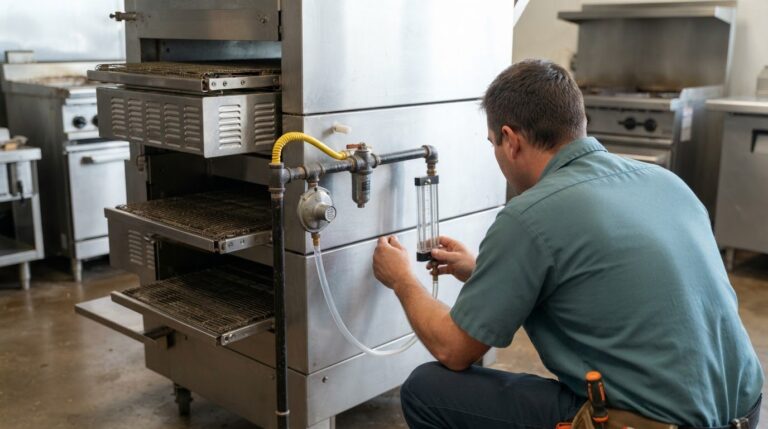
A regulator can have enough headline capacity and still be the wrong fit for a commercial pizza line. Dedicated gas regulator sizing for commercial pizza lines starts by adding the connected appliances’ maximum gas demand, converting BTU/hr to CFH at 1 CF = 1,000 BTU, and applying a 20% safety factor. The selection must also account for inlet pressure, outlet pressure, and operating stability.
It’s sensible to focus on total demand, but pressure conditions matter just as much: a regulator must suit the gas system and maintain the required outlet pressure as inlet pressure changes. Allow for a maximum inlet pressure 10% above the selected operating requirement and a minimum inlet pressure 10% below the expected requirement.
This reference explains how to calculate capacity, account for pressure fluctuations and operating conditions, and assess what supports stable gas delivery to your pizza equipment. Use it to evaluate a gas setup and choose commercial ovens suited to your operation.
Key Takeaways
- Calculate demand across all connected gas appliances, then use the result to identify a suitable regulator capacity.
- See how elevation can affect regulator capacity, with an adjustment of approximately 3% for every 1,000 feet above sea level.
- Understand when a two-stage regulation system may be worth considering for higher inlet pressure.
- Learn why outlet pressure must match equipment requirements for steady gas delivery.
- Explore how commercial pizza ovens and other restaurant equipment fit into planning a gas line’s total load.
Q: What’s the impact of inlet pressure fluctuation on sizing?
Inlet pressure is the gas pressure entering a regulator. Its minimum and maximum values determine whether the regulator can supply the required outlet pressure as conditions change. For dedicated gas regulator sizing for commercial pizza lines, match the selected capacity to total appliance demand, outlet pressure, and system pressure. A capacity rating alone does not show whether the regulator will perform throughout the full inlet range.
Inlet pressure inputs are the expected minimum and maximum pressures available to the regulator. Use both values when assessing its operating range. Allow for a maximum inlet pressure 10% above the selected operating requirement and a minimum inlet pressure 10% below the expected requirement. These margins account for variation rather than treating one inlet reading as constant. A regulator intended for a 2 lb gas system may not be sized to operate with a minimum inlet pressure of ½ pound.
Minimum regulator inlet pressure is the lowest pressure at the inlet that still allows the regulator to deliver the required downstream pressure. If supply pressure falls below the regulator’s usable range, outlet pressure may not remain adequate when appliances draw gas. Compare the minimum with the regulator’s certified capacity data and the system’s expected low-pressure condition. For a pizza line with multiple appliances operating together, assess their combined demand, not just one oven’s load.
Outlet pressure is the pressure the regulator delivers to connected equipment. It must meet the appliance’s specified operating requirement and remain achievable at the lowest expected inlet pressure. Consider the full pressure range, total load, and regulator performance data together. Checking only the outlet target or the highest inlet value leaves a key operating condition out of the sizing decision.
A dedicated regulator is needed when applicable code requirements or an appliance manufacturer’s instructions call for separate pressure regulation. Requirements depend on the installation and equipment instructions, so there is no universal rule for every commercial pizza line. For indoor installations, consider a line pressure regulator with a vent limiter and overpressure protection device. Follow the regulator’s installation instructions and applicable site requirements for its location and vent arrangement.
Regulator and installation costs depend on capacity, pressure range, connection details, and the work required to integrate it into the gas line. Pipe routing, access, venting, and overpressure protection also affect the project scope. A reliable estimate requires the installation details, not a generic price.
A licensed plumber or gas fitter should size and commission a dedicated regulator using a clear sequence:
- Identify the appliances served and add their maximum gas demand.
- Establish the gas system’s expected minimum and maximum inlet pressures, plus the required outlet pressure.
- Match those conditions and the total load to the regulator’s certified sizing data.
- Install the regulator with the specified connections, location, venting, and overpressure protection.
- Commission the line by checking pressure delivery under operating conditions, including when connected appliances are drawing gas.
Natural gas regulator sizing calculator
A regulator sizing calculation converts connected appliance demand into a capacity target. For a useful estimate, combine the gas load, fuel type, and installation conditions.
Propane and Natural Gas Sizing
Sizing a regulator for propane or natural gas starts with appliance demand but requires fuel-specific regulator data. Identify the equipment’s fuel and input rating, then use capacity information for that fuel and the installation’s inlet and outlet pressures. Do not treat a natural gas capacity figure as interchangeable with a propane rating. The fuel determines which regulator performance data applies.
Total BTU Demand Calculation
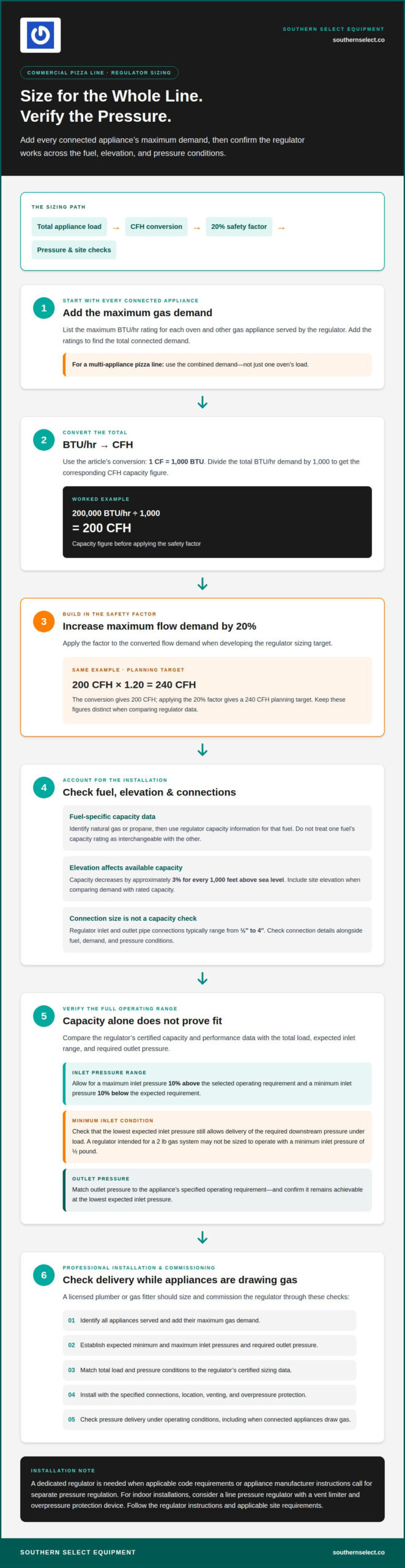
Total BTU demand is the combined input rating of appliances connected to the regulator. Add the maximum BTU/hr ratings for every oven and other gas appliance served by that line. For example, a 200,000 BTU/hr demand converts to a minimum capacity of 200 CFH using the 1 CF = 1,000 BTU method. Add a 20% safety factor to maximum flow demand when developing the sizing target.
Use this sequence to convert appliance ratings into a preliminary capacity figure:
- List each connected appliance’s maximum gas demand in BTU/hr.
- Add the ratings to find the total connected demand.
- Convert BTU/hr to CFH using 1 CF = 1,000 BTU.
- Increase maximum gas flow demand by 20% for the safety factor.
- Compare the result with regulator capacity data for the selected fuel and operating conditions.
For instance, a 200,000 BTU/hr load converts to 200 CFH before applying the safety factor. Applying 20% produces a planning target of 240 CFH. The stated minimum regulator capacity for that example remains 200 CFH using the conversion method. The adjusted figure helps account for added demand in selection, rather than changing the conversion itself.
Elevation also affects the capacity available from a regulator. Capacity decreases by approximately 3% for every 1,000 feet above sea level. Include the installation elevation when comparing the calculated demand with the regulator’s rated capacity. A rating that appears sufficient at one elevation may provide less capacity at a higher site.
Connection size is another calculator input, but it doesn’t replace a capacity check. Regulator inlet and outlet pipe connections typically range from ½” to 4”. Choose the connection details alongside fuel, demand, and pressure conditions, then compare the complete selection with certified sizing data. This keeps the calculation tied to the actual gas line, not just its BTU total.
Operating conditions and pressure stability
Operating conditions include the pressures and demand patterns a regulator encounters in service. For a commercial pizza line, consider the gas supply, outlet requirement, and which appliances may draw gas simultaneously. A selection based on one pressure reading alone misses how the system behaves as equipment starts, stops, or operates together.
Pressure stability describes how well the regulator maintains suitable downstream pressure as inlet pressure or gas demand changes. A stable setup accounts for the connected load and the regulator’s pressure range. For example, if an oven and another appliance draw gas at the same time, size the regulator for their combined demand, not just the oven operating alone.
Two-stage regulation uses successive regulators to reduce gas pressure in steps. Consider this arrangement when inlet pressure exceeds 10 PSI. Dividing pressure reduction between stages can help manage a high-pressure supply before gas reaches equipment. The selection still depends on the system’s inlet conditions, required delivery pressure, total load, and the certified data for the chosen regulators.
A service regulator reduces incoming service-line pressure to the desired delivery pressure. It manages the transition from the supply into the building’s gas system, so its capacity and pressure range must suit the downstream load. An appliance regulator, by contrast, manages gas pressure directly at equipment or an appliance. These regulators serve different points in the system and are not interchangeable.
Pressure stability also depends on matching regulator performance to operating demand. A capacity rating describes flow under stated conditions, but does not by itself show how pressure changes as demand varies. Compare the manufacturer’s certified data with the system’s pressure range and the appliances’ required delivery pressure. This helps determine whether a regulator can support the load across expected conditions.
Use these checks to assess operating stability:
- Identify whether the regulator serves the building supply, equipment, or a specific appliance.
- Record the minimum and maximum inlet conditions expected at that point.
- Account for appliances that may operate together, including peak combined demand.
- Compare required outlet pressure and total load with certified regulator data.
- Consider two-stage regulation when inlet pressure exceeds 10 PSI.
Assess pressure range, regulator role, and demand together. For a pizza line, include every connected appliance in the operating scenario, then check whether the selected regulation stages suit the supply pressure and equipment requirements. A regulator selected for one operating condition may perform differently under another, so evaluate the complete system.
Regulator outlet pressure
Regulator outlet pressure is the gas pressure delivered downstream to connected equipment. For a commercial pizza line, set its target according to each appliance’s stated operating requirement. Capacity and outlet pressure are separate selection factors: a regulator may support enough flow but still deliver unsuitable pressure. First identify the required pressure for every appliance served by the same regulator.
The outlet-pressure target is the pressure the regulator must maintain for equipment operation. It should match the appliance manufacturer’s specifications, not an assumed setting shared across all ovens. If a line serves several appliances, compare their requirements before selecting the regulator. Account for all downstream equipment in the system design, not just the first oven in the line.
Pressure drop is the reduction in gas pressure between the regulator and an appliance. Pipe routing and equipment location affect the pressure available at each connection. For example, an oven farther along a line may have different delivery conditions from equipment near the regulator. Include the entire pipe path in the installation assessment, especially when appliances are located at separate points.
Static pressure is measured when connected appliances are not drawing gas; operating pressure is measured while gas is flowing. Both readings help show whether the selected outlet setting suits the installation. A static reading alone does not describe delivery during busy service, when multiple appliances may operate together. Consider expected operating combinations and assess pressure at the equipment connections under load.
Use these steps to evaluate outlet pressure for a pizza line:
- Gather the stated pressure requirement for each connected appliance.
- Identify which appliances share the regulator and their likely operating combinations.
- Account for pipe routing between the regulator and each equipment connection.
- Match the regulator’s outlet range and capacity to the application using its certified data.
- Measure pressure at relevant connections during static and operating conditions.
These checks distinguish the regulator’s outlet setting from the pressure available at an appliance. If an oven requires a particular delivery pressure, assess whether that pressure remains suitable along the pipe route and while gas is flowing. Measuring pressure only at the regulator can miss differences at downstream connections. Use the manufacturer’s data and complete installation layout to assess the result.
Record appliance requirements, selected regulator data, and pressure readings. This connects the outlet target to the installed equipment and operating conditions. If the pizza line changes, such as when another appliance is added, reassess the regulator against the revised load and pressure needs. A changed connection can alter the conditions the original selection was intended to serve.
How to calculate total BTU demand for commercial pizza ovens and other gas appliances
Total BTU demand is the combined maximum gas input of appliances served by one gas line or regulator. Start with each appliance’s input rating in BTU/hr, then add the ratings for all equipment connected to that supply. This gives the connected load, not the demand of one oven operating alone. Include every appliance served by the same regulator, such as pizza ovens and other gas equipment.
An appliance input rating is its stated gas requirement at maximum input. Use the equipment’s rated demand rather than estimating from cooking capacity or expected daily use. Record each appliance name and its BTU/hr value. If the line serves several ovens, add every listed input before converting units or comparing regulator capacity.
Use this calculation sequence:
- List each connected appliance and its maximum input in BTU/hr.
- Add the ratings to determine total connected demand.
- Convert the BTU/hr total to CFH using 1 CF = 1,000 BTU.
- Add a 20% safety factor to maximum gas flow demand.
- Compare the result with the regulator’s certified capacity data and operating conditions.
CFH means cubic feet per hour, a gas-flow unit used to compare demand with regulator capacity. The conversion method uses 1 CF = 1,000 BTU. For example, 200,000 BTU/hr converts to a minimum regulator capacity of 200 CFH. The sizing guide also recommends adding a 20% safety factor to maximum gas flow demand. Keep the converted minimum and safety-adjusted planning figure distinct in the calculation.
Simultaneous operation matters because the regulator serves the connected load. If two ovens and another gas appliance can run together, include all three inputs in the total. Do not count only the equipment used during a typical service period. Maximum connected demand provides the basis for comparing regulator capacity; pressure conditions and certified data determine whether a selection suits the installation.
Elevation changes the capacity comparison. Regulator capacity decreases by approximately 3% for every 1,000 feet above sea level. Include the installation elevation when assessing the available capacity against calculated demand. A connection size alone doesn’t establish sufficient flow: typical regulator inlet and outlet connections range from ½” to 4”, but demand and operating data remain central to selection.
As you plan equipment, review XLT commercial pizza ovens alongside the connected appliances’ rated gas inputs. Use those equipment ratings in the total-load calculation before selecting regulator capacity.
Southern Select Equipment: XLT Pizza Ovens
Southern Select Equipment offers XLT Pizza Ovens for commercial food service operations. Once you understand your gas line’s capacity and pressure requirements, you can use those figures when evaluating an oven for your kitchen. The equipment’s rated gas input is an important part of the total-load calculation, alongside every other appliance connected to the line.
Southern Select Equipment also offers EDGE Pizza Ovens, Conveyor Ovens, and heavy-duty food preparation equipment. Consider the equipment planned for your operation as you develop dedicated gas regulator sizing for commercial pizza lines. To explore commercial pizza oven options, contact Southern Select Equipment.
Make Your Next Equipment Decision with Confidence
Connect your gas-line plan with the equipment your kitchen needs. As your menu, layout, or appliance mix takes shape, keep the intended equipment and its operating requirements central to the discussion. This provides a practical starting point for planning your commercial pizza line.
Dedicated gas regulator sizing for commercial pizza lines is most useful when considered alongside the equipment planned for the space. Share your commercial oven priorities with Southern Select Equipment to make an informed equipment decision that fits your operation.
Contact Southern Select Equipment to discuss your commercial pizza oven plans. A thoughtful next step can help you move from planning toward a kitchen setup that fits your goals.
Frequently Asked Questions
How do I determine the correct regulator capacity for my application?
Choose capacity by matching the appliances’ combined maximum demand with a regulator’s certified data for the fuel and pressure conditions. Include equipment that may operate at the same time, not just the oven used most often. When planning a kitchen expansion, account for every appliance intended to share the line. A capacity figure is useful only when considered alongside its specified inlet and outlet conditions.
How does altitude affect regulator sizing?
Higher elevation reduces regulator capacity, so a selection that suits a lower site may not provide the same flow at altitude. Capacity decreases by approximately 3% for every 1,000 feet above sea level. Include the installation’s elevation when comparing the regulator’s rated capacity with the gas demand. This adjustment matters even when appliance ratings and the rest of the gas system remain unchanged.
Should indoor regulators be sized differently than outdoor ones?
Indoor and outdoor placement affects installation considerations, but capacity still depends on gas demand, fuel, and operating pressures. For an indoor installation, consider a line pressure regulator with a vent limiter and overpressure protection device. The regulator’s location and vent arrangement should follow its installation instructions and suit site conditions. Do not assume that an indoor or outdoor label alone determines the correct capacity.
What happens if I install an undersized regulator?
An undersized regulator may fail to maintain the required outlet pressure when connected appliances draw gas. An oven could then receive less pressure than its specified operating requirement, particularly when other appliances on the same line run simultaneously. The relevant issue is performance under the installation’s actual demand, not simply whether the regulator fits the pipe. Regulator capacity and pressure conditions both matter.
What safety factors should I include in sizing calculations?
Apply a 20% safety factor to maximum gas flow demand when developing the regulator sizing target. Keep that margin separate from the base demand calculation so the figures remain clear. Also account for the installation’s pressure range and elevation when comparing demand with certified regulator capacity. A safety factor supports the calculation; it doesn’t replace checking the regulator’s approved performance data.
When should I consider a two-stage regulation system?
Consider two-stage regulation when inlet pressure exceeds 10 PSI. The system reduces pressure in successive steps instead of relying on one regulator stage to handle the full reduction. Selection still depends on the supply pressure, required delivery pressure, total gas load, and regulator performance data. The staged arrangement must suit the connected equipment’s operating requirements and the installation’s conditions.
How do I size a dedicated natural gas regulator for a commercial pizza oven line?
Add the maximum input ratings of all appliances served by the line, then convert BTU/hr to CFH using 1 CF = 1,000 BTU. Apply the 20% safety factor to maximum gas flow demand. Then compare the resulting target with certified capacity data for natural gas at the system’s inlet and required outlet pressures. Include elevation and appliances expected to operate together.
What gas pressure and inlet pressure do commercial pizza ovens require?
Use the pressure requirements stated for the specific oven; there isn’t one universal value for every commercial model. For example, the Middleby Marshall PS360 Nat. Gas Conveyor Pizza Oven lists manifold pressure 3.5 in. and BTU max 135,000. Manifold pressure describes the appliance specification, while regulator inlet pressure describes supply conditions entering the regulator. Both must suit the system design.