
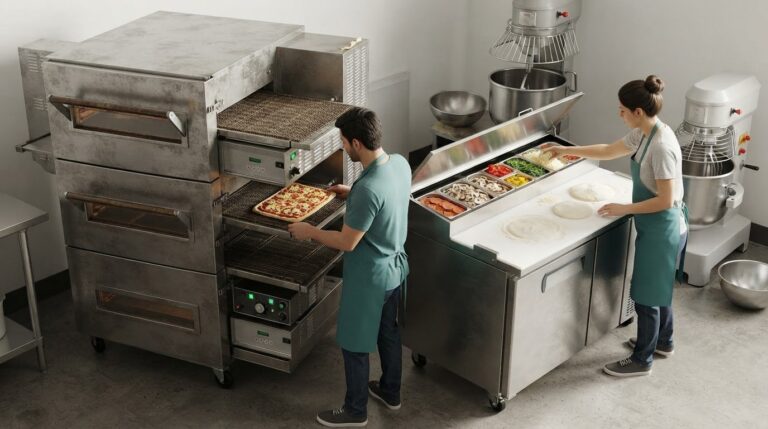
A pizza oven is only one part of the equipment budget. The equipment requirements for launching a fast casual pizza franchise typically include commercial ovens, dough mixers, refrigeration, prep surfaces, sanitation equipment, storage, and order systems. The right combination depends on the menu, kitchen footprint, and expected volume. Total equipment costs also vary with store size, menu complexity, and local requirements.
It makes sense to focus on cost early, but the lowest upfront price may not be the best fit if equipment slows service or makes consistent preparation harder. A well-planned kitchen balances quality, ease of cleaning, workflow and budget. This guide covers the core equipment categories, explains how space and production needs shape your choices, and outlines what to consider when assessing costs and vendors, including how oven selection can support reliable cook times and smoother service.
Key Takeaways
- Match oven capacity and kitchen layout to your menu and peak-hour production needs, not just the available floor space.
- Plan refrigeration, prep surfaces, storage, and sanitation equipment as one connected workflow to keep ingredients accessible and service organized.
- Build equipment specifications around your menu, utilities, and franchise standards so vendor quotes reflect comparable requirements.
- Choose a commercial mixer suited to your dough volume and production routine to support consistent batches and efficient prep.
- Assess equipment costs alongside cleaning, maintenance, reliability, and the guidance available through your franchise and equipment vendors.
1. Choosing restaurant equipment based on kitchen size, layout, budget, quality, and maintenance
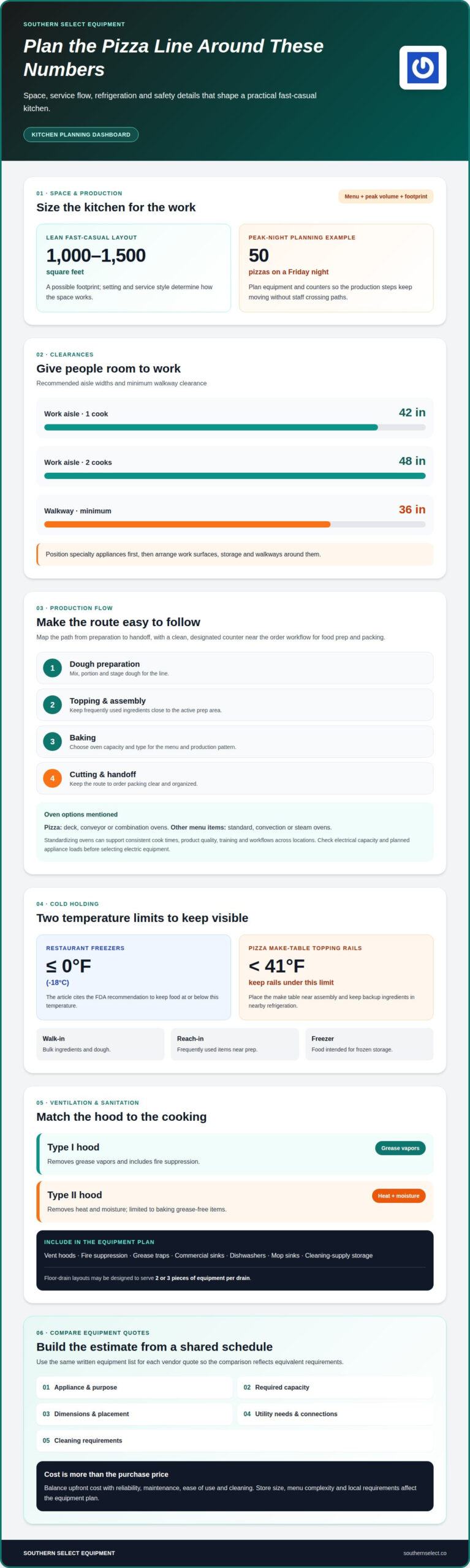
Start with the menu, expected peak volume, and available kitchen footprint. A lean fast-casual layout may fit within 1,000–1,500 square feet, but the setting and service style determine how that space works. Map the path from dough preparation to topping, baking, cutting, and handoff. A Friday-night target of fifty pizzas, for example, calls for equipment and counters that keep those steps moving without staff crossing paths.
Position specialty appliances first, then plan work surfaces, storage, and walkways around them. Recommended work aisles measure 42 inches for one cook and 48 inches for two; keep walkways at least 36 inches wide. Place a clean, designated counter near the order workflow for food preparation and packing. Racks, shelves, and labeled storage help keep ingredients and supplies organized, while accessible sinks support handwashing and cleaning tasks.
Cooking equipment should match the menu and production pattern. Pizza shops may choose deck, conveyor, or combination ovens; fast-casual kitchens may also use standard, convection, or steam ovens for other menu items. Standardizing ovens can support consistent cook times, product quality, training, and workflows across locations. Before selecting electric equipment, account for the kitchen’s electrical capacity and the planned load of each appliance.
Ventilation and safety choices affect both layout and budget. A Type I hood removes grease vapors and includes fire suppression; a Type II hood removes heat and moisture and is limited to baking grease-free items. Include vent hoods, fire suppression, and grease traps in the equipment plan, alongside commercial sinks, dishwashers, mop sinks, and cleaning-supply storage. Floor-drain layouts may be designed to serve 2 or 3 pieces of equipment per drain.
Build estimates from an equipment schedule, not a package label. List each appliance, its purpose, utility needs, placement, and cleaning requirements, then compare quotes against the same list. Package costs vary with store size, menu complexity, and local regulations, so one equipment list will not suit every restaurant. Balance purchase cost with reliability, maintenance, ease of use, and cleaning. A lower upfront cost may bring more maintenance or slower service, while a well-matched layout reduces unnecessary movement and supports consistent output.
2. Refrigeration, prep tables, and smallwares
Plan cold storage around the ingredients, dough volume, and service rhythm of your menu. Walk-in refrigerators can hold bulk ingredients and dough, while reach-in coolers keep frequently used items close to the prep line. Freezers provide separate space for food intended for frozen storage. According to the U.S. Food and Drug Administration, restaurant freezers should keep food at or below 0°F (-18° C).
Size capacity for the quantity and types of food your restaurant serves, not just the available floor space. Plan where dough will rest, where backup ingredients will sit, and how staff will replenish the line during a rush. Separating bulk cold storage from active prep can reduce unnecessary trips. Position units so doors can open without blocking work aisles or access to cooking equipment.
A refrigerated pizza make table brings ingredients and assembly space together. Common setups combine a chilled topping rail, ingredient containers, and a stainless steel work surface. Keep the rail stocked with the toppings used most often, then place backup ingredients in nearby refrigeration. Maintain refrigerated pizza make-table topping rails under 41°F; having access to experienced technicians like Access Refrigeration & Appliance Repairs helps keep cooling units and essential kitchen equipment operating reliably. This setup gives staff a clear sequence: portion dough, add sauce, select toppings, and move the assembled pizza toward cooking.
Prep tables need enough usable surface for the tasks they support. A stainless-steel surface can work for dough portioning or order staging, while a refrigerated table supports pizza assembly. Use separate, clearly labeled containers for toppings so employees can identify ingredients quickly. Scoops, dough cutters, scrapers, scales, and food-safe storage containers are useful smallwares; choose them to suit the menu and prep method. Keep tools near the task they support.
- Bulk storage: Use walk-in refrigeration for larger ingredient and dough volumes.
- Line storage: Keep reach-in coolers and make-table rails near active assembly.
- Frozen storage: Select freezer capacity based on the kinds and quantities of food served.
- Smallwares: Organize labeled containers and prep tools beside the station where staff use them.
For example, a compact pizza line might place a refrigerated make table beside the oven, with backup toppings in a reach-in cooler. A larger operation may need walk-in cold storage supplying several prep stations. In either layout, map ingredient movement from delivery storage to prep, assembly, and cooking. This sequence helps owners choose tables and refrigeration that fit production needs while keeping ingredients accessible and work surfaces organized.
3. How much does it cost to open a pizza shop?
That startup range covers more than kitchen equipment, so separate equipment estimates from leasehold work, opening inventory, and other launch expenses. Build the equipment budget from the menu and operating plan, rather than treating one broad figure as a quote for every restaurant.
Begin with a written equipment schedule. For each item, record its function, required capacity, dimensions, power needs, and connection points. Add the quantity and intended location, then use the same schedule for every vendor quote. This makes it easier to compare equivalent equipment and spot exclusions, such as delivery or installation, without assuming those costs are included. Franchise systems may provide tested layouts, equipment specifications, and vendor recommendations; use those standards to keep locations consistent.
Restaurant design affects what the equipment schedule can accommodate. A design package may include equipment specifications, an equipment schedule, and plumbing and electrical schematics. Match each appliance to the menu it must support, then coordinate its placement with staff movement, storage, and order handoff. For example, a takeout-focused counter may need less dining-room equipment than a restaurant built around table service. The layout should support efficient kitchen work and create the intended dining-room atmosphere.
Pizza ovens are central to production, but the right configuration depends on expected volume, menu, and available space. A pizza restaurant may use deck, conveyor, or combination ovens, and some operations need more than one oven to meet demand. Compare options by how well they fit the planned menu and workflow, not by purchase price alone. Standardized equipment across franchise locations can help teams follow repeatable procedures and produce consistent results.
Location and opening plans shape the rest of the budget. A site with strong foot traffic, convenient parking, and proximity to the intended customer base can support the restaurant’s operating concept. Include the counter, point-of-sale system, kitchen display needs, and front-of-house equipment in the project schedule. A takeout or delivery model may require fewer customer-facing furnishings, while dine-in service calls for a different setup.
Plan opening marketing alongside the equipment and build-out schedule. Social media, local advertising, and community engagement can introduce the restaurant to nearby customers before service begins. Align staff training with the final equipment layout so employees learn the actual workflow. A clear schedule, comparable vendor quotes, and a menu-led equipment list help owners track where capital is going and prepare for a consistent first service.
4. Commercial mixers for pizza dough
Dough preparation shapes consistency before toppings reach the pizza. Choose a commercial mixer to suit your recipes, batch size, and production rhythm. Document the dough portions needed for each service period, then estimate how often batches must be mixed.
A commercial spiral mixer is one option for pizza dough. Its spiral action works the dough as the bowl turns, supporting a repeatable mixing process. Choose capacity based on your standard batch rather than the largest possible batch. An oversized mixer may not suit smaller recipes, while a small unit can require extra batches during busy production. The right fit keeps dough preparation aligned with oven capacity.
Consistency also depends on repeatable recipes and clear production steps. Record ingredient quantities, mixing sequence, and dough handling practices so staff can follow the same method across shifts. Plan where flour, water, and other ingredients will be staged, and keep the mixer near dough portioning. Dough dividers or portioners can help create consistent pieces, while sheeters or rollers support repeatable shaping. Add equipment to solve a defined production need.
Match dough equipment to the rest of the kitchen. A mixer may prepare dough efficiently, but the line also needs room for portions to move toward shaping, toppings, and baking. Carrying dough across the kitchen can slow service during a rush. Map the sequence from mixing through the pizza oven, then place tools and work surfaces along that route. A process designed to produce two hundred identical crusts in one night may need mechanical assistance to portion dough consistently.
Oven choice affects the pace that dough preparation must support. Deck, conveyor, and combination pizza ovens suit different menus, production volumes, and space plans. A conveyor setup may require a steady flow of prepared pizzas, while another service pattern may allow more batch-based preparation. Set the mixer schedule around the chosen oven workflow rather than treating mixing and baking as separate decisions. This helps reduce bottlenecks between dough preparation and finished orders.
Before opening, test production using the intended recipe, batch size, portioning method, and oven sequence. Entry-level staff can be trained to use dough sheeters to produce professional-level crusts in under an hour. Cold fermentation lets yeast work slowly over several days, so the storage and prep schedules must accommodate the recipe. Review the test for labor demands, dough consistency, and wasted ingredients. A well-designed system can save labor hours, improve consistency, and reduce waste.
5. Equipment costs and franchise vendor guidance
Equipment costs depend on the concept, menu, space, and required ventilation. These figures describe different configurations, not a universal franchise budget.
Before comparing vendor quotes, build a shared equipment schedule with specifications, quantities, and utility needs. Franchise systems may supply standardized equipment lists, tested layouts, workflow guidance, and vendor recommendations. The franchise agreement and operating standards determine which equipment must come from an approved source or receive approval. Use those specifications as the baseline, then compare quotes for matching items and included services.
For commercial pizza equipment, health-department and local building-code requirements affect the planned installation. Food-zone surfaces may need recognized third-party certification, such as NSF International, while electrical equipment may carry a UL or ETL listing. Ventilation, fire protection, plumbing, and sanitation also shape the equipment plan. Local fire codes determine requirements for items such as sprinklers, extinguishers, and alarms; the hood design must suit the cooking equipment and menu.
Compare traditional and ventless designs by their equipment scope, installation needs, and kitchen layout. A Type I hood system includes fire suppression and make-up air in the installed estimate above. Factory-built recirculating commercial hoods that filter and return air indoors fall under UL 710B. Ventless packages are not interchangeable with conventional systems, so their specified appliances and operating configuration matter to the total build-out.
Startup planning should include more than ovens and refrigeration. Account for preparation equipment, sinks, storage, smallwares, a POS system, and any kitchen display system needed to move orders into production. Franchisees can compare financing and leasing with an outright purchase by assessing payment obligations, ownership terms, and fit with the opening budget. Used equipment may cost less, but condition and expected maintenance are important factors in the decision.
Keep the vendor process orderly: match each quote to the franchise equipment schedule, identify differences in specifications, and record installation and utility assumptions. This helps franchise owners see whether a lower quote reflects a genuine saving or a different scope. It also keeps equipment decisions aligned with the approved concept, kitchen workflow, and planned opening costs.
The franchise agreement and operating standards determine which equipment must come from an approved source or receive approval. Use the franchisor’s approved specifications as the baseline.
Southern Select Equipment
Southern Select supplies commercial kitchen equipment, including XLT Pizza Ovens, EDGE Pizza Ovens, Hobart Mixers, and conveyor ovens. These options can support decisions about baking capacity and dough preparation as you build an equipment plan around your menu and workflow.
Turn to Southern Select when you’re narrowing your equipment needs and want to explore commercial options for your kitchen. Share the role an oven or mixer needs to play in your operation to focus the conversation on your menu and workflow.
Contact Southern Select to discuss commercial equipment for your restaurant.
Move Your Franchise Plan Toward Opening Day
A clear plan for the equipment requirements for launching a fast casual pizza franchise can turn early decisions into a coordinated purchasing path. Next, connect the kitchen plan with the franchise approval process, project schedule, and opening priorities. This alignment helps you make decisions in sequence rather than treating every equipment choice as a separate task.
As you refine the plan, keep the menu and service model at its center. They shape what your team needs to produce, how the kitchen should operate, and which equipment decisions deserve attention first. A focused conversation with Southern Select can help you consider commercial equipment options in light of those priorities and set a practical direction for your project.
Contact Southern Select Equipment today to discuss your restaurant equipment needs. With a thoughtful plan in hand, you can take the next step toward opening a kitchen built around your concept.
Frequently Asked Questions
Equipment Costs: What Should Franchise Owners Expect?
Equipment spending depends on the franchise concept, menu, kitchen footprint, and installation scope. Build a useful budget by separating each appliance from related work, such as utility connections, ventilation, delivery, and setup. For example, an oven quote may not include hood modifications. Compare scopes line by line, then weigh cleaning, maintenance, and replacement needs alongside the initial purchase.
How much does it cost to open a pizza shop?
The total opening budget depends on the location, condition of the space, and service model. A leased restaurant needing extensive kitchen work will have different costs from a space already suited to food service. Track build-out, equipment, opening inventory, technology, and pre-opening expenses as separate categories. This makes it easier to see how changes to seating or the menu affect the overall startup plan.
Quick Answer: What Equipment Do You Need to Start a Pizza Business?
A pizza business needs equipment for dough preparation, cold storage, assembly, baking, cleaning, and order handling. Think of the kitchen as connected work zones: dough moves to assembly, pizzas go to the oven, and finished orders reach the counter. Sinks, dishwashing, dry storage, and a point-of-sale system support production. Let the menu and service style determine which additional appliances belong in the plan.
What kitchen equipment is required to open a fast-casual pizza franchise?
The equipment requirements for launching a fast casual pizza franchise include commercial cooking, dough, refrigeration, preparation, sanitation, storage, and order-management equipment. Franchise operating standards can shape exact specifications and approved models. Locations with the same menu may need different quantities because of differences in layout or order channels. Build the equipment schedule around the approved operating model, then coordinate each item with its station and utility connections.
What pizza oven types and capacities do fast-casual pizza franchises require?
Franchises may choose deck, conveyor, or combination ovens; capacity should match the menu and production flow. Estimate demand by service period, then consider how bake time, pizza size, and order mix affect oven use. A conveyor oven supports continuous production, while another configuration may better suit a different workflow. Franchise standards and kitchen space also guide the final oven specification.
How much does commercial pizza restaurant equipment cost in the United States?
There isn’t one equipment total that fits every U.S. pizza restaurant. Costs change with equipment type, kitchen scope, installation needs, and whether the project uses new or used machinery. Ask vendors to separate equipment from freight and installation so quotes can be compared fairly. Southern Select Equipment ships to all 50 states and the District of Columbia.
What are the equipment specifications in major pizza franchise FDDs and operations manuals?
Franchise operations materials provide the system-specific reference for equipment specifications, approved models, and layout expectations. The equipment requirements for launching a fast casual pizza franchise may therefore differ between brands, even when their menus seem similar. Use the applicable franchise documents to identify required models and substitution rules, then align the equipment schedule and kitchen plan with those standards before purchasing.
What refrigeration, food-prep, and dough-making equipment is needed for a pizza franchise?
Plan for cold storage, a refrigerated pizza assembly station, work surfaces, ingredient containers, and dough-preparation equipment suited to your recipes. The practical setup depends on how ingredients move from storage to the prep line and how dough reaches shaping and baking. For example, keep backup toppings accessible without interrupting assembly. Include portioning tools and labeled containers to support consistent preparation between shifts.