
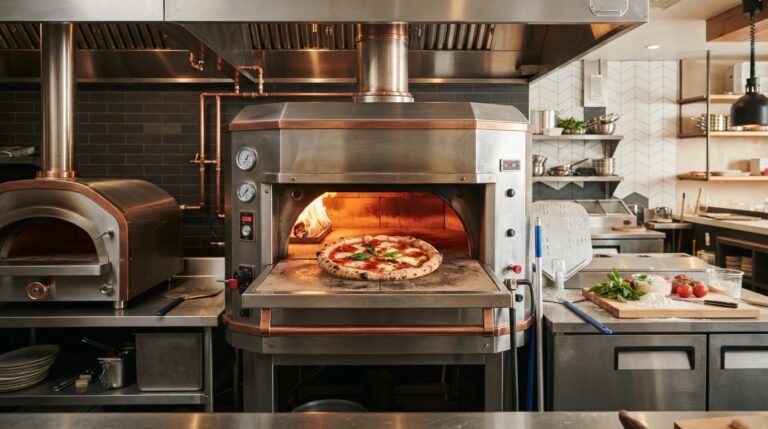
The biggest oven isn’t automatically the most efficient choice. An energy efficient commercial pizza oven matches its fuel, design, capacity, and placement to your menu and service volume, producing the pizzas you need without heating unused space or generating unnecessary heat.
Utility costs matter because fuel use and operating demands affect your budget every day. The right fit also depends on how you cook, how quickly you need to serve, and how the oven fits into your kitchen workflow.
This guide will help you compare gas, electric, and wood-fired options, weigh deck and conveyor designs, and size capacity around your expected output. You’ll also see how placement and day-to-day use influence efficiency, so you can make a practical choice for your kitchen and the guests you welcome.
Key Takeaways
- Match fuel to your kitchen’s utilities, menu, and cooking rhythm to avoid paying for an operating setup that doesn’t suit your service.
- Estimate peak demand before selecting capacity; an oven that keeps pace without sitting underused can support smoother service.
- Measure the installation area and account for access, ventilation, and surrounding workflow when planning oven placement.
- Compare wood-fired, deck, conveyor, gas, and electric designs by how they cook and fit your operation, not by fuel type alone.
- Look beyond the oven’s advertised efficiency: operating habits, heat management, and choosing a suitable size all affect energy use.
Commercial oven fuel options
Reduce energy use without compromising pizza quality by matching the fuel and oven style to your menu. Keep cooking temperatures consistent and track energy use against output to spot waste before changing recipes or cooking methods.
-
Match oven type and fuel to the menu
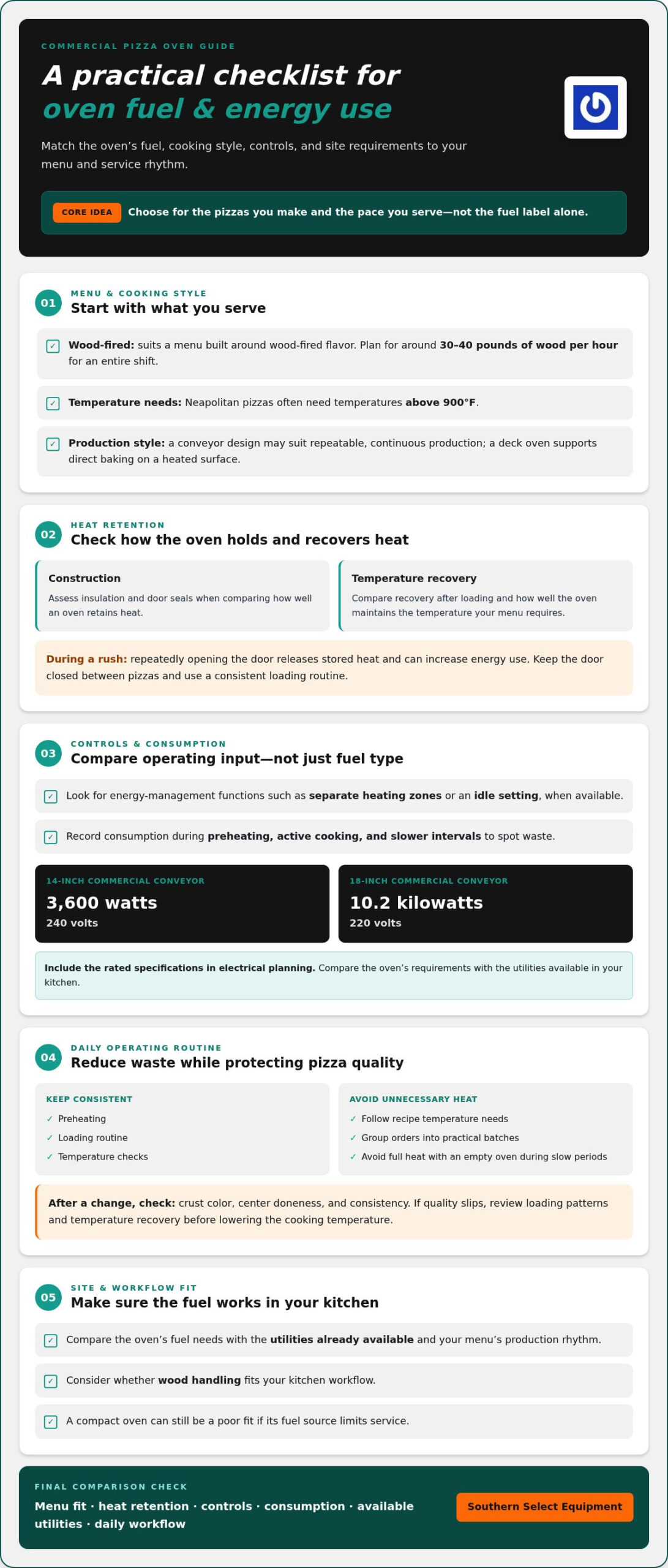
Choose an oven around your signature pizzas and service pattern, then compare how each fuel supports that cooking style. A wood-fired oven suits menus built around wood-fired flavor, but it requires around 30 to 40 pounds of wood per hour for an entire shift. Neapolitan pizzas often need temperatures above 900 degrees Fahrenheit. A conveyor design may better suit repeatable, continuous production, while a deck oven supports direct baking on a heated surface.
-
Assess heat retention and fuel use
Before comparing fuel consumption, assess construction and heat retention. Insulation, door seals, and temperature recovery after loading affect how often an oven draws fuel or power. Repeatedly opening the door, for example, releases stored heat and can increase energy use during a rush. Establish a consistent loading routine, keep the door closed between pizzas, and compare how well each oven maintains the temperature your menu requires.
-
Review energy-saving functions and consumption
Compare operating input and controls, not just the fuel label. Look for functions that let you manage heat during quieter periods, such as separate heating zones or an idle setting, when available. Then record consumption during preheating, active cooking, and slower intervals. A 14-inch commercial conveyor oven is rated at 3,600 watts and 240 volts, giving you concrete electrical specifications to include in your comparison.
-
Reduce energy use while preserving food quality
Standardize preheating, loading, and temperature checks before changing settings. Follow the temperature required by your recipe, group orders into practical batches, and avoid keeping an empty oven at full heat during slow periods. After each change, check crust color, center doneness, and consistency. If quality slips, review loading patterns and temperature recovery before lowering the cooking temperature.
- Select a fuel source that fits the site. Compare the oven’s fuel needs with the utilities already available in your kitchen and the menu’s production rhythm. For example, an 18-inch commercial conveyor oven is rated at 10.2 kilowatts and 220 volts. Include those figures in electrical planning, and consider whether a wood-fired setup’s fuel handling fits your workflow. A compact oven can still be a poor fit if its fuel source limits service.
Capacity and hourly pizza output
Size an oven for your busiest service periods, not an optimistic daily average. Compare usable cooking capacity with the number of pizzas your team can prepare, load, and finish consistently.
-
Match capacity to the business type
Start by matching your business type, menu, and order pattern to oven capacity. A dine-in pizzeria may face sharp rushes, while a restaurant serving pizza alongside other dishes may have more variable demand. Review peak periods, takeout orders, and menu mix together. Don’t choose the largest model by default: unused capacity can mean heating more space than your service requires.
-
Assess pizza capacity and hourly output
Compare rated hourly output with the size and style of pizzas you actually serve. One commercial model may cook up to 170 12-inch pizzas per hour, but that figure describes a particular model and pizza size. A larger pizza, different toppings, or frequent loading gaps can change the practical pace. Use the stated output as a comparison point, then account for your menu and workflow.
- Measure demand during real service. Review order tickets from a representative busy period and identify when pizza orders arrive together. Separate dine-in, pickup, and delivery orders if they affect kitchen flow. Estimate the pace your team must sustain rather than adding every pizza sold throughout the day. This helps you distinguish a concentrated rush from steady production and size capacity around the actual bottleneck.
- Compare output ranges with your target pace. Smaller commercial conveyor ovens can produce more than 20 pizzas per hour, while larger commercial conveyor ovens can produce up to 175 pizzas per hour. Those figures span very different production needs. Compare them with your peak demand and the number of pizzas your team can prepare and finish. A high rated output won’t help if preparation, loading, or order assembly cannot keep pace.
- Account for pizza size and belt space. Match the oven’s usable cooking area to the diameter of your menu’s pizzas, not just its advertised capacity. A 12-inch pizza and a larger pie occupy different amounts of cooking space, affecting how many can bake together. For a conveyor, consider how product spacing and belt movement shape the flow. Avoid assuming that hourly output stays constant across different sizes and recipes.
- Test the full kitchen workflow before choosing. Trace each order from topping and loading through baking, cutting, and handoff. A model described as producing 182 pizzas per hour still depends on an operation that can supply and receive that output. Look for delays at preparation or finishing stations, then base your capacity decision on the slowest part of the process. This keeps oven size aligned with service rather than isolated specifications.
Oven size, weight, and placement
Match the oven’s footprint, weight, and utility connections to your kitchen before you install it. Electrical service and gas connections must match the model; ventilation, clearances, and fire-protection requirements depend on the oven and locally adopted codes.
Break costs into equipment, site preparation, utility work, ventilation, and ongoing energy use. Fuel type, local utility rates, operating hours, and existing kitchen infrastructure all affect the total expense.
-
Assess kitchen space for oven size
Measure the installation space and the route from delivery access to the cooking line. Allow room for doors, loading, cleaning, and staff movement, not just the oven’s listed dimensions. A conveyor oven, for example, needs clear space for loading and receiving pizzas. Don’t place a large unit where it blocks prep stations or disrupts kitchen workflow.
-
Check installation requirements
Read the oven’s nameplate and installation specifications before planning gas or electrical work. Match the connection type and capacity to the model, and plan ventilation, exhaust, clearances, and fire protection around its design and locally adopted codes. Gas and electric ovens have different utility requirements, so don’t assume one installation layout suits both.
- Confirm the floor and delivery path. Check the oven’s listed weight, floor support, and any thresholds or turns between the entrance and kitchen. A heavy deck oven may need a different route and placement plan from a compact conveyor model. Measure doorway width, corridor clearance, and turning space before delivery to avoid finding that the oven won’t fit its final position.
- Place the oven around the work sequence. Map the route from dough preparation to topping, baking, cutting, and handoff. Position the oven so staff can load and unload without crossing busy prep or service routes. For a conveyor, align the entrance and exit with the stations that supply and finish the pizzas. Keep nearby work surfaces practical and maintain the clearances required for the oven.
- Build an installation budget by category. List equipment, site modifications, utility connections, ventilation, and installation labor separately. An existing compatible connection may reduce site work; a new gas line or electrical supply may add work. Ongoing operating costs depend on fuel type, local utility rates, cooking schedule, and heat management. A category-by-category breakdown is more useful than one total estimate.
- Plan for safe access and maintenance. Leave practical access to controls, service panels, and areas that need routine cleaning. Consider where staff will stand while loading and whether nearby equipment makes the station cramped or obstructed. Staff need room to move trays and ingredients safely without compromising ventilation or required clearances.
Wood-fired, deck, conveyor, gas, and electric ovens
- Compare oven styles against your cooking method. A deck oven heats a fixed cooking surface, while a conveyor moves pizzas through a heated chamber. Gas and electric describe fuel sources, not oven layouts, and each can suit different workflows. Match the style to how your restaurant prepares, loads, and finishes pizzas. That fit matters more than choosing a fuel based on reputation alone.
- Choose wood-fired cooking for a menu built around it. Wood adds a distinct cooking method, but it also requires ongoing fuel handling and tending. Operating a wood-fired pizza oven requires around 30 to 40 pounds of wood per hour for an entire shift. The guide gives a minimum of 350 degrees Celsius, or 650-700 degrees Fahrenheit, for the desired crust and center.
- Weigh deck ovens against batch cooking. A deck oven lets staff place pizzas directly on a heated surface and manage each bake in place. Consider whether that hands-on process suits your menu and staffing. A restaurant baking varied pizza styles, for example, may value direct control over placement and timing. Account for the energy needed between batches rather than judging efficiency by fuel use alone.
- Consider conveyor ovens for a steady production line. A moving belt supports repeatable cooking and a consistent handoff during continuous service. Smaller commercial conveyor models can cook pizzas in under five minutes, while larger models can produce up to 175 pizzas per hour. Compare those capabilities with your actual order flow. A high-output feature is useful when demand supports it, but excessive capacity can mean heating space you don’t use.
- Compare gas and electric by site and temperature control. Both types can suit commercial cooking, but their utility connections and controls differ. Review available connections, the temperature range your menu requires, and how easily staff can adjust settings during service. An electric conveyor oven may suit a kitchen designed around electrical equipment, while a gas model needs compatible gas service.
- Include combo and coal-fired ovens only when their features fit. A combo oven can bring multiple cooking methods into one unit; assess whether your menu will use those features regularly. Coal-fired cooking requires a distinct fuel-handling routine, so consider storage and staff workflow along with the desired flavor. Compare these options with wood-fired, deck, gas, electric, and conveyor ovens based on menu needs, temperature control, and operating rhythm.
Pizza oven energy efficiency
In the United States, certification labels and incentives depend on the oven model and each program’s eligibility criteria. Compare documented energy use and operating requirements rather than assuming a label or incentive means lower utility costs. Choosing an energy efficient commercial pizza oven means assessing how its performance fits your kitchen’s actual production needs.
- Compare energy use against useful output. Record the oven’s energy input alongside the pizzas produced during the same service period. For an electric model, note its rated power and voltage, then compare consumption during preheating, cooking, and idle periods. A rating alone doesn’t show how efficiently your kitchen turns energy into finished pizzas; production volume and operating schedule matter, too.
- Include operating hours in your comparison. A high-output oven can suit sustained service but may use energy unnecessarily when demand is intermittent. Note when the oven is heating, producing pizzas, or waiting between orders. For example, compare a steady dinner rush with scattered pizza orders throughout a service period.
- Measure heat loss during a real shift. Observe how often staff open doors, leave access points open, or interrupt cooking to retrieve products. Each avoidable release of heat may require additional energy to restore the cooking environment. Record these moments during a representative service, then improve loading and retrieval routines before changing cooking temperatures or recipes.
- Use temperature settings that suit the menu. Compare the required cooking temperature with the oven’s usable range and the results on finished pizzas. An 18-inch commercial conveyor pizza oven is listed with a range of 32°F to 572°F. That specification describes its range, not the ideal setting for every recipe. Test crust, center, and consistency before adjusting production settings.
- Account for the full production chain. Track how the oven’s pace relates to preparation, topping, and finishing stations. If staff can’t supply pizzas to a conveyor consistently, its potential output won’t translate into useful service volume. If the oven is the bottleneck, record waiting orders and cooking flow. These observations help you decide whether capacity, workflow, or heat management needs attention first.
- Evaluate fired pizza against its operating demands. Wood-fired cooking can be an intentional menu feature, but include its fuel use in your efficiency comparison. Track wood consumption, the heating routine, and cooking output across a full shift. Then weigh those demands against the food, flavor, and service style your restaurant aims to deliver. Efficiency should reflect the complete operation, not energy input alone.
- Use a consistent comparison method. Compare ovens using similar menus, service periods, and production volumes. Keep the recipe and loading routine consistent, then record energy input and finished-pizza quality. This shows whether an energy efficient commercial pizza oven suits your operation: lower energy use matters only if the oven also meets your output and food-quality needs.
Certification labels and incentives depend on the oven model and each program’s eligibility criteria. Assess them alongside documented energy use and operating requirements.
Southern Select Equipment: XLT Pizza Ovens
Southern Select Equipment offers XLT Pizza Ovens for restaurant operators comparing commercial pizza oven options. If your decision comes down to matching oven style with menu, expected output, and kitchen setup, its selection also includes EDGE Pizza Ovens and Conveyor Ovens. Compare these categories against your cooking workflow, available utilities, and the pizza volume you need to serve. That gives you a practical starting point for narrowing equipment choices without treating one oven style as right for every operation.
Once you’ve identified the features your kitchen needs, explore the available options and consider how each could fit your food service operation. For a closer look at XLT Pizza Ovens, visit XLT commercial pizza ovens.
Contact Southern Select or visit southernselect.co to continue your equipment search.
Choose Equipment That Fits Your Next Stage
Turn your kitchen’s operating needs into a clear equipment shortlist. Identify the features that matter most to your menu and workflow, then compare models against those priorities rather than choosing by fuel type alone. That keeps your energy efficient commercial pizza oven decision grounded in how your restaurant works.
Southern Select Equipment offers XLT Pizza Ovens and EDGE Pizza Ovens for commercial food-service operations. If you’re refining your pizza setup or considering how preparation equipment fits alongside your oven, these products give you a focused starting point. Compare options against your menu and production needs.
Contact Southern Select Equipment to discuss your equipment needs. A thoughtful choice today can help your kitchen serve guests with confidence as your operation moves forward.
Frequently Asked Questions
What features make a commercial pizza oven energy efficient?
Look for controls and construction that help the oven use energy in proportion to its workload. Programmable modes, independent heating zones, and precise thermostat controls can help staff avoid heating unused areas or maintaining unnecessary heat. Compare manufacturer energy-use data under consistent production conditions. Energy consumed per finished pizza is a useful measure because it connects oven performance to the food your restaurant serves.
How much energy do commercial pizza ovens use per hour?
Rated electrical input gives a useful reference: a 14-inch commercial conveyor oven rated at 3,600 watts uses 3.6 kilowatt-hours in an hour at continuous full input. An 18-inch model rated at 10.2 kilowatts would use 10.2 kilowatt-hours under that same condition. Actual hourly consumption changes as heating elements cycle and operating conditions shift, so treat these calculations as rated-input comparisons, not guaranteed usage.
What are the most energy-efficient commercial pizza ovens in 2026?
No oven type is automatically the most efficient for every restaurant in 2026. Compare models by energy used to produce the output your menu requires, using comparable recipes and service conditions. A high-throughput conveyor may suit continuous orders, while a different design may fit a smaller, intermittent pizza menu. Include preheating and idle periods in the comparison, so a short cooking cycle doesn’t obscure energy consumed outside active baking.
How do oven capacity, cook time, and insulation affect energy efficiency?
Assess capacity, cook time, and insulation together by testing a representative batch. Capacity determines how much heated space supports each service, cook time affects how long the oven runs per order, and insulation influences heat loss between loads. Record energy input for a consistent batch and compare it with finished-pizza quality. A faster cycle offers little benefit if the oven then sits preheated but underused.
What electrical, gas, ventilation, and fire-code requirements apply to commercial pizza oven installation?
Match electrical or gas connections to the selected oven’s nameplate and installation specifications. Plan ventilation, exhaust, clearances, and fire protection around the oven’s design and locally adopted codes.
How much does an energy-efficient commercial pizza oven cost?
This is the listed price for that model, not a general price for all energy-efficient commercial ovens.
What are typical installation and operating costs for commercial pizza ovens in the U.S.?
Installation costs include the oven, site modifications, utility connections, ventilation, and installation labor. Existing compatible connections may reduce site work. Operating costs depend on fuel type, local utility rates, operating hours, and heat management.