
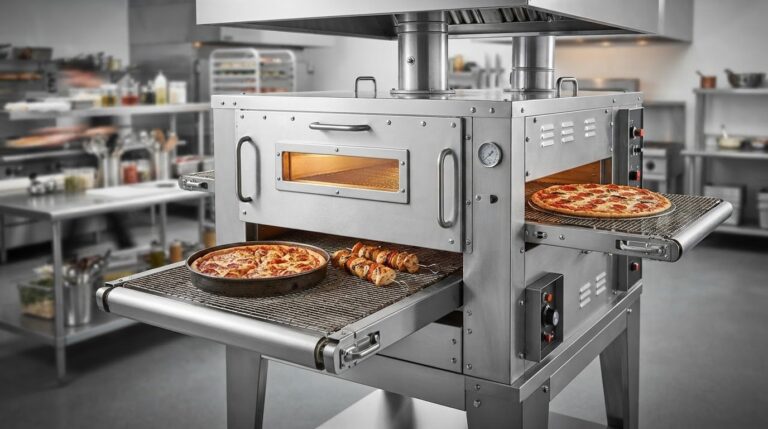
One belt speed won’t suit every item on a varied pizzeria menu. Independent belt speed control for multi item pizzeria menus lets operators adjust conveyor travel to match the food being cooked. Thin-crust pizza, kebabs, and deep-dish pies may need different settings because belt speed affects how long each item spends in the oven.
That flexibility matters when a kitchen needs to serve a varied menu without stopping the conveyor line. The goal is consistent cooking while orders keep moving, even when different foods have different needs.
This guide explains how belt speed adjustments work, what to consider when cooking different menu items, and how conveyor ovens support continuous service and throughput. You’ll also learn where commercial conveyor ovens fit into a pizzeria’s equipment decisions, so you can assess whether this approach suits your menu and kitchen workflow.
Key Takeaways
- Match conveyor belt speed to each item’s cooking needs to support more consistent results across a varied menu.
- Use a repeatable approach to adjust and assess settings when adding different foods to the conveyor line.
- Plan the flow of items through the cooking chamber to keep production moving during busy service.
- Consider how menu variety, oven setup, and kitchen workflow shape the role of conveyor cooking in your operation.
- Learn what to look for in commercial oven options when you’re planning equipment around your menu and throughput needs.
Conveyor oven consistency during busy service
During a rush, a conveyor oven makes cooking more repeatable. The belt carries food through the cooking chamber, where controlled heat supports consistent results. Staff load items at one end and collect them at the other instead of moving each pizza by hand. That steady path gives the team a clear production rhythm.
Consistency still depends on choosing a suitable belt speed for each food. Thin-crust pizza and deep-dish pies have different cooking needs, so one setting may not suit both. Operators can adjust the speed, observe the result, and refine the setting. The aim is an even bake that the team can reproduce during service.
Menu variety also shapes how cooks organize the line. Conveyor ovens can cook foods beyond pizza, including naan, pita bread, kebabs, chicken wings, garlic bread, lava cakes, and flatbreads. A kitchen serving pizza and garlic bread, for example, needs a clear sequence for loading and collecting each item. An organized workflow helps prevent confusion when orders arrive together.
- Group orders by the item and cooking setting they need.
- Keep the loading point clear so food enters the belt in an orderly flow.
- Observe the finished item and adjust the belt speed when results call for it.
- Use a consistent handoff at the exit, such as placing completed pizzas directly into the order assembly area.
A shared routine turns individual decisions into consistent practice. When one cook loads a pizza and another collects it, both need to know the sequence. The method can include identifying the item, selecting its established setting, and checking the finished bake. During a busy shift, this coordination helps the team spot results that differ from expectations.
Electrical, ventilation, and installation requirements vary by oven model and kitchen setup. Plan the power connection, ventilation, placement, and installation according to the model specifications and applicable site requirements.
Even cooking comes from matching the process to the product, not simply keeping the belt moving. If a pizza comes out undercooked or overly browned, review the selected speed and the item’s place in the workflow. Change one factor at a time and observe the next result. This helps the team identify settings that produce consistent results for each menu item.
Consistency during service is a team habit as much as an oven setting. Clearly assigning loading and collection helps prevent items from being rushed or overlooked. Staff can keep pizzas moving through the chamber while organizing completed orders at the exit. Repeatable steps and product-appropriate belt settings help a conveyor line support a varied menu without disrupting its flow.
Pizzerias, fast-casual and buffet-style restaurants, sports bars, food courts, and catering services may use gas double-stack conveyor pizza ovens. A gas burner generates heat within the oven chamber.
Variable conveyor speed for different menu items
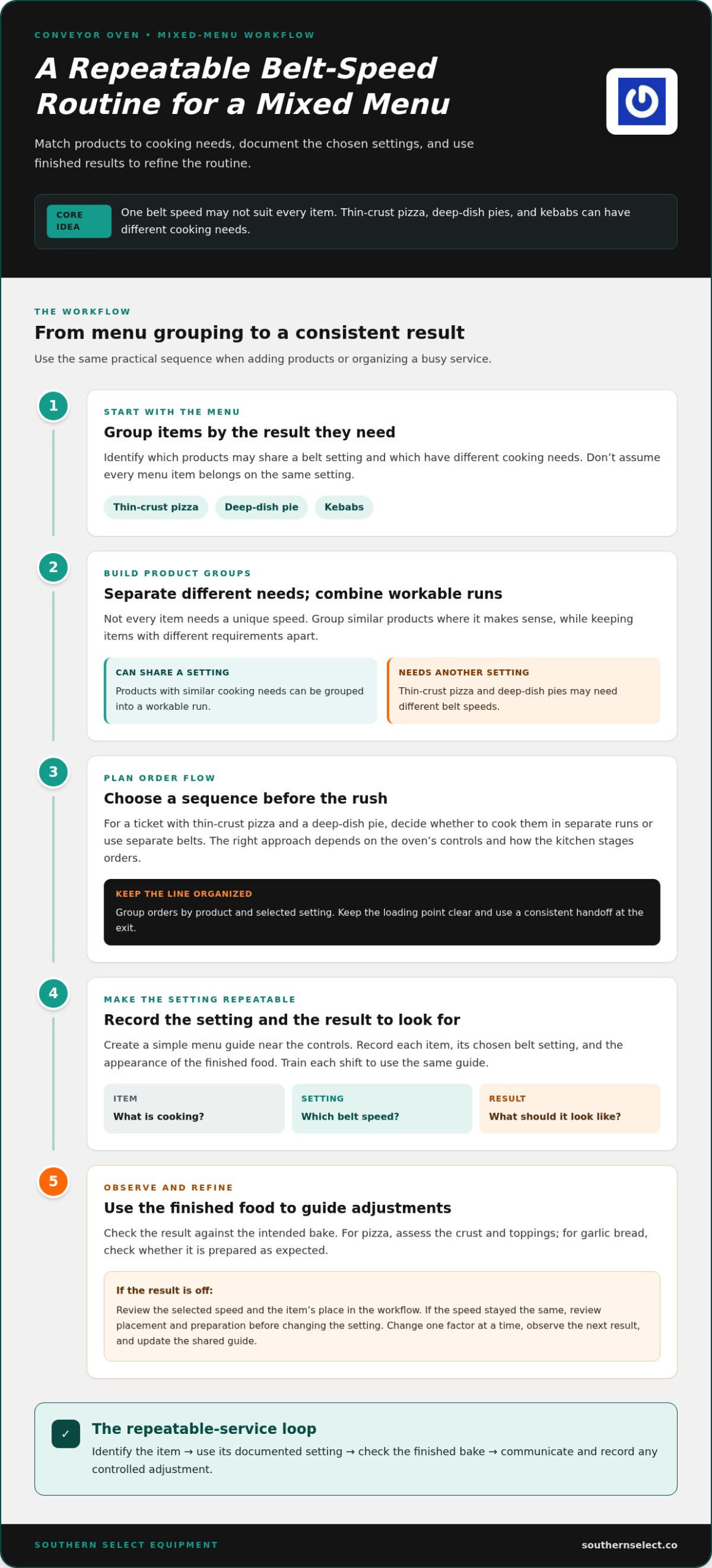
A useful speed-setting routine starts with the menu, not the control panel. Group items by the cooking result they need, then decide which products can share a setting. Thin-crust pizza and deep-dish pies, for example, may need different belt speeds. Kebabs are another distinct item to consider when planning a mixed conveyor menu.
Create a simple menu guide for the oven team. Record each item, its chosen belt setting, and the result to look for. Keep the guide near the controls so cooks can find the right setting without relying on memory. When the menu changes, update the guide after evaluating the new item. A plan for independent belt speed control for multi item pizzeria menus can begin with documented product groups and settings.
- Group similar products: identify menu items that can use the same speed.
- Separate different needs: keep thin-crust pizza apart from items requiring another setting.
- Record the result: note the selected setting and the appearance of the finished food.
- Train each shift: make sure cooks can follow the same menu guide.
Order flow matters, too. If a ticket includes thin-crust pizza and a deep-dish pie, decide whether to cook them in separate runs or use separate belts. The right approach depends on the oven’s controls and how the kitchen stages orders. A clear sequence reduces last-minute decisions at the conveyor.
Menu categories can make the sequence easier to manage. A pizzeria serving pizza alongside flatbreads, garlic bread, or naan can group orders by product and selected setting. Not every item needs a unique speed. Grouping gives staff a practical way to identify which products can move together and which need a different approach. Independent belt speed control for multi item pizzeria menus is most useful when those distinctions lead to a workable kitchen routine.
Use the finished product to guide decisions. For pizza, check whether the crust and toppings match the intended result. For garlic bread, assess whether it is prepared as expected. If the result changes even though the belt speed stays the same, review how the item was placed and prepared before changing the setting.
Keep changes controlled during service. If a setting needs adjustment, communicate it to the team and update the menu guide. Avoid using different unrecorded settings for the same product. Shared instructions make it easier to reproduce the kitchen’s preferred result across shifts.
A varied menu benefits from a deliberate relationship between products, belt settings, and order sequence. Start with thin-crust pizza, deep-dish pies, and a non-pizza item such as kebabs. Group products into workable runs, document the chosen settings, and refine the routine as the menu evolves. This gives cooks a dependable method without treating every item the same way.
Adjustable belt speed for different menu items
A useful speed-setting routine starts with the menu, not the control panel. Group items by the cooking result they need, then decide which products can share a setting. Thin-crust pizza and deep-dish pies, for example, may need different belt speeds. Kebabs are another distinct item to consider when planning a mixed conveyor menu.
Create a simple menu guide for the oven team. Record each item, its chosen belt setting, and the result to look for. Keep the guide near the controls so cooks can find the right setting without relying on memory. When the menu changes, update the guide after evaluating the new item.
- Group similar products: identify menu items that can use the same speed.
- Separate different needs: keep thin-crust pizza apart from items requiring another setting.
- Record the result: note the selected setting and the appearance of the finished food.
- Train each shift: make sure cooks can follow the same menu guide.
Order flow matters, too. If a ticket includes thin-crust pizza and a deep-dish pie, decide whether to cook them in separate runs or use separate belts. The right approach depends on the oven’s controls and how the kitchen stages orders. A clear sequence reduces last-minute decisions at the conveyor.
Menu categories can make the sequence easier to manage. A pizzeria serving pizza alongside flatbreads, garlic bread, or naan can group orders by product and selected setting. Not every item needs a unique speed. Grouping gives staff a practical way to identify which products can move together and which need a different approach.
Use the finished product to guide decisions. For pizza, check whether the crust and toppings match the intended result. For garlic bread, assess whether it is prepared as expected. If the result changes even though the belt speed stays the same, review how the item was placed and prepared before changing the setting.
Keep changes controlled during service. If a setting needs adjustment, communicate it to the team and update the menu guide. Avoid using different unrecorded settings for the same product. Shared instructions make it easier to reproduce the kitchen’s preferred result across shifts.
A varied menu benefits from a deliberate relationship between products, belt settings, and order sequence. Start with thin-crust pizza, deep-dish pies, and a non-pizza item such as kebabs. Group products into workable runs, document the chosen settings, and refine the routine as the menu evolves. This gives cooks a dependable method without treating every item the same way.
Continuous cooking and throughput
A conveyor oven moves pizzas through the cooking chamber from one side to the other. This supports a continuous workflow: staff load an item, continue preparing orders, and collect finished food at the exit. The belt carries products through the oven without requiring staff to move each pizza during cooking.
How does an independent-speed conveyor compare with multiple ovens or batch cooking? Separate speed controls can help a kitchen manage products with different cooking needs on distinct belts. A single conveyor supports steady flow, while batch cooking groups items into oven loads. Deck ovens suit artisanal baking, while conveyor ovens are designed for speed, volume, and reliable operation under pressure.
Throughput depends on more than belt movement. The kitchen needs a steady supply of prepared items, a clear loading point, and staff ready to receive food. If pizzas pile up before the oven, the conveyor cannot fix that bottleneck. If finished orders crowd the exit, the line may slow even while the belt keeps moving.
Plan the workflow around those handoffs:
- Stage prepared pizzas near the conveyor entrance before loading.
- Keep the belt entrance clear so staff can place the next item safely and consistently.
- Assign someone to collect finished pizzas and route them to order assembly.
- Track where queues form, at preparation, oven entry, or collection, then adjust the handoff.
Independent speed control can help when separate belts handle different menu items. A kitchen might run pizza on one belt and a product with a different cooking pace on another. This arrangement is useful only if the oven allows each belt to run at the needed speed and the team can keep both moving.
Some gas double-stack conveyor pizza ovens can be adjusted to cook hundreds of pizzas in a day. This describes possible daily production, not guaranteed output for every kitchen. Menu mix, preparation flow, oven operation, and order timing all affect production. Use actual service patterns to assess whether one conveyor, stacked ovens, or another setup best fits demand—while facilities expanding into large-scale production or distribution may look to industrial integration specialists such as Quintec Conveyors for broader material handling needs.
Some kitchens combine a deck oven with a conveyor oven. The deck can handle artisanal products, while the conveyor supports efficient, higher-volume cooking for products suited to its continuous path. This lets the menu and service needs guide oven use instead of forcing every item through the same cooking method.
During a rush, observe the full process from preparation to handoff. If unbaked pizzas are waiting, improve staging. If cooked items build up at the exit, clarify collection and assembly. These practical adjustments help the conveyor support throughput without treating belt speed as the only factor in service capacity.
How independent conveyor zones work in pizza ovens
A conveyor zone is a path through an oven where food moves on a belt and receives heat. Independent belt-speed control means separate belts can run at different speeds when the oven has separate controls. Each belt’s pace affects how long food spends in the cooking chamber. This helps a kitchen manage different product needs without treating every item as one identical run.
Keep belt speed distinct from oven temperature. A gas double-stack conveyor oven has two ovens arranged vertically, and each oven’s temperature can be controlled independently. That does not, by itself, mean the belts have independent speeds. Check whether a specification describes temperature settings, belt settings, or both before planning separate cooking paths.
Consider a service example. One belt could carry thin-crust pizzas while another handles deep-dish pies, with each speed suited to its products. Kebabs may call for a different speed as well. The practical value depends on separate controls and enough staff to load, monitor, and collect items along both paths.
For a double-stack design, consider the upper and lower ovens as separate cooking spaces. The top oven can handle smaller batches while the bottom oven handles larger quantities. This creates two workflows, but it is not the same as independent belt-speed control. Check the oven configuration to distinguish independently controlled temperatures from separately controlled conveyor belts.
Before choosing a setup, map menu items to paths and controls:
- List products that need different belt speeds, such as thin-crust and deep-dish pizza.
- Identify whether the oven has separate belts or cooking chambers.
- Match each item to the control that changes its belt movement or oven temperature.
- Plan where staff will load and collect products from each path.
- Record the chosen settings and finished results for consistent operation.
This map also reveals workflow limits. If two products need different speeds but share one belt, they cannot move at separate paces. The kitchen may need to schedule them in separate runs or use distinct cooking paths. Separate upper and lower ovens can offer another workflow option, and a stacked layout uses less floor space than two separate ovens.
When comparing equipment, focus on how its controls match the menu rather than assuming “independent” describes every function. Look for clearly described belt-speed controls, oven-temperature controls, and the number of separate cooking paths. If a conveyor setup fits your service needs, explore commercial conveyor pizza oven options as a next step.
Southern Select Equipment: XLT Pizza Ovens
Southern Select Equipment offers XLT Pizza Ovens for commercial pizzeria operations. When comparing equipment for a varied menu, consider how the oven fits your products, service pace, and kitchen workflow. Belt-speed controls and oven-temperature controls are different features, so assess each against the cooking process you need.
Southern Select Equipment also offers EDGE Pizza Ovens and Conveyor Ovens, giving you commercial oven categories to consider as you plan your setup. The right choice starts with understanding what your menu needs from the cooking line and how orders move through your kitchen.
Visit Southern Select Equipment to explore XLT Pizza Ovens and consider which option suits your operation.
Plan the next step for your menu
Make your menu the starting point for equipment decisions. List the items your kitchen prepares, note where their cooking needs differ, and map how orders move from preparation to pickup. This gives you a practical basis for discussing belt controls, oven layout, and the workflow your team needs.
As you compare options, keep belt-speed controls distinct from temperature controls. Southern Select Equipment offers XLT Pizza Ovens and EDGE Pizza Ovens. Consider how each equipment category fits your operation, and focus oven questions on the cooking paths and controls your menu requires.
Thoughtful planning helps you assess whether independent belt speed control for multi item pizzeria menus fits your service goals. Bring your menu and workflow priorities to Southern Select Equipment to discuss commercial oven options for your kitchen.
Contact Southern Select Equipment to discuss your equipment needs and move your planning forward.
Frequently Asked Questions
What belt speeds and cooking times are recommended for different pizza styles and menu items?
There isn’t one belt speed or cooking time that suits every menu item. The right setting depends on the oven, the product’s thickness and toppings, and the result your kitchen wants. A heavily topped pizza, for example, may need a different approach from a thin-crust pie. Follow the oven’s operating guidance, test each recipe, and document the settings that produce your preferred result.
Can independent belt speed control handle pizzas, wings, sandwiches, and other menu items simultaneously?
An oven can handle different items simultaneously only when it has separate cooking paths and controls that let the belts run independently. Chicken wings are among the non-pizza foods conveyor ovens can cook. Sandwiches need a cooking path and setup suited to the product. If items share one belt, they travel at the same speed, so schedule products with different needs in separate runs.
What are the maintenance, calibration, and operational risks of independent belt speed systems?
If cooks use different, unrecorded settings for the same item, results may vary and order flow can suffer. Check the finished food, adjust one setting at a time, and record changes in a shared menu guide.