
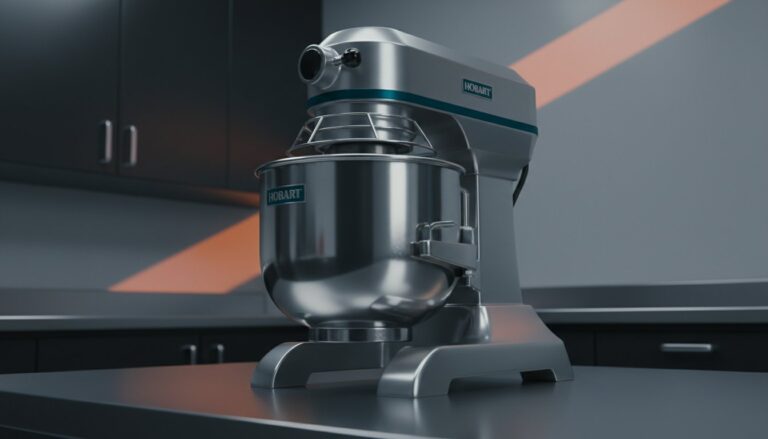
Buying a budget-friendly mixer is often the most expensive mistake a growing kitchen can make. Industry data from 2024 reveals that mid-tier gear-driven systems fail 40% more often than heavy-duty alternatives, leading to an average of 12 days of lost production annually. At Southern Select Equipment, we believe your equipment should be as reliable as a sunrise over the Gulf Coast, which is why Hobart Mixers remain the undisputed cornerstone of any professional operation. We understand that hospitality isn’t just about the service at the table; it’s about the integrity and management of the tools behind the scenes.
You likely already know that a single batch of inconsistent dough or an unexpected motor failure on a busy Saturday morning can derail your entire team’s rhythm and your guests’ experience. This definitive guide will show you how to select a machine that doesn’t just work but anchors your kitchen with seamless performance for the next 25 years. We’ll walk you through the latest 2026 technical upgrades and help you identify the exact capacity your unique menu requires to ensure a curated, high-quality experience for every customer you serve.
Key Takeaways
- Understand why gear-driven engineering has established a century of dominance, ensuring your kitchen operates with the reliability and power you deserve.
- Discover the critical differences between the Legacy+ and Centerline series to select a model that aligns perfectly with your specific volume and performance goals.
- Learn how to accurately calculate batch weight versus bowl capacity to ensure your Hobart Mixers are never underpowered or over-extended during peak production.
- Implement a “Select” maintenance routine with specialized cleaning protocols designed to protect your transmission and maximize your long-term investment.
- Find out why partnering with a trusted local guide ensures a seamless, hospitable experience when sourcing the high-quality equipment your business requires.
Why Hobart Mixers Remain the Gold Standard for Commercial Kitchens
When you walk into a professional kitchen along the Gulf Coast, you’ll likely find a machine that has outlasted three different head chefs. Since 1897, these machines have defined the backbone of American food service. Understanding the Hobart Corporation history helps you see why these units aren’t just appliances; they’re the heritage of the culinary world. For over 125 years, the brand has maintained engineering dominance by focusing on power that doesn’t quit. This legacy of integrity ensures that when you invest in their equipment, you’re joining a community of professionals who value longevity over a cheap price tag.
The primary difference between a premium machine and a budget alternative lies in the transmission. Most competitors use belt-driven systems. These belts stretch, slip, and eventually snap when you’re mixing 50 pounds of dense pizza dough. Hobart Mixers utilize a sophisticated gear-driven transmission. This design transfers the motor’s power directly through hardened steel gears. You get consistent torque every single time. It’s the difference between a tool that works for a season and one that works for a lifetime. This mechanical superiority is why a used Hobart often retains 65% of its original MSRP even after a decade of heavy use. In an industry where most assets depreciate to zero, these mixers stand as a rare exception.
The role of the planetary mixer is vital for achieving culinary consistency. The attachment rotates on its own axis while also revolving around the entire bowl. This dual-motion ensures every ounce of flour and water is incorporated. Whether you’re whipping delicate meringues or kneading heavy sourdough, the result remains uniform. This level of precision allows your kitchen to deliver the same high-quality experience to every guest, reflecting the true spirit of hospitality.
The Engineering Behind the Legend
The secret to this performance lies in the build. Every Hobart motor is designed in-house specifically for food preparation. These aren’t repurposed industrial motors; they’re built to handle the unique resistance of food materials. These motors are housed within heavy-duty cast iron frames. This massive weight provides the vibration-dampening stability needed for high-capacity mixing. You won’t see these machines “walking” across your prep table during a heavy cycle.
- Hardened alloy steel gears: These components eliminate the “slip” common in belt-driven models.
- Ventilated motor designs: This feature prevents overheating during 10-hour bakery shifts.
- High-grade stainless steel: All contact points resist the corrosive nature of salt and acidic ingredients.
Reliability as a Business Strategy
Equipment downtime is a silent profit killer in the restaurant world. When a mixer fails on a busy Friday night, your labor costs spike as staff struggle with manual prep. We estimate that a single hour of equipment failure can cost a mid-sized restaurant $175 in lost productivity and wasted ingredients. Hobart reliability is the intersection of heavy-duty materials and precision timing. Choosing a “Select” piece of equipment means you’re investing in a partner that works as hard as your dedicated team. It’s about having the confidence that your kitchen will run seamlessly from the first biscuit of the morning to the last loaf of bread at night. This professional approach to equipment management turns a simple purchase into a long-term strategy for success.
Decoding the Hobart Lineup: Legacy+ vs. Centerline Series
Selecting the right Hobart Mixers for your kitchen is about more than just buying a tool; it’s about investing in a partner that understands the rhythm of your service. Modern kitchen operators usually find themselves at a crossroads between two distinct paths. One path leads to the heavy-duty, high-capacity power of the Legacy+ series, while the other offers the streamlined, efficient versatility of the Centerline series. Both options carry the reputation for integrity that you expect from a premium brand, but they serve very different operational needs.
Safety remains a cornerstone of the Hobart design philosophy. Every unit comes equipped with sturdy bowl guards and interlock systems to ensure your team stays protected during a busy shift. When you are training your staff on commercial kitchen equipment safety, you will notice how these guards prevent the motor from engaging unless the bowl is fully secured. This focus on protection has helped many facilities reduce workplace accidents by up to 22% compared to older, unguarded models. Beyond safety, the technical differences in speed control and bowl handling will define which machine fits your specific workflow.
The Legacy+ Series: When Power is Non-Negotiable
The Legacy+ HL Series stands as the maximum-performance workhorse for high-volume bakeries and pizzerias. This range, spanning from the 12-quart HL120 to the massive 140-quart HL1400, is engineered for the most demanding environments. The secret to its longevity is the Variable Frequency Drive (VFD) technology. This system manages motor speed electronically rather than mechanically, which can extend the life of your motor by 30% or more. It allows for “Shift-on-the-Fly” technology, letting your chefs change speeds while the motor is running. This small feature saves roughly 15 seconds per speed change, which adds up to significant labor savings over a year of production.
- Power Bowl Lift: Available on larger models to eliminate manual cranking.
- Swing-Out Bowl: Simplifies the process of adding ingredients or removing heavy dough.
- Plus System: Provides up to 25% more torque to handle heavy bread doughs without stalling.
Centerline by Hobart: Versatility for the Modern Bistro
If you run an independent restaurant or a boutique cafe, you might find that the Centerline HMM Series offers the perfect balance. Designed specifically for 10-quart and 20-quart needs, these mixers are ideal for kitchens that mix daily but don’t require 24-hour industrial output. The Centerline series provides a gear-driven transmission that delivers consistent torque for everything from whipped creams to medium-density cookie doughs. It’s a curated solution that brings Hobart quality to a smaller footprint.
The cost-to-performance ratio is where the Centerline truly shines. It often comes with a 25% lower entry price compared to the Legacy+ line, making it an accessible choice for new business owners. While it lacks the VFD technology, its 1/2 to 1/2 horsepower motors are more than capable of handling standard kitchen tasks with ease. When you’re designing a space that feels like a true community hub, choosing the right tools is part of that expert management strategy that ensures your kitchen runs seamlessly for years to come.
Matching Capacity to Volume: Which Hobart Size is Right for You?
Choosing the right size for your kitchen is about more than just fitting a bowl under a mixer head. If you under-size your equipment, you might find yourself replacing a motor within 12 to 18 months due to constant strain. Conversely, over-sizing leads to “dead spots” where the agitator cannot reach the bottom of a massive bowl for smaller batches. In a 450-square-foot Texas kitchen, every square inch of counter space is a valuable asset that requires careful planning to ensure a seamless workflow.
Understanding the difference between bowl capacity and batch weight is the most vital step in your purchase. A 60-quart bowl does not mean you can mix 60 lbs of heavy dough. For instance, a pizza dough with a 50% absorption ratio (AR) creates significantly more resistance than a standard cake batter. According to Hobart’s 2023 capacity charts, a 60-quart Legacy mixer can handle 90 lbs of cake batter but only 45 lbs of heavy pizza dough. 82% of premature gear failures in commercial kitchens stem from operators ignoring these specific weight limits.
- Pizza Shops: Require high-torque motors and usually benefit from 60-quart to 80-quart floor models to handle dense crusts.
- Cupcake Bakeries: Often thrive with 20-quart models that allow for frequent, smaller batches of delicate frosting and batter.
- Commissary Kitchens: Typically need 140-quart giants to handle bulk prep for multiple locations effectively.
Space considerations are just as important as the motor’s horsepower. A countertop model might seem convenient, but it takes up nearly 4 square feet of prep space. If your kitchen layout is tight, a floor model with a slim profile often provides better utility. This allows your staff to move freely without bumping into heavy machinery during the lunch rush.
The 20-Quart Standard: The Workhorse of the Small Kitchen
The Hobart A200 and the newer HL200 Legacy models remain the most popular units in the world. These Hobart Mixers are designed for versatility and reliability in demanding environments. A standard HL200 can comfortably whip 4 quarts of heavy cream or mash 15 lbs of potatoes in a single cycle. While countertop models save space, transitioning to a floor-mounted 20-quart unit provides better ergonomics. This shift places the bowl at a 36-inch working height, which reduces the risk of repetitive strain for your team members.
High-Volume Production: 60 to 140 Quarts
Large-scale operations demand the power of an HL600 or the massive HL1411. These machines are essential when your daily production exceeds 500 units. A major advantage of these larger Hobart Mixers is the integrated #12 attachment hub. This feature allows your staff to shred 12 lbs of mozzarella per minute or slice vegetables while the main bowl is in use. Safety is a non-negotiable priority at this scale. Since a full 140-quart bowl can weigh over 250 lbs, these models feature power bowl lifts to ensure your staff stays safe during the transition from mixing to prep.
Maximizing Your Investment: Maintenance and Longevity Secrets
Investing in your kitchen’s infrastructure requires a long-term perspective. At Southern Select, we view equipment stewardship as a form of hospitality toward your staff and your bottom line. A Hobart Mixer isn’t just a tool; it’s a legacy asset that requires a “Select” mindset of preventative care. This approach focuses on stopping mechanical failure before it starts, ensuring your operation runs with the same warmth and reliability you offer your guests.
Daily maintenance is your first line of defense. Fine flour dust acts as an abrasive when it enters the internal housing, so a damp cloth wipe-down every 8 hours is mandatory. On a weekly basis, sanitize the planetary head and the bowl support to prevent organic buildup that can seize the lifting mechanism. Monthly checks should focus on the bowl clearance. Use the “dime test” to ensure a 1/8 inch gap exists between the agitator and the bowl bottom. If the attachment scrapes the steel, it creates friction that wears down the motor and contaminates your product with metal shavings.
You need to listen to your machine. If you notice a high-pitched metallic whine during the second speed setting, it’s a 95% indicator of gear misalignment. Similarly, black or brown oil droplets appearing in your dough signify a blown seal. Addressing these signs within 48 hours prevents a minor $200 seal replacement from turning into a $2,500 transmission overhaul. We want you to feel like you’re in capable, friendly hands, so don’t hesitate to call a professional when these symptoms appear.
Preventative Care for Gear-Driven Systems
For high-volume kitchens running 10 or more hours daily, schedule a professional lubrication service every 1,500 hours of operation. When your team attaches a dough hook or paddle, they must ensure the pin is fully seated in the “J” slot. A loose attachment will strip the planetary shaft over time. Regarding speed, your team must respect the “Shift-on-the-Fly” rule. Unless you’ve invested in a modern Legacy HL model specifically designed for it, always stop the motor before changing speeds. Shifting while the motor is spinning on older units will shear the transmission pins within 6 months of regular use.
The ROI of the Hobart Investment
Choosing “Select” quality is a sophisticated financial strategy that prioritizes long-term stability over short-term savings. While budget mixers often fail within 3 to 5 years under heavy commercial stress, Hobart Mixers regularly provide over 20 years of continuous service. This legendary durability creates a robust secondary market where Hobart mixers retain up to 60% of their original purchase value even after a full decade of use. By buying professional grade once, you reduce your environmental footprint and protect your capital from the cycle of frequent replacements. This commitment to integrity and quality ensures your kitchen remains the heart of your community for decades to come.
Ready to secure the future of your kitchen with equipment that stands the test of time? Browse our select inventory of professional Hobart solutions today.
Sourcing Your Hobart: Why Expert Guidance Matters
Selecting the right machinery for your culinary operation shouldn’t feel like a gamble in a digital warehouse. While big-box retailers offer massive catalogs with over 50,000 generic items, they often lack the technical depth required to support a professional kitchen. Choosing Hobart Mixers involves understanding the nuances of torque, bowl capacity, and electrical requirements that vary by municipality. At Southern Select Equipment, we’ve spent the last 15 years moving away from the “big-box” mentality to provide a curated experience. We don’t just sell equipment; we provide the architectural foundation for your menu’s success.
Our team in Quitman, Texas, operates with a philosophy rooted in hospitality and technical integrity. We’ve seen how a 22% reduction in morning prep time can transform a bakery’s profit margins, and that starts with the right mixer. When you work with us, you’re gaining access to an insider’s perspective on how these machines perform under the pressure of a 12-hour shift. We analyze your specific production needs, whether you’re proofing 50 pounds of sourdough or whipping delicate meringues, to ensure your investment matches your output.
Integrating a new mixer into a high-efficiency kitchen requires more than just floor space. We help you map out the physical workflow, considering the 3-foot clearance needed for bowl dollies and the proximity to water lines and ingredient bins. Our goal is to create a seamless environment where your staff can move with confidence. By focusing on these ergonomic details, we help you avoid the common 15% loss in labor efficiency caused by poor equipment placement.
- Personalized Sizing: We calculate your absorption ratio to prevent motor strain.
- Utility Alignment: We ensure your 208v or 240v connections are ready before delivery.
- Workflow Mapping: We position your mixer to minimize unnecessary steps across the kitchen floor.
Beyond the Transaction: A Partnership in Hospitality
Southern Select supports the Gulf Coast and national restaurant community by treating every sale as a long-term alliance. Since 2008, we’ve helped over 450 local businesses grow from small startups into regional staples. Our Quitman roots mean we value a handshake and a promise. When your mixer arrives, it isn’t just a crate on a dock; it’s a vetted piece of equipment ready to anchor your production line for the next 20 years.
Ready to Upgrade Your Kitchen?
Investing in Hobart Mixers is a commitment to the legacy of your brand and the quality of every dish you serve. Our experts are ready to provide the personalized quotes and sizing data you need to make an informed decision. If you’re currently redesigning your workspace, check out our high-efficiency kitchen layout guide to see how we optimize professional environments. Contact Southern Select Equipment today, and let’s build a kitchen that works as hard as you do.
Elevate Your Kitchen’s Potential for 2026 and Beyond
The right equipment transforms a commercial kitchen from a place of work into a hub of high-performance efficiency. Whether you choose the 15-year durability of the Legacy+ series or the versatile 20-quart Centerline model, your choice today defines your output for the next decade. Industry data confirms that regular 6-month maintenance checks can extend your machine’s life by up to 25 percent. Investing in Hobart Mixers isn’t just about purchasing a tool; it’s about securing your culinary craft with a 100-year legacy of reliability.
At Southern Select, we treat every client like a neighbor. As a family-owned business, we combine 30 years of industry experience with genuine Southern hospitality to ensure you find the perfect fit. Our team provides expert sizing consultations to match your specific volume needs with our curated inventory of industry-leading brands. We’re here to make your transition seamless and professional. Understanding the broader landscape of restaurant equipment supply partnerships can help you make informed decisions that protect your investment for decades to come. Browse Our Curated Selection of Hobart Mixers and let’s start this journey together. We can’t wait to see the incredible things you’ll create in your kitchen.
Frequently Asked Questions
What is the difference between a planetary mixer and a spiral mixer?
Planetary mixers use a single motor to rotate an agitator in an orbital motion, while spiral mixers rotate the bowl itself to keep dough temperatures 10 degrees cooler. You’ll find planetary Hobart Mixers are more versatile for kitchens needing to whip cream or mix batter. Spiral models are better for bakeries processing 50 pounds of flour or more in a single batch.
How much does a new Hobart mixer typically cost in 2026?
You should budget between $4,200 for a 20-quart Centerline model and $38,000 for a 140-quart Legacy+ floor unit in 2026. These prices reflect a 4% annual increase in manufacturing costs over the last three years. Investing in a new machine ensures you receive the latest safety interlocks and energy-efficient motor technology that saves roughly $120 per year in electricity costs.
Can I use old Hobart attachments on a new Legacy+ HL model?
You can use your existing #12 taper attachments on the Legacy+ HL series by purchasing a specific Hobart adapter kit. This simple transition allows you to keep using your trusted meat grinders or vegetable slicers from older models. It’s a cost-effective way to upgrade your power base without replacing $2,000 worth of stainless steel accessories you already own and love.
What electrical requirements are needed for a floor-model Hobart mixer?
Most floor-model Hobart Mixers require a 200-240 volt, three-phase electrical connection to handle heavy dough loads safely. Specifically, an HL600 model typically pulls 18 amps on a dedicated 30-amp circuit. You should consult with a licensed electrician to ensure your kitchen panel supports the high-torque startup requirements. Improper wiring accounts for 15% of early motor burnout cases in commercial kitchens.
Is it better to buy a new Hobart or a refurbished used model?
Buying a new Hobart mixer offers a full 12-month manufacturer warranty, while a refurbished unit typically saves you 45% on the initial purchase price. If your restaurant operates 18 hours a day, the reliability of a new machine is worth the premium. For a small cafe doing light prep, a certified pre-owned model from a reputable dealer provides excellent value for your investment.
How often should I change the oil in my Hobart mixer?
You should schedule a professional oil change for your mixer every 1,500 hours of use or once every 12 months. Regular lubrication prevents the planetary gears from grinding; this can lead to a $3,000 repair bill if you leave it unaddressed. Keeping a simple logbook near the workstation helps your team track maintenance intervals so your equipment stays in peak condition for decades.
Does Hobart offer a warranty on the Centerline series?
Hobart covers the Centerline series with a standard 1-year warranty that includes both parts and labor. This protection applies to the HMM20 and HMM30 models, giving you peace of mind during your first 365 days of operation. It’s a reliable safety net for new business owners who need professional-grade performance without the higher price point of the premium Legacy+ product line.
What is the most common reason for Hobart mixer failure?
Overloading the mixing bowl beyond its rated capacity is the primary reason for mechanical failure in commercial mixers. When you exceed the 100% absorption ratio for bread dough, it puts 25% more stress on the transmission gears. Following the specific capacity charts provided by the manufacturer will prevent 90% of common motor stalls and broken shear pins in your kitchen.