
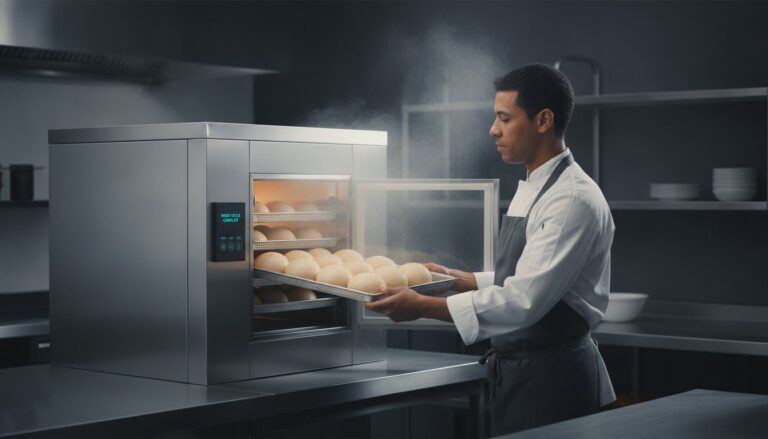
You have likely felt that sinking sensation when a busy morning rush hits and your dough simply isn’t ready, or worse, it has started to skin and collapse under the heat of a humid kitchen. In a high-volume environment, these small inconsistencies don’t just waste ingredients; they disrupt the rhythm of your entire team and slow down your service. We believe that your equipment should be as reliable as a neighbor’s helping hand, providing a steady foundation for every loaf and pizza crust you create.
Selecting the right commercial dough proofer is about more than just buying a heated cabinet. It’s about mastering the delicate balance of temperature and moisture to ensure a perfect rise every single time. Whether you’re navigating the new 2026 Department of Energy efficiency standards or looking for a unit that meets the updated NSF/ANSI 4-2025 sanitation requirements, we’re here to guide you through the selection process. You’ll learn how to increase your kitchen’s throughput and protect your production cycles from the unpredictability of different shifts. This guide provides the expert insight you need to choose durable machinery that stands up to 24/7 operations while delivering the seamless results your customers expect.
Key Takeaways
- Learn how precise climate control eliminates dough skinning and ensures a consistent rise across every shift.
- Discover how to balance energy efficiency with tray capacity to find a commercial dough proofer that perfectly matches your oven’s output.
- Identify the ideal footprint for your kitchen, from high-volume full-size cabinets to space-saving countertop models.
- Master essential maintenance protocols, including water filtration strategies to prevent mineral buildup and extend equipment life.
- Explore why industry-leading brands like Hobart are the gold standard for durability in demanding, 24/7 hospitality environments.
What is a Commercial Dough Proofer and Why is it Essential?
A commercial dough proofer is much more than a simple storage cabinet. It’s a precision-engineered environment designed to nurture the biological process of fermentation. In a bustling bakery or high-volume pizzeria, the air temperature and moisture levels can fluctuate wildly as ovens are opened and staff move about. A dedicated proofer acts as a sanctuary for your dough, providing a stable, climate-controlled space where yeast can thrive without interference from the chaotic kitchen atmosphere. Professional units differ significantly from residential options because they feature heavy-duty insulation and high-sensitivity sensors that maintain exact conditions even during 24/7 operations.
For any kitchen requiring high-volume bread production, this equipment is a non-negotiable asset. It serves as the bridge between mixing and baking, ensuring that the work you put into your dough isn’t lost to a drafty corner or a dry afternoon. When you treat your fermentation process with the same respect as your final bake, you create a product that stands out for its texture and flavor.
The Science of Fermentation: Temperature and Humidity
Yeast is a living organism that requires specific conditions to produce the carbon dioxide needed for a perfect rise. Most professional bakers find the sweet spot for yeast activity falls between 80°F and 95°F. Within this range, the fermentation process is efficient and predictable. However, heat alone isn’t enough. You also need a relative humidity level typically between 80% and 85% to keep the surface of the dough supple. Relative humidity is the measure of how much water vapor is in the air compared to the maximum amount the air could hold at that specific temperature. Without this moisture, the dough develops a skin that restricts its expansion and leads to a dense, inferior final product. Understanding the Proofing (baking technique) is essential for anyone looking to scale their production without sacrificing quality.
Consistency: The ROI of a Dedicated Proofing Cabinet
In the hospitality industry, consistency is the foundation of trust. If your morning bagels have a different texture than your afternoon loaves, your customers will notice. A commercial dough proofer removes the variables of drafts, seasonal weather shifts, and kitchen humidity. This predictability allows your team to stick to a tight production schedule, ensuring that dough is ready for the oven exactly when needed. When you can rely on a specific rise time, you eliminate the risk of over-proofing or dough collapse, which directly reduces food waste. Investing in high-quality equipment ensures that your kitchen throughput remains high and your standards stay uncompromisingly professional.
Key Features to Evaluate in a Commercial Proofing Cabinet
Choosing the right commercial dough proofer requires looking beyond the price tag to understand how the machine’s build impacts your daily routine. We believe that your equipment should work as hard as you do, and that starts with selecting a unit designed for the specific demands of your menu. The physical construction of the cabinet is your first line of defense against inconsistency. High-grade stainless steel is the professional standard for a reason; it resists the corrosion that naturally occurs in high-humidity environments and stands up to the bumps and scrapes of a fast-paced kitchen. When selecting your unit, keeping an eye on OSHA Bakery Equipment Standards ensures your kitchen remains a safe, compliant environment for your team while meeting federal safety protocols.
Insulation is another critical factor that separates professional-grade machinery from entry-level models. Insulated cabinets are the gold standard for energy efficiency because they trap heat and moisture inside, protecting your dough from the sudden temperature drops that happen when your kitchen doors swing open. While non-insulated models are lighter and more affordable, they are best suited for kitchens that already maintain a very stable ambient temperature. You also need to consider the heating mechanism. Forced air systems are excellent for circulating heat evenly across every rack, while traditional water pan systems provide a reliable, straightforward way to generate the humidity your yeast needs to thrive.
Capacity planning is where your kitchen’s ambition meets reality. It’s vital to match your proofer’s tray capacity to your oven throughput. If your proofer holds twenty trays but your oven can only handle five per hour, you risk over-proofing the final batches before they ever see the heat. Ensuring proper spacing between trays is equally important; crowded cabinets prevent air from circulating, leading to uneven fermentation that can ruin a whole day’s prep. If you’re looking to refine your entire production line, exploring our curated selection of restaurant equipment can help you find the perfect match for your kitchen’s unique rhythm.
Digital vs. Manual Control Systems
Digital interfaces offer the ultimate precision for modern bakeries. These systems allow you to program specific “recipes” and track humidity levels with surgical accuracy, which is essential for delicate artisanal breads. On the other hand, many of our partners find a sense of comfort in manual dials. These systems reflect a straightforward, neighborly simplicity; they are incredibly intuitive for staff of all experience levels and often allow for easier field repairs if a component ever wears out. You should choose the system that best fits your team’s technical comfort and your kitchen’s maintenance capabilities.
Reach-In vs. Pass-Thru Design
The physical flow of your kitchen dictates whether you need a reach-in or pass-thru model. Reach-in cabinets are the most common choice, fitting snugly into standard layouts and smaller footprints. However, if your kitchen is designed with a clear separation between prep and baking areas, a pass-thru design can be a game-changer. It allows your prep team to load dough from one side while your bakers pull it from the other. This streamlined movement reduces congestion in the kitchen and minimizes heat loss, as doors are only open for a few seconds at a time.
Sizing and Capacity: Matching Your Kitchen’s Ambition
Your kitchen’s floor plan is more than just a layout; it’s the stage where your team performs every day. Choosing the right size for your commercial dough proofer is about matching the scale of your dreams with the reality of your square footage. We often see talented chefs struggle because their equipment doesn’t quite align with their production goals. Full-size proofing cabinets are the undisputed workhorses for high-volume bakeries and commissaries. These units offer the vertical capacity to handle dozens of trays at once, ensuring you never run out of fresh product during a morning rush. They’re designed for the heavy lifting of the hospitality world, providing the stability needed for constant operations.
If your space is more intimate, such as a boutique cafe or a local pizzeria, a half-size or countertop model might be the perfect neighbor for your prep table. These units deliver the same professional climate control as their larger counterparts but with a much smaller footprint. For those navigating the tight corners of urban kitchen environments, under-counter units are a brilliant way to maximize efficiency without sacrificing quality. We also suggest looking for models equipped with universal slides. This simple feature offers the flexibility to use both standard sheet pans and hotel pans, making your workflow much more versatile as your menu evolves.
Calculating Your Throughput Requirements
Success in a professional kitchen is all about the rhythm of your production line. You need to know exactly how many loaves or pizza crusts your team must produce during peak service hours. It’s essential to balance your proofer’s capacity with the speed of your commercial restaurant equipment. If your proofer is too small, your ovens will sit empty; if it’s too large, your dough might over-proof while waiting for its turn in the heat. We recommend planning for about 20% more capacity than your current peak needs to allow for future growth without over-investing in unused floor space.
Mobile vs. Stationary Units
Flexibility is a key value in modern kitchen management. Many of our clients prefer mobile units equipped with heavy-duty casters. These allow you to roll the equipment away for thorough cleaning or to reconfigure your kitchen as your business grows. Stationary units, however, are ideal for permanent, high-stability installations where the workflow is set in stone. Always keep safety in mind when moving fully loaded cabinets. A cabinet filled with dough is heavy and top-heavy; ensuring your floors are level and your staff is trained on proper handling will keep your workplace safe and productive.
Maintenance and Longevity: Protecting Your Investment
Caring for your commercial dough proofer is a commitment to the quality of your product and the long-term health of your business. Because these machines operate in a permanent state of warmth and high humidity, they require a disciplined cleaning schedule to prevent mold and bacterial growth. We recommend wiping down the interior surfaces daily with food-safe sanitizers. This isn’t just about passing a health inspection. It’s about ensuring your dough never picks up off-flavors from a neglected environment. Following the updated NSF/ANSI 4-2025 standards for sanitation ensures your equipment remains a clean, safe harbor for your fermentation process.
You should also pay close attention to your door gaskets and seals. These humble components are responsible for maintaining climate integrity and energy efficiency. If a seal is cracked or brittle, you’re losing both heat and moisture, which leads to the inconsistent textures that frustrate your baking team. We suggest an annual calibration of your temperature and humidity sensors. Even the best digital systems can drift over time; a few degrees of error can be the difference between a perfect rise and a collapsed batch that ends up in the bin.
Managing Hard Water and Scaling
If you use a steam-generated proofer, water quality is your biggest silent enemy. Hard water leaves behind limescale that coats heating elements and clogs humidity sensors. This forces the machine to work harder and eventually leads to expensive component burnout. This is a common hidden cost in a busy restaurant kitchen. Installing a high-quality water filtration system is mandatory to protect your investment. While simple descaling can be handled by your staff, you should call a professional if you notice a significant drop in steam production or visible mineral deposits on the heating coils.
High-Volume Pizza Dough Management
In a high-volume pizzeria, your proofer acts as the essential staging area before your dough enters the intense heat of XLT Pizza Ovens. One of the most common issues we see is “blown” dough, where the yeast becomes overactive and creates large, unmanageable bubbles. You can prevent this by using your proofer to bring cold-fermented dough to room temperature safely and slowly. This precise temperature staging ensures a consistent bake and a superior crust texture every time. If you’re ready to upgrade your production line with machinery built for the long haul, our team can help you select the right commercial kitchen equipment for your specific menu needs.
Sourcing Professional Equipment with Southern Select Equipment
At Southern Select Equipment, we believe that your kitchen is the heart of your hospitality, and the tools you use should be as reliable as a trusted neighbor. We don’t just supply restaurant equipment; we curate a specific collection of heavy-duty, commercial-grade machinery designed to anchor your production line for years to come. When you invest in a commercial dough proofer through our team, you’re getting more than a climate-controlled box. You’re gaining a partner who understands the high-stakes nature of the food industry and the necessity of equipment that never quits. Our approach is rooted in integrity, ensuring that every piece of machinery we offer meets our strict standards for durability and performance.
One of the most strategic advantages our team at Southern Select Equipment offers is our focus on high-end, pre-owned equipment from legendary brands like Hobart, XLT, and EDGE. These manufacturers build machines to last for decades, not just years. By choosing used professional gear from Southern Select Equipment, you can maximize your startup budget and secure top-tier quality that might otherwise be out of reach. This allows you to allocate your resources toward other vital areas of your business while still benefiting from the legendary durability that these brands provide. We take the guesswork out of the used market by carefully vetting our inventory, so you can feel confident that your choice is a sound investment for your kitchen’s future.
The Synergy of Quality: Mixers, Proofers, and Ovens
A truly efficient kitchen operates as a cohesive system where each piece of equipment supports the next. A high-performance Hobart Mixer is the perfect companion to a professional proofer. When your dough is mixed with precision, the fermentation process in the proofer becomes much more predictable. This synergy reduces the need for constant staff adjustments and significantly lowers the risk of food waste. Our experts at Southern Select Equipment are here to help you consult on your specific menu needs, ensuring you find the right equipment combination to streamline your labor and elevate your final product.
Reliability in High-Stakes Environments
Southern Select Equipment provides national shipping and expert support because we believe professional kitchen operators everywhere deserve a partner they can rely on. Whether you are building a new bakery or expanding a pizzeria, our goal is to make the equipment sourcing process seamless and stress-free. We treat every transaction as a long-term partnership rather than a cold sale. Every piece of equipment in our warehouse is checked to ensure it lives up to the Southern Select Equipment reputation for quality and reliability. If you’re ready to upgrade your production line with equipment that won’t let you down, Contact us to find your next commercial proofer and experience our neighborly service for yourself.
Building a Foundation for Kitchen Excellence
Mastering the science of fermentation is the secret to delivering the consistent quality your customers crave. By maintaining the ideal balance of warmth and humidity, a commercial dough proofer ensures that every batch of dough reaches its full potential. You’ve seen how matching your proofer’s capacity to your oven’s throughput can streamline your operations and how proper maintenance protects your investment for years to come. These aren’t just technical choices; they’re the building blocks of a resilient, high-volume kitchen.
At Southern Select Equipment, we bring family-owned expertise and a curated selection of high-volume restaurant machinery to every partnership. We specialize in legendary brands like XLT and Hobart, ensuring you have access to the most durable equipment on the market. Whether you’re a local bakery or a national chain, our national shipping and professional support make the process seamless. Upgrade your kitchen with professional-grade equipment from Southern Select Equipment and feel confident that your production is in capable, friendly hands. We look forward to helping you reach your next milestone in culinary excellence.
Frequently Asked Questions
What is the difference between a proofer and a holding cabinet?
A proofer is specifically designed for the fermentation process by maintaining a warm, humid environment between 80°F and 100°F. In contrast, a holding cabinet is built to keep cooked food at safety-regulated temperatures, usually above 140°F. While they look similar, a holding cabinet lacks the precise humidity controls required for a commercial dough proofer to prevent skinning.
Do I need a water line for my commercial dough proofer?
You only need a dedicated water line if you choose an auto-fill model designed for high-volume production. Manual units have a water pan you fill by hand, but auto-fill models provide a seamless workflow for busy kitchens. If you install a water line, we recommend a filtration system to prevent the mineral buildup that can damage your heating elements over time.
Can I use a commercial proofer for slow cooking or warming?
No, you shouldn’t use a proofer for cooking or standard food warming. These units are engineered for lower temperatures and high moisture levels, which won’t reach the heat needed to safely cook raw food or keep it at food-safe holding temperatures. Using them for warming can also lead to soggy textures due to the excessive humidity required for dough fermentation.
How long does it typically take to proof dough in a professional cabinet?
Most professional bakers find that dough takes between 30 and 60 minutes to proof in a controlled cabinet. The exact timing depends on your dough’s hydration, yeast levels, and the specific temperature you set. A steady environment ensures that your production schedule stays predictable regardless of the seasonal humidity changes in your kitchen.
What temperature should a commercial proofer be set to for pizza dough?
For pizza dough, we recommend setting your proofer between 85°F and 95°F with a relative humidity of 80%. This range encourages a rapid, even rise without making the dough too sticky to handle. It is the perfect way to prep your crusts before they hit the intense heat of a high-performance conveyor or deck oven.
How much electricity does a full-size proofing cabinet consume?
A typical full-size unit consumes between 1,500 and 2,000 watts during active heating. However, models meeting the 2026 Department of Energy efficiency standards use smart sensors and better insulation to reduce this consumption. Choosing an Energy Star certified model can help lower your bakery’s energy costs, which often account for about 20% of total production expenses.
Is an insulated proofer worth the extra cost for a bakery?
Yes, an insulated cabinet is absolutely worth the investment for a busy bakery or restaurant. It provides a stable internal climate that isn’t affected by the ambient heat of your ovens or cold drafts from nearby doors. The extra insulation also means the heating element runs less frequently, which saves on energy and extends the life of your equipment.
How do I prevent my dough from forming a crust while in the proofer?
You prevent crust formation by keeping the relative humidity level consistently between 80% and 85%. This moisture keeps the surface of the dough supple, allowing it to expand freely as the yeast produces carbon dioxide. If your humidity is too low, the surface dries out and creates a skin that restricts the rise and ruins the final texture.