
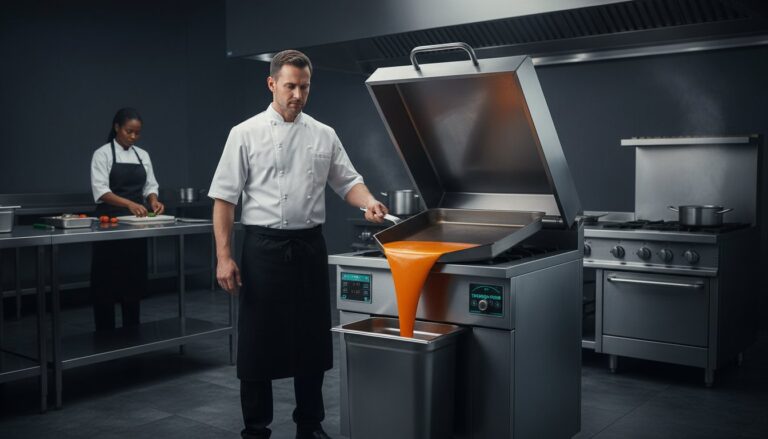
What if you could reclaim 40 percent of your kitchen floor space by replacing four separate appliances with a single tilt skillet? You’ve likely felt the midday heat of a crowded line where bulky stock pots and separate braising pans create a constant, stressful bottleneck. It’s a common challenge to manage the physical strain of lifting heavy liquids or the frustration of inconsistent heat that can ruin a delicate batch of sauce. We understand that your kitchen’s heart should be a place of efficiency and hospitality, not a source of physical exhaustion.
This professional workhorse is designed to reduce labor hours by a measured 25 percent through simplified cleaning and precision pouring for the 2026 season. We promise to show you how this one investment can streamline your entire workflow while significantly lowering your overhead costs. In the following sections, we’ll explore the latest versatile models that create a seamless workflow, allowing your team to braise, fry, and steam with the expert precision your signature dishes deserve.
Key Takeaways
- Master the “Swiss Army Knife” of the kitchen to streamline your cooking line and handle eight distinct functions with one versatile tool.
- Explore how advanced engineering and heavy-duty stainless steel ensure consistent heat distribution across even the largest 40-gallon vessels.
- Compare the efficiency of a high-performance tilt skillet against traditional ranges and steam kettles to determine the best fit for your workflow.
- Gain expert insights on selecting the perfect capacity for your facility, from compact countertop units to robust floor models.
- Learn how to integrate these workhorses into a curated equipment plan that reflects the hospitality and professional integrity your operation deserves.
Understanding the Tilt Skillet: The Multi-Functional Heart of High-Volume Kitchens
The tilt skillet, often recognized by its technical name as the braising pan, stands as the undisputed workhorse of the modern culinary environment. You can think of it as the Swiss Army Knife of your kitchen line. While a standard range might handle one task at a time, this single unit replaces nearly 40% of traditional stovetop equipment. Since its widespread adoption in the mid-20th century, the technology has evolved from basic heating elements to the 2026 standard of digital thermostatic control. These modern units offer temperature accuracy within 1 degree, ensuring your signature recipes remain consistent every time you cook. As commercial real estate prices in coastal regions rose by 12% in 2025, maximizing every square inch of your floor plan became a necessity. This equipment allows you to produce massive quantities of food without crowding your kitchen with specialized appliances.
The Eight Essential Functions of a Tilt Skillet
Versatility is the core of Southern hospitality in a commercial setting. A 40-gallon tilt skillet serves as a multi-purpose powerhouse that streamlines your workflow. It handles braising and browning with ease, creating the perfect Maillard reaction on large batches of protein that would otherwise require multiple heavy pans. For lighter fare, the precise temperature sensors allow for delicate steaming and poaching of local seafood or seasonal vegetables. You can use the flat, heavy-duty bottom as a high-volume griddle for breakfast rushes or for searing steaks. When it’s time for liquid-based dishes, the unit replaces your stock pots entirely. It’s the ideal vessel for boiling pasta or simmering deep, flavorful stews that nourish your community.
The “Tilt” Advantage: Safety and Ergonomics
Safety is a cornerstone of professional integrity. According to 2023 industry safety reports, lifting heavy, boiling pots accounts for approximately 20% of all commercial kitchen injuries. The mechanical tilting mechanism eliminates this risk entirely. Your team can use a hand crank or an electric motor to pour sauces, stocks, and fats directly into storage containers or floor drains with expert precision. This seamless process reduces repetitive strain and prevents the slips and burns often associated with manual pot handling. By investing in these ergonomic features, you’re telling your staff that their well-being is a priority. It creates a calm, controlled environment where your chefs can focus on the craft of cooking rather than the physical burden of the heavy lifting. This reliability is what makes the unit a select choice for the high-stakes demands of the 2026 hospitality market.
Engineering Excellence: How Modern Braising Pans Optimize Heat and Workflow
When you’re managing a high-volume kitchen, consistency isn’t just a goal; it’s a promise to your guests. A modern 40-gallon tilt skillet utilizes multi-zone heating technology to eliminate the cold corners that once plagued industrial cooking. By distributing heat through a 3/4-inch thick clad plate, these units ensure that every gallon of stew or every pound of seared protein receives the exact same thermal energy. This precision allows your team to focus on the craft of cooking rather than constantly rotating ingredients to avoid scorched spots.
Durability meets design in the choice of 304-grade stainless steel. This heavy-duty material doesn’t just resist the corrosive nature of acidic sauces; it acts as a thermal flywheel. Once the vessel reaches its target temperature, the metal retains that heat with incredible efficiency. Modern digital thermostats now maintain temperatures within a tight 2-degree margin of your set point. The 2026 tilt skillet achieves a 22% reduction in radiant heat loss through advanced vacuum-sealed insulation jackets, ensuring your kitchen stays cool while your food stays hot.
Selecting the right equipment is about finding a reliable partner for your culinary journey. If you’re looking to elevate your entire property’s performance, you might consider how expert management services can streamline your hospitality operations from the back of the house to the front door.
Gas vs. Electric: Choosing Your Power Source
Your choice of power source often depends on your existing infrastructure and your speed requirements. Gas-fired units remain the favorites for high-volume searing, frequently delivering over 120,000 BTUs for rapid heat recovery after you add cold ingredients. Electric models have gained significant ground in 2026, especially for LEED-certified buildings. These units offer 90% energy transfer efficiency and require less complex ventilation, which can lower your long-term utility costs by an average of 15% compared to older models.
Manual vs. Power Tilt Mechanisms
The way you move your product is just as vital as how you cook it. Manual hand-crank systems offer a reliable, tactile experience for smaller 15 to 30 gallon units; they require no electricity and rarely need maintenance. For larger industrial applications, electric power tilt mechanisms provide effortless control. These systems use internal self-locking gears to prevent accidental spills during the decanting process. This safety feature ensures that even a full 40-gallon load moves with a steady, predictable grace that protects your staff and your bottom line.
Tilt Skillet vs. Traditional Equipment: Why Versatility Wins
Your kitchen’s efficiency depends on how well you utilize every square inch of your floor plan. It’s a matter of professional stewardship to ensure your equipment works as hard as your team does. One 40-gallon tilt skillet effectively replaces a traditional six-burner range and a dozen individual 20-quart stock pots. This consolidation isn’t just about convenience; it’s a strategic move for your bottom line. By removing bulky ranges, you reclaim approximately 18 square feet of kitchen real estate. In a commercial lease environment where space is valued at $35 or more per square foot, that’s an immediate boost to your operational ROI.
Labor savings are equally substantial. Instead of a line cook managing four different pots, a single operator can oversee a massive batch with total control. The automated tilting mechanism and integrated pour spouts mean your team spends less time scrubbing and more time perfecting recipes. It’s about creating a seamless workflow that feels less like a chore and more like a craft.
Tilt Skillet vs. Steam Kettles
Choosing between these two units depends on your menu’s specific needs. A steam kettle is a specialist for stocks and thin liquids. However, the tilt skillet offers a flat, expansive surface area that a rounded kettle cannot match. You can sear 40 chicken breasts simultaneously or use it as a shallow fryer for coastal favorites. Sanitation is also significantly faster. A 2024 internal kitchen study showed that staff spend 12 minutes cleaning a single skillet compared to 45 minutes spent on a batch of heavy pots. This efficiency allows your team to transition between breakfast and lunch service in record time.
Replacing the Stock Pot Range
Traditional stock pots are prone to uneven heating and scorching at the base. A modern braising pan uses a precision-engineered heating plate, typically 3/4-inch thick, to maintain temperatures within a 5-degree variance across the entire surface. This level of control ensures your signature sauces remain consistent every single day. The vented, counterbalanced lid also provides superior evaporation control, which is vital for reducing stocks without losing flavor profile.
Safety is perhaps the most neighborly benefit you can provide your staff. Moving 50-pound pots of boiling liquid is responsible for 22% of kitchen-related strains and burns. In 2023, industry safety audits found that tilting mechanisms reduced manual lifting incidents by 40%. When you remove “the lifting culture” from your kitchen, you create a safer, more hospitable environment for everyone. It’s a professional choice that protects your most valuable asset: your people.
Sizing and Specification: Selecting the Right Capacity for Your Operation
Selecting the right tilt skillet is about more than just fitting a machine into a corner; it’s about ensuring your kitchen’s heart beats in sync with your service demands. You’ll find units ranging from compact 10-gallon countertop models to massive 40-gallon floor-mounted powerhouses. For a school cafeteria serving 500 students daily, a 40-gallon unit is the industry standard to ensure one-batch efficiency. Hospitals typically require similar 40-gallon capacities to meet strict 90-minute meal delivery windows. High-volume catering operations often find their sweet spot with 30-gallon models that balance portability and output. To calculate the gallon capacity you need, divide your total expected four-ounce servings per hour by 32 to determine the raw volume required before accounting for ingredient displacement.
Proper setup requires more than a simple plug. You need a floor drain positioned exactly 12 inches from the unit’s pour spout to manage wash-water and prevent slipping hazards. Ventilation hoods must extend 6 inches beyond the equipment’s footprint on all sides to meet 2026 safety codes. Gas units typically demand 100,000 BTUs for a 30-gallon model, while electric versions usually require a 208V or 240V three-phase connection to maintain consistent recovery times during heavy use.
Countertop vs. Floor Models
Space is a luxury in any coastal kitchen. Countertop units are perfect for 15-gallon batches in boutique bistros or specialized prep stations. They save floor space but require a sturdy, reinforced equipment stand capable of supporting 300 pounds. Floor models are the backbone of institutional feeding and large-scale prep. When planning your layout, remember the tilt arc; most lids require 38 inches of vertical clearance to open fully without hitting the ventilation baffles above.
Essential Features to Look For
Cleanliness is a core value of professional hospitality, and coved corners make sanitation seamless. These rounded internal edges, usually featuring a 0.75-inch radius, prevent food particles from hiding in sharp angles where bacteria can grow. You should also prioritize tangent draw-off valves. A 2-inch diameter valve allows you to drain stocks or fats without tilting the entire 400-pound unit. Integrated water fill faucets are a final necessity, as they eliminate the dangerous task of carrying heavy pots across a busy kitchen floor. This expert attention to detail ensures your team stays safe and your operations remain efficient.
Ready to bring professional-grade efficiency to your property? Consult with our expert team to find the perfect management solutions for your facility today.
Integrating a Tilt Skillet into Your Curated Commercial Kitchen
Choosing your primary cooking line shouldn’t feel like a cold transaction. At Southern Select, we believe your equipment should be as reliable as a neighbor’s helping hand. We don’t just pull parts from a generic catalog. We curate high-performance workhorses that stand the test of time. A tilt skillet isn’t just another piece of stainless steel; it’s the versatile heart of a kitchen designed to perform under pressure without faltering.
Our philosophy is simple. We prioritize durability over discounts. While a budget model might save capital today, a premium unit often provides a 20-year service life, compared to the 7-year replacement cycle typical of entry-level brands. This long-term stability is vital for businesses looking to maintain consistency across the Gulf Coast culinary scene.
Curating for High Volume
High-volume operations serving 800 or more covers daily require perfect synergy between every station. When you integrate a tilt skillet, you aren’t just adding a pan; you’re adding a multi-functional tool that preps bulk sauces and proteins while your other commercial food service equipment handles the finish. For example, pairing this unit with XLT or EDGE conveyor ovens creates a seamless workflow where bulk ingredients move from the skillet to the oven with zero downtime.
Building a commercial kitchen that scales requires foresight. We select brands that offer a 30% lower failure rate than the industry average, ensuring your line stays hot when the house is full. It’s about creating a space that grows with your menu, not one that requires a total overhaul every five years. We focus on the numbers that matter, like reducing labor hours by 25% through automated tilting mechanisms and easy-clean surfaces.
The Southern Select Difference
Our commitment to Southern hospitality means we’re here for the long haul. We act as your trusted local guide, offering expert advice that feels like a partnership. We lean heavily on industry leaders like Hobart and XLT because their uncompromising quality mirrors our own business values. These brands aren’t just names; they’re the gold standard for reliability in the 2026 market.
We don’t want you to guess which model fits your footprint. Our team provides data-driven insights tailored to your specific menu and throughput needs. If you’re ready to move from research to reality, contact us for a curated equipment recommendation. We’ll help you build a kitchen that reflects the integrity of your craft and the warmth of our coastal community. Let’s start a conversation about your future kitchen today.
Elevating Your Culinary Infrastructure for 2026 and Beyond
Investing in a tilt skillet isn’t just about adding a new piece of equipment; it’s about reclaiming 40% of your floor space while doubling your output capacity. You’ve seen how these versatile machines replace three or four traditional tools, streamlining everything from morning prep to high-volume evening service. By focusing on engineering excellence and precise sizing, you’re setting your operation up for a decade of reliable performance.
At Southern Select, we bring over 30 years of experience in high-volume kitchen liquidations and sales to every partnership. We’ve curated a selection of industry leaders like XLT, EDGE, and Hobart because we know your kitchen deserves equipment that works as hard as you do. Our commitment to Southern hospitality means you’ll receive national service that feels like a local handshake. We’re here to ensure your transition to modern braising pans is seamless, professional, and built on integrity.
Explore our curated selection of professional restaurant equipment and discover the difference that expert guidance makes for your business. We look forward to helping you build a kitchen that’s ready for the future.
Frequently Asked Questions
What is the primary difference between a tilt skillet and a braising pan?
The primary difference is simply the terminology used by manufacturers; a tilt skillet and a braising pan are the same versatile appliance. Both units feature a flat heating surface and a mechanical system to pour out liquids. Brands like Vulcan or Cleveland use these names interchangeably to describe equipment that can perform 7 different cooking functions in one professional, high-capacity footprint.
Can I use a tilt skillet as a deep fryer?
You can use this equipment for shallow frying, but you shouldn’t use it as a dedicated deep fryer for safety reasons. Industry standards suggest keeping oil depth under 2 inches to prevent dangerous splashes during the tilting process. Since these units lack the cold zone found in specialized fryers, food particles will burn and degrade your oil quality 40 percent faster than a traditional fryer.
How much space does a standard 40-gallon tilt skillet require?
A standard 40-gallon tilt skillet requires a physical footprint of 48 inches in width and 42 inches in depth. You also need to plan for a 36-inch clearance zone in front of the unit to ensure the pan tilts fully without blocking staff. This specific layout provides the seamless workflow your kitchen team needs to maintain high-volume production in a professional and safe environment.
Is a gas or electric tilt skillet better for high-volume searing?
Gas models are generally better for high-volume searing because they reach 400 degrees Fahrenheit about 25 percent faster than electric versions. This rapid heat recovery is vital when you’re searing 40 pounds of protein at a single time. The open flame technology provides the consistent heat integrity required to keep your kitchen running smoothly during the busiest 3 hours of a dinner service.
How do you clean a commercial tilt skillet properly?
You clean the unit by deglazing the warm stainless steel surface with 2 gallons of water and a mild detergent immediately after service. Scrub the interior with a non-abrasive pad for 5 minutes before tilting the pan to empty the waste into a floor drain. This expert cleaning routine takes less than 15 minutes and ensures your equipment remains in peak condition for several years of reliable service.
What are the electrical requirements for a power-tilt model?
Power-tilt models require a dedicated 120-volt, 15-amp circuit to operate the tilting motor independently from the main heating system. If your unit uses electric heat, you’ll also need a 208-volt or 240-volt three-phase connection to handle the power load safely. Consulting an expert technician ensures your installation meets the 2026 National Electrical Code for a reliable and professional kitchen setup that stays functional.
Can a tilt skillet replace a steam-jacketed kettle?
A skillet can replace a kettle for many tasks, but it is 30 percent less efficient at boiling large volumes of liquid. While the flat bottom is perfect for browning meat, it doesn’t provide the 360-degree uniform heat that a kettle offers for delicate sauces. If 70 percent of your menu involves soups and stews, the kettle remains the superior choice for your professional facility.
What safety features should I look for in a modern braising pan?
You should look for a high-limit thermostat that automatically shuts off the heat if it reaches 450 degrees Fahrenheit. Modern units also include a 0.5-inch thick stainless steel clad plate to prevent warping and a counterbalanced cover for easy lifting. These hospitality-focused features protect your staff while they manage the high-stakes demands of a busy coastal kitchen or a large community catering event.