


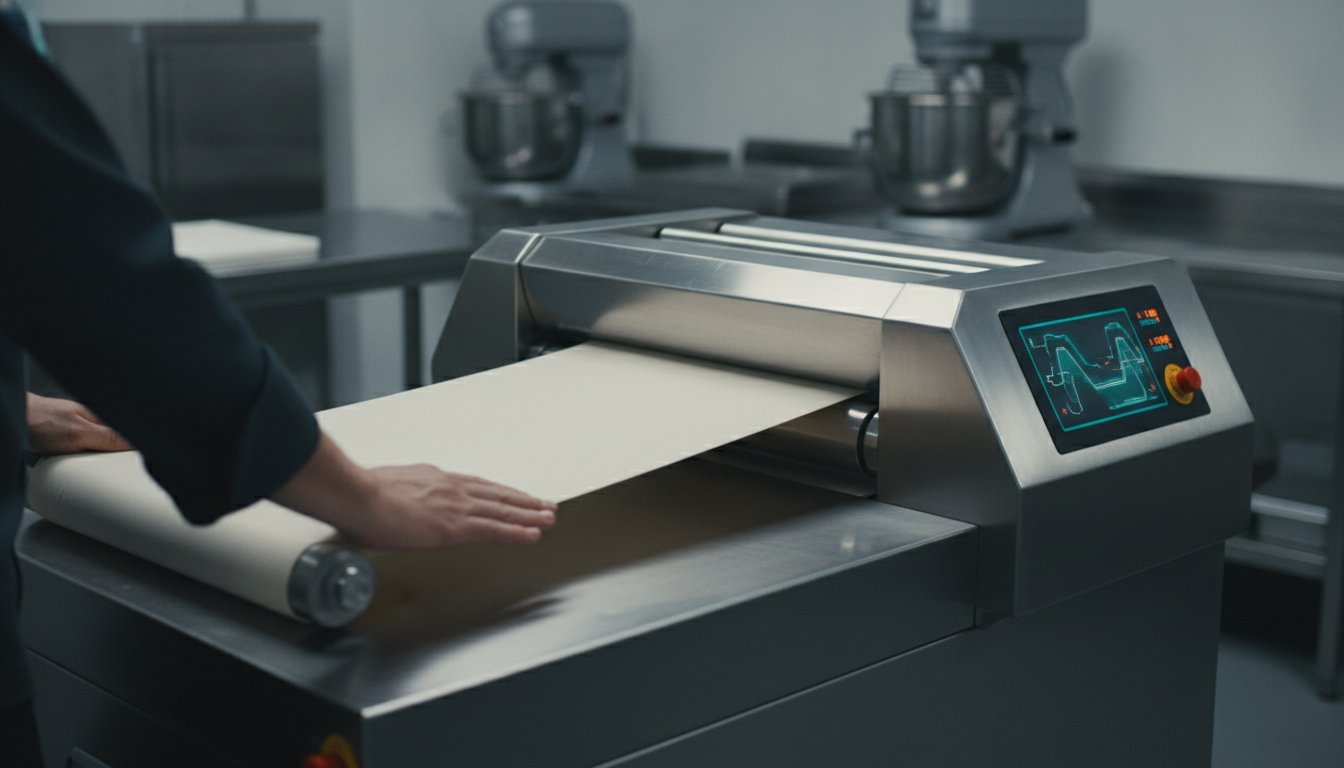
A rolling pin might be a symbol of tradition, but in a high-volume kitchen, it’s often the hidden bottleneck holding your team back from true excellence. You know the frustration of watching a busy shift slow down because the dough thickness is off, or seeing labor costs climb as your staff spends hours on manual prep. Choosing the right commercial dough sheeter is about more than just speed; it’s about the reliability of serving a perfect product to every guest. We agree that your team’s energy is a precious resource that shouldn’t be wasted on repetitive physical strain.
This guide will help you master the technical nuances of modern equipment to eliminate manual labor and achieve flawless consistency. You’ll learn how to navigate the 2026 market, including the importance of NSF/ANSI 8 sanitation standards and the rise of automation in mid-scale bakeries. We’re here to help you find a solution that ensures faster ticket times and a seamless operation for years to come. By the end, you’ll have the expert knowledge needed to select a machine that scales with your growth and maintains your high standards of hospitality.
Running a high-volume kitchen feels like conducting an orchestra; every player must be perfectly in sync to create a masterpiece. When you rely on hand-rolling, you’re introducing a variable that’s difficult to control. A commercial dough sheeter acts as a reliable partner on your prep line, removing the guesswork and physical toll that comes with manual labor. It’s the difference between a kitchen that struggles to keep up and one that operates with the steady, inviting rhythm of true Southern hospitality. By automating the flattening process, you ensure that your signature crust is identical every single time a plate leaves the kitchen.
Consistency is the foundation of your brand’s integrity. If one crust is thin and another is thick, your bake times will fluctuate, leading to uneven results and frustrated guests. Using professional dough sheeting technology allows you to dial in the exact thickness required for your recipe. This precision also has a direct impact on your bottom line. Uniform thickness means better portion control, preventing the accidental “product giveaway” that happens with oversized, hand-rolled dough. It keeps your food costs predictable and your margins healthy, even as you scale production from 50 pizzas a day to over 500.
Protecting your team is just as vital as protecting your profits. Manual rolling is a grueling task that leads to physical fatigue and repetitive motion injuries over time. When your staff isn’t exhausted from the physical strain of the rolling pin, they have more energy to focus on the guest experience. A sheeter creates a safer, more sustainable environment where your team can thrive without the risk of burnout or injury.
Hand-rolling dough is a time-intensive process that eats away at your labor budget. While a skilled cook might take several minutes to prep a single large pizza skin, a sheeter completes the task in seconds. Many high-volume shops find they save 15 to 20 hours of labor per week simply by making the switch. This automation allows your most talented chefs to step away from the prep table and focus on the artistry of topping and finishing your dishes. The ROI of a commercial dough sheeter is realized the moment your weekly labor savings exceed the equipment’s operational cost.
Your guests return because they love your specific “crust experience,” and that experience shouldn’t change based on who is working the line. A sheeter standardizes the output regardless of the operator’s experience level. The machine applies even pressure that respects the dough’s structure, which is essential for proper gluten relaxation and a superior crumb. This uniformity is especially critical if you use conveyor ovens. Because the heat and speed are fixed, a uniform dough thickness ensures every item is baked to perfection without the risk of raw centers or burnt edges.
Selecting the right mechanical configuration for your kitchen is much like choosing the right partner for a long-term project; the fit must be exact to ensure success. A commercial dough sheeter comes in several distinct styles, each designed to handle specific textures and production volumes. One-stage sheeters offer a straightforward approach with a single set of rollers. They’re excellent for high-speed operations focusing on standard doughs like tortillas or flatbreads where a single pass achieves the desired thickness. While these machines are fast, they require a bit more manual guidance to reach specific diameters for larger items.
For most professional environments, electric power is the only viable choice. Manual sheeters might work for a small home kitchen, but they lack the torque and steady speed required to maintain a busy ticket line. Motorized units provide the relentless reliability needed to keep your kitchen moving during a Friday night rush. Safety is another major factor in this choice. High-quality motorized equipment is built to meet strict OSHA safety standards for bakery equipment, protecting your team with emergency stops and finger guards that manual alternatives often lack. If you’re looking to upgrade your line, you can explore our curated equipment selection to find a model that prioritizes both safety and performance.
A two-stage commercial dough sheeter is often considered the gold standard for pizzerias. This model uses two sets of rollers positioned at an angle to each other. The first set flattens the dough into an oval, and as it drops to the second set, the operator or the machine gives it a slight turn. This process creates a perfectly round, uniform crust with minimal effort. It’s a vital component of modern commercial restaurant equipment setups because it handles various hydration levels without sticking. You can switch between different dough diameters quickly, ensuring your small, medium, and large pizzas all share the same consistent quality.
When your menu includes delicate, laminated items like croissants or puff pastry, a reversible sheeter is your powerhouse. These machines use a conveyor belt system that moves the dough back and forth through the rollers. This multi-pass method allows you to gradually reduce thickness without tearing the intricate layers of butter and flour. High-capacity floor models are ideal for large dough blocks, providing the surface area needed to manage long sheets of pastry without compromising their structure. While countertop versions exist for smaller cafes, a floor-mounted unit offers the stability and volume required for a full-scale bakery operation.
Investing in a commercial dough sheeter is about more than just checking a box on your equipment list. It’s about finding a machine that stands up to the rigors of a high-volume shift without breaking a sweat. You need a motor with enough horsepower to handle cold, stiff dough without stalling. If the motor struggles, your production line grinds to a halt during your busiest hours. We recommend looking for a motor with at least 1/2 to 1 horsepower for standard pizzerias, while high-volume bakeries might require even more power to keep things moving. The rollers themselves are the heart of the machine. You’ll often choose between synthetic rollers, which are excellent for non-stick performance, or chrome-plated steel, which offers incredible durability for heavy-duty use.
Safety and sanitation are the hallmarks of a well-managed kitchen. Your team deserves equipment that protects them with OSHA-compliant guards and intuitive emergency stops. Beyond safety, the ease of cleaning dictates how well the machine is maintained over its lifespan. Features like removable scrapers allow your staff to clear away flour and dough buildup in seconds. This prevents bacterial growth and ensures every batch remains pure. NSF/ANSI 8 certification is the industry standard you should look for, confirming that the machine’s design prevents food-trap areas and uses non-toxic, corrosion-resistant materials.
A sturdy frame is the backbone of any reliable commercial kitchen. While cheaper models might use plastic gears or lightweight housings, professional-grade sheeters utilize all-metal drives and stainless steel frames to handle constant vibration. Plastic gears are common failure points that can lead to expensive downtime during peak hours. Investing in metal-to-metal contact ensures a longer lifespan and more predictable performance. NSF certification is vital because it guarantees that the equipment is constructed for easy cleaning and meets strict public health standards for food protection.
Precision is what separates a good crust from a great one. Look for machines that offer micro-adjustments, allowing you to fine-tune the gap between rollers down to the millimeter. This level of control is essential if your menu features everything from thin-crust pizza to thicker flatbreads. Modern non-stick roller surfaces improve efficiency by reducing the amount of dusting flour needed. This keeps your kitchen cleaner and prevents your dough from becoming too dry or tough. High-quality rollers also manage heat effectively. This ensures the dough doesn’t warm up and prematurely activate the yeast during the sheeting process, which would ruin the final texture of your baked goods.
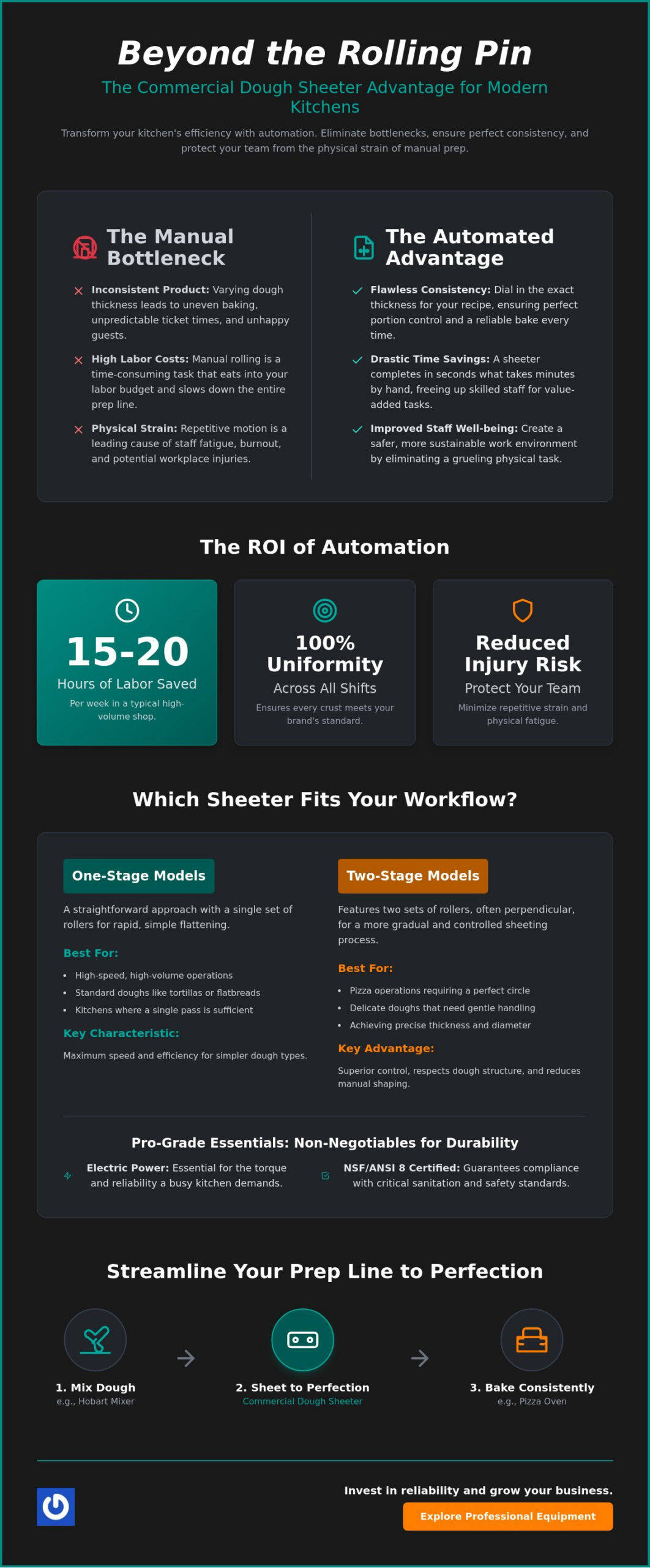
Think of your kitchen as a well-oiled machine where every station supports the next. A commercial dough sheeter isn’t just a standalone tool; it’s a vital bridge between your raw ingredients and the final bake. Your workflow starts with the consistent power of Hobart Mixers, where your dough develops the necessary elasticity. Once the dough has rested, it should move directly to the sheeter. By positioning these units in a linear fashion, you minimize the physical steps your prep cook takes. This layout allows them to move from mixing to sheeting to the assembly station without crossing paths with the rest of the line, keeping the kitchen’s rhythm steady and calm.
The true efficiency of a sheeter is realized when it’s paired with high-performance XLT or EDGE conveyor ovens. Because the sheeter provides a perfectly uniform thickness, your conveyor oven can be dialed in to a precise speed and temperature. This eliminates the need for “checking the bottom” of every pizza, as the consistency of the dough ensures a predictable bake every time. Training your staff is the final piece of the puzzle. Teach your team to feed the dough smoothly and catch it with open palms rather than fingertips. This simple technique prevents tearing and ensures the dough’s structure remains intact as it moves toward the oven. If you’re looking to upgrade your production capacity, browse our full range of restaurant equipment to find the perfect fit for your line.
A well-integrated sheeter is the engine that feeds a high-volume restaurant kitchen. To keep quality high, manage your dough temperature carefully. If the dough is too cold, it may resist the rollers; if it’s too warm, it can become sticky. We recommend using speed racks to organize your sheeted dough with parchment separators. This allows you to prep hundreds of skins during quiet hours, so they’re ready to be topped and fired the moment the dinner rush begins.
Flour is a necessity for baking, but it’s the enemy of mechanical gears. Daily cleaning protocols are essential to prevent flour dust from migrating into the motor or gumming up the rollers. Use a soft brush to clear the scrapers and wipe down the exterior with a damp cloth. On a monthly basis, inspect the drive belts for signs of wear and ensure the rollers are still perfectly aligned. If you notice the dough is consistently thicker on one side, it’s time to call a professional for a calibration service. Regular care ensures your commercial dough sheeter remains a reliable partner for years to come.
Opting for a bargain might feel like a win for your initial budget, but in a high-stakes kitchen, generic equipment often carries a hidden price tag. A low-cost commercial dough sheeter might look the part on a website. It usually lacks the internal fortitude to handle the relentless pressure of a 24/7 operation. When a machine fails during a peak Friday night rush, the cost of lost revenue and staff frustration far outweighs any initial savings. You deserve a partner who understands the stakes. Investing in professional-grade machinery ensures that your kitchen remains a place of productivity and calm, rather than a source of constant mechanical stress.
Expert guidance is the secret ingredient to a successful equipment transition. Choosing a sheeter involves more than just comparing spec sheets; it requires an understanding of how that machine will interact with your specific dough recipes and your team’s workflow. We believe in providing a curated experience that removes the guesswork from your purchase. By selecting equipment that is built to last, you’re not just solving today’s production bottleneck. You’re building a foundation that allows your business to grow without the fear of your hardware holding you back.
Our approach is rooted in the values of Southern hospitality and expert reliability. We don’t just sell machines; we act as a “Trusted Local Guide” for operators who demand the very best. We carefully curate high-performance brands like Hobart and XLT because they have proven their integrity in the most demanding environments. This dedication to quality helps national operators and local pizzerias alike source the right restaurant supplies for long-term success. We’re here to make sure you feel like you’re in capable, friendly hands throughout the entire process.
When you view your commercial dough sheeter as a long-term asset rather than a simple expense, your perspective on value changes. A professional machine offers the peace of mind that comes from industry-leading durability and consistent performance. It’s an investment in your team’s well-being and your brand’s reputation for quality. As your volume increases, your equipment should be a catalyst for growth, not a limitation. If you’re ready to elevate your kitchen’s consistency and volume, it’s time to partner with a team that cares about your results as much as you do. Consult with our experts at Southern Select Equipment today to find the perfect solution for your high-volume needs.
Mastering the technical nuances of your equipment is the first step toward a kitchen that runs with effortless precision. We’ve explored how the right mechanical choice, whether it’s a reversible model for delicate pastries or a two-stage unit for pizza, eliminates the physical strain of manual labor while guaranteeing a flawless bake. Integrating a commercial dough sheeter into a workflow that features high-torque Hobart mixers and efficient conveyor ovens ensures your team can focus on the guest experience rather than the prep table. Reliability isn’t just about the machine; it’s about the peace of mind that comes from knowing your line is ready for any rush.
At Southern Select Equipment, we’re dedicated to helping you scale your vision with integrity and expert care. We specialize in high-volume brands like XLT and EDGE, providing the heavy-duty foundation your operation needs to thrive. With our national shipping and deep expertise in professional sourcing for the hospitality industry, we’re ready to act as your trusted partner. Upgrade your kitchen with professional-grade equipment from Southern Select Equipment and feel the reassurance of being in capable, friendly hands. We look forward to helping you create a seamless, high-performance kitchen that serves your community for years to come.
A commercial dough sheeter uses precision-engineered rollers with adjustable gap settings to achieve an exact, uniform thickness every time. While some people use the terms interchangeably, a standard dough roller often lacks the micro-adjustment capabilities and high-torque motors required for high-volume repeatability. Sheeters are designed to handle the heavy-duty demands of a professional kitchen, ensuring your crusts are identical across every shift.
You can process gluten-free dough in a sheeter, but you must prioritize strict sanitation to prevent cross-contamination. Gluten-free mixtures are often stickier or more brittle than traditional wheat dough, so using synthetic, non-stick rollers is a smart choice for these recipes. Many hospitality operators choose to dedicate a specific machine to gluten-free production to ensure total safety and peace of mind for their guests.
A floor-model reversible sheeter typically requires a footprint of about 8 to 10 feet when the conveyor wings are fully extended. It’s important to leave enough clearance for the operator to move comfortably at both ends of the machine. Most modern units feature folding wings, which allow you to save significant floor space and keep your kitchen organized when the machine isn’t in active use.
A two-stage commercial dough sheeter is the superior choice for thin-crust pizza because it creates a uniform diameter with minimal manual handling. The first set of rollers flattens the dough into an oval, and the second set stretches it into a perfect circle. This process is much faster than using a one-stage model, which requires the operator to manually rotate the dough between passes to achieve a round shape.
High-quality rollers are built to last for several years under normal commercial use. You’ll likely need to replace the scrapers much sooner, as they are designed to wear down over time while protecting the roller surface from damage. Regular cleaning and avoiding the use of metal tools near the rollers will significantly extend the lifespan of these critical components and maintain your machine’s integrity.
Heavy-duty floor models frequently require a 208V or 240V electrical connection to support their powerful, high-torque motors. Smaller countertop models often run on a standard 115V outlet, making them much easier to integrate into an existing kitchen layout. Always check the manufacturer’s specifications before your equipment arrives to ensure your electrical panel can handle the load safely and reliably.
Sheeters can handle high-hydration doughs effectively if you use non-stick roller materials and a light, consistent dusting of flour. The key is managing the dough’s temperature; if it’s too warm, it will stick regardless of the roller type. Synthetic rollers are generally more forgiving with wetter doughs than chrome or stainless steel alternatives, making them a favorite for high-hydration artisan recipes.
The most efficient way to clean your machine between batches is to use a stiff, dry brush to clear away flour and dough fragments. Removable scrapers make this process much easier, as they can be taken to a sink for a quick, thorough wash. Avoid using excessive water directly on the machine’s body to protect the internal motor and electrical components from moisture damage.




Leave a Reply