


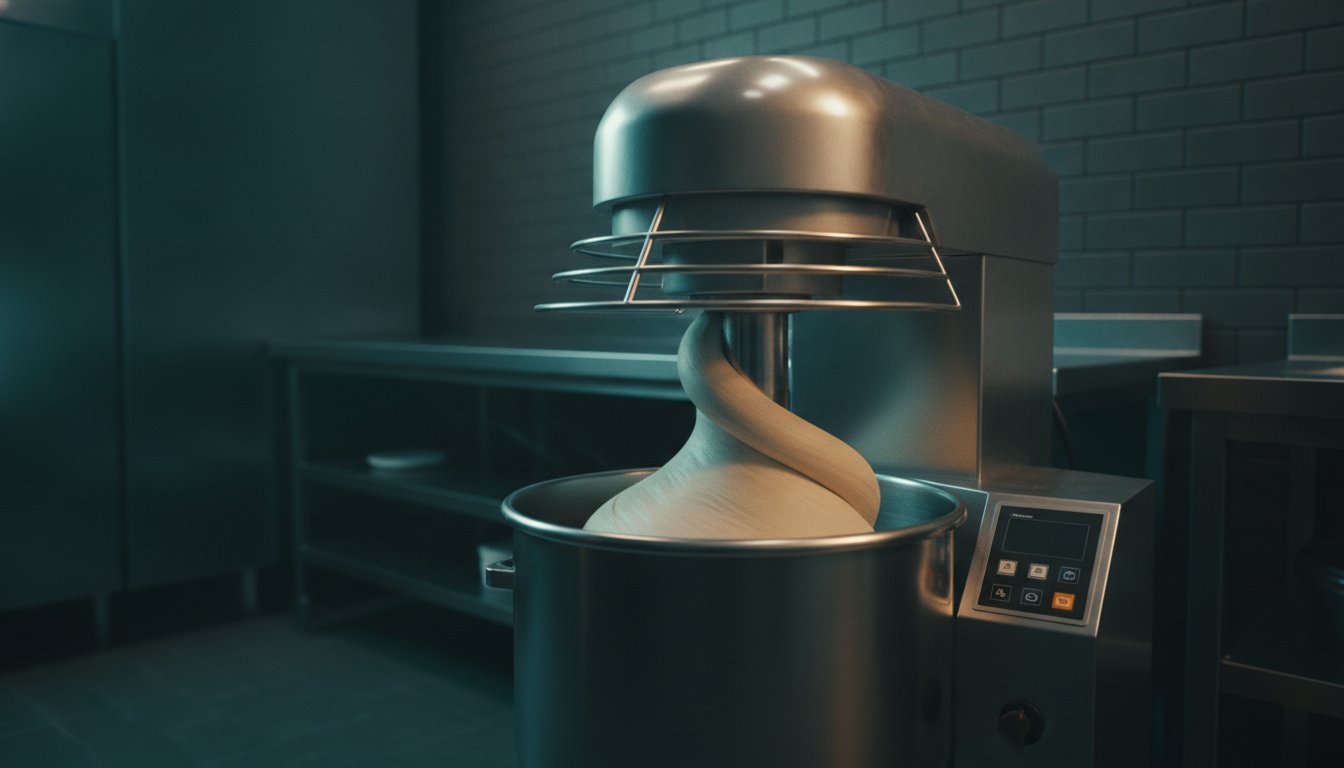
Your next commercial dough mixer is far more than a simple piece of kitchen hardware. It’s the heartbeat of your daily operations and the silent partner in every artisan loaf or thin-crust pizza you serve to your neighbors. We know the stress of a motor seizing during the dinner rush or the frustration of inconsistent gluten development that slows down your prep team. You deserve a kitchen that runs with the warmth of Southern hospitality and the precision of an expert operation.
This guide will help you master the technical nuances of modern mixing so your business can scale with efficiency and total reliability. You’ll learn how to match motor torque to your specific dough hydration and understand why 2026 safety features like advanced interlocks are now non-negotiable for a professional workspace. We’re going to examine the latest in durable planetary and spiral designs to ensure you invest in a workhorse that truly lasts for decades.
A professional-grade commercial dough mixer is the silent engine of your bakery, designed as a high-torque industrial machine built to withstand the relentless demands of a busy kitchen. While a home mixer might look similar on a countertop, the internal engineering is worlds apart. We view kitchen reliability through the lens of Southern hospitality; it’s about putting your people first by providing tools that simply don’t quit. When your equipment is dependable, your staff can focus on the artistry of the bake rather than the frustration of a mechanical failure. This reliability is the bedrock of a successful kitchen, turning a stressful morning into a seamless production.
Securing your workflow starts with understanding that the right mixer is a long-term partner. It ensures your prep team can move with confidence through every shift. By investing in heavy-duty machinery, you’re not just buying a tool; you’re securing the future of your establishment. This creates a sense of calm and competence that is vital for any growing business in our community.
The primary distinction lies in the motor duty cycle. Residential models are built for intermittent use, whereas a professional commercial dough mixer is engineered for continuous operation. Inside these machines, you’ll find all-metal transmissions and heavy-duty gears that won’t strip under the pressure of a stiff bagel dough. Residential units often rely on plastic components that quickly fail under the intense heat of a professional kitchen. Additionally, commercial units carry NSF certification. This standard ensures the machine is easy to sanitize and meets the strict requirements of local health inspections, keeping your business in good standing and your customers safe.
Precision mixing directly influences your dough’s temperature and fermentation. High-torque motors allow for efficient mixing without generating excessive frictional heat, which can prematurely activate yeast and ruin your crumb structure. Understanding the mechanics of Planetary and Spiral Mixers helps you find the perfect balance in gluten development. The right mixer provides the control needed to avoid under-mixing or over-working the flour. When your equipment delivers the same results every morning, you build the kind of consistency that turns a first-time visitor into a lifelong regular. This level of expert management in your kitchen ensures that every loaf or crust represents your brand’s integrity and commitment to quality.
Choosing a commercial dough mixer is a defining moment for your kitchen. It is a commitment to your craft and a promise of consistency to the neighbors who visit your establishment every day. To make an expert choice, you must look beyond the stainless steel exterior and understand the physics of the mix. The mechanical action of your machine determines how much heat is transferred to your ingredients and how efficiently gluten develops. Whether you are running a boutique bakery or a high-volume pizzeria, matching the mechanism to your menu is the first step toward a seamless operation.
The decision often comes down to versatility versus specialization. When you understand the physics of your prep kitchen, you can make decisions that protect your staff and your bottom line. If you find yourself at a crossroads, the experts at Southern Select Equipment can help you curate a kitchen setup that feels like home while performing like a powerhouse.
Planetary mixers are the generalists of the culinary world. Named for their motion, the agitator rotates on its own axis while also revolving around the stationary bowl, much like a planet orbiting a sun. This dual-rotation ensures every inch of the bowl is reached. These machines are prized for their versatility because they feature a “hub” for interchangeable attachments. You can easily switch between a wire whip for meringues, a flat beater for cookie dough, or a hook for bread. For a community bakery producing a wide range of sweets and light breads, this flexibility is invaluable. It allows one machine to handle multiple roles, saving precious floor space.
For pizzerias and artisan bread shops, the spiral mixer is the gold standard. Unlike planetary models, the bowl itself rotates while the spiral hook remains relatively stationary. This specialized action is remarkably efficient at handling large batches of low-hydration, heavy dough. Because the hook only works a small portion of the dough at a time, it generates significantly less frictional heat. This keeps your dough temperature stable, which is vital for long fermentation cycles. Following OSHA Safety Standards for Bakery Equipment is especially critical with these high-torque machines to ensure your staff remains safe while managing massive production volumes. Spiral mixers are built for endurance, allowing you to scale your production without sacrificing the integrity of your signature crust.
Sizing your equipment correctly is about more than just fitting ingredients into a bowl. It is about ensuring your motor has the heart to handle the weight of your ambition. Many kitchen owners fall into the “quart trap,” assuming that a 20-quart bowl can handle 20 pounds of any dough. In reality, the weight and stiffness of your recipe dictate the load on the motor. Selecting a commercial dough mixer that is too small for your heaviest batch won’t just slow you down; it will lead to motor stalling and catastrophic gear failure. We want your kitchen to feel like a place of steady, reliable progress, not a site for frequent repairs and frustration.
The most critical number in your kitchen isn’t your daily revenue, but your Absorption Ratio. You calculate this by dividing the water weight by the flour weight and multiplying by 100. Stiff doughs with a low AR, such as bagels or thin-crust pizza, put immense strain on the transmission. If your dough has a low hydration level, you must de-rate the mixer’s advertised capacity to prevent burnout. Manufacturers typically use a 60% Absorption Ratio as the standard baseline for their capacity charts because it represents the average hydration of most common white breads. If your recipes fall below this 60% mark, your 30-quart mixer might only safely handle the load of a 20-quart model.
A smart investment considers where your business will be in three years, not just where it is today. We recommend the 75% rule: never plan to run your mixer at more than 75% of its rated capacity during your standard batches. This headroom protects the motor during peak hours and allows for slight variations in ingredient temperature or humidity. While a 20-quart countertop model is perfect for small cafes or specialty batches, high-volume pizzerias often require the stability of 60-quart or 80-quart floor models. Planning for these peak turnover rates ensures your staff isn’t waiting on the machine to finish a cycle.
Under-sizing your equipment is a quiet budget killer that often voids manufacturer warranties. Beyond the mechanical risks, these machines are powerful industrial tools that require expert handling. Because of the high torque and potential hazards, federal child labor laws strictly prohibit minors from operating or cleaning these mixers. Choosing a machine with the right power and capacity for your specific hydration levels ensures a safe, compliant, and productive environment for your entire team.
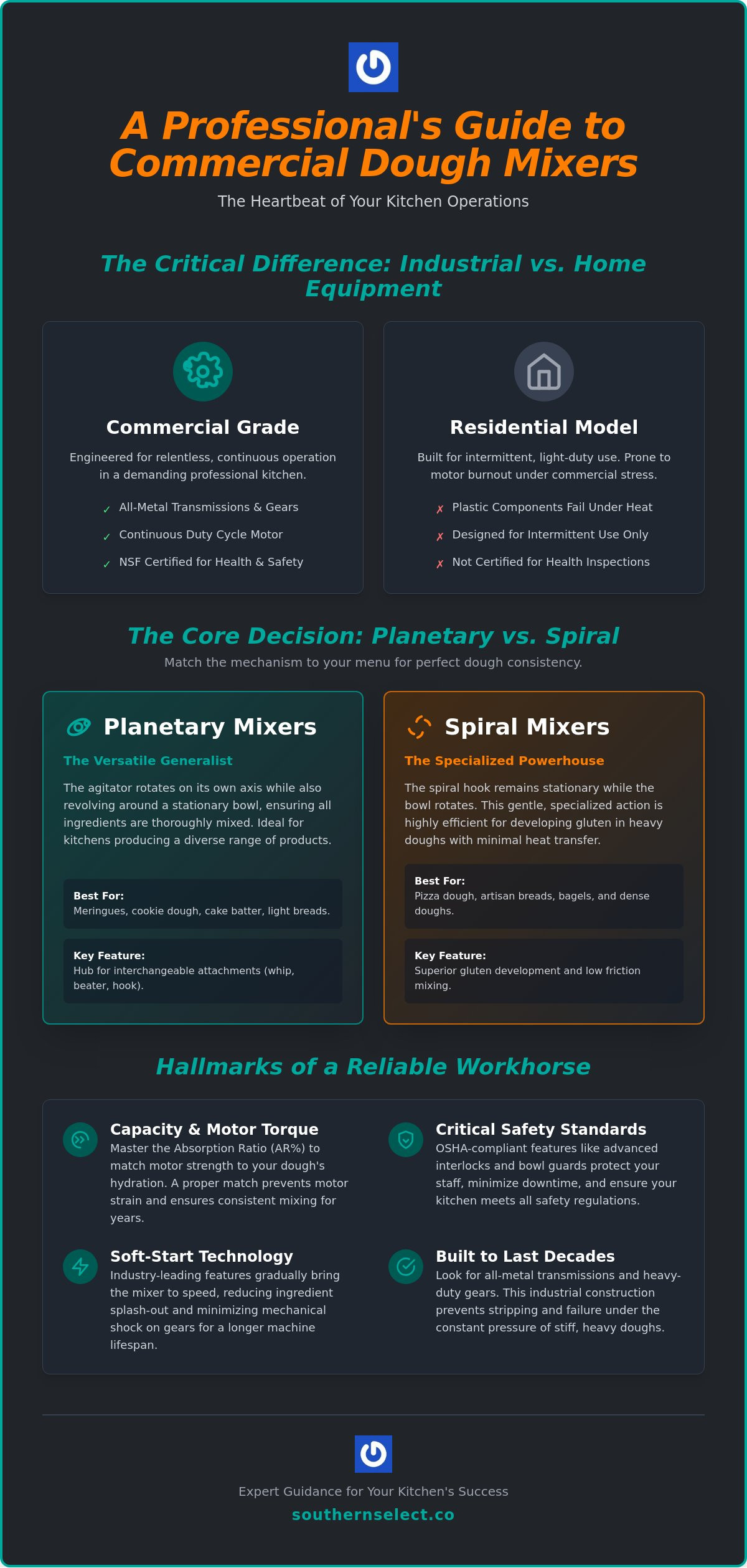
Operating a busy bakery or pizzeria means managing a high-stakes environment where every second counts and every staff member matters. When you select a commercial dough mixer, you aren’t just buying a machine; you are investing in the safety and well-being of your kitchen family. In 2026, the industry has seen a renewed focus on safety interlocks and protective systems to prevent workplace accidents. We believe that providing a secure workspace is the ultimate expression of hospitality. When your team feels safe and supported by their tools, they can focus on the craftsmanship that makes your establishment a local favorite.
Modern standards for food safety are more rigorous than ever. You should look for equipment that carries the NSF/ANSI Standard 8 certification, which ensures the machine is designed for easy cleaning and deep sanitation. A professional commercial dough mixer should feature a physical bowl guard that acts as a cage during operation. These guards must be interlocked; if the guard is opened or the bowl is lowered, the motor should automatically cut power to prevent injury. We also recommend models with removable guards and bowl scrapers, allowing your team to perform a thorough clean without struggling against hard-to-reach crevices. Standard safety features in 2026 include:
The physical construction of your mixer determines whether it will be a legacy piece or a temporary fix. Cast iron frames offer superior vibration dampening and stability compared to stamped steel, which is vital when mixing dense, low-hydration doughs. For the best performance, look for permanent-magnet motors. These provide high torque even at low speeds, ensuring your machine doesn’t strain or stall when the work gets tough. Digital timers and auto-stop features are also essential for the multitasking chef, allowing you to walk away and manage other tasks without worrying about over-mixing.
Designing a high-performance restaurant kitchen requires a long-term reliability mindset. Every piece of equipment must work in harmony to support your staff’s efficiency and your brand’s integrity. If you’re ready to upgrade your prep area with tools that stand the test of time, explore our curated selection of professional restaurant equipment today. We’re here to help you build a kitchen that reflects the quality of your community.
Hobart is often called the ‘forever’ mixer, and for good reason. In our community, we value things built to endure. When you choose a Hobart commercial dough mixer, you’re making a statement about your commitment to quality. These machines aren’t just tools; they’re heirlooms of the professional kitchen. Many pizzerias and bakeries rely on them for decades because the engineering matches the high-stakes nature of the food industry. This reliability is why they’re a cornerstone in any sophisticated commercial restaurant equipment plan, especially for kitchens looking to scale without the fear of mechanical failure.
The resale value of these mixers is a testament to their build quality. Even after years of hard labor, a well-maintained Hobart remains in high demand. It’s an investment that holds its ground, providing a sense of financial security that cheaper imports simply can’t offer. You’re not just buying a machine; you’re securing an asset that respects your bottom line as much as your craft. It’s about having peace of mind so you can focus on the people and the plates that make your business special.
Hobart offers different paths depending on your kitchen’s specific rhythm. The Legacy+ series is the powerhouse, designed for the heavy, constant work of a high-volume pizzeria. It features Shift-on-the-Fly™ technology, allowing your team to change speeds without stopping the mix. For smaller, neighborhood cafes with tighter floor plans, the Centerline series provides professional performance in a more compact footprint. Soft-start technology is a key feature here, gradually increasing the motor speed to prevent messy flour splashes and reduce initial strain on the transmission.
No matter how well a machine is built, it eventually needs care. Hobart’s national service network is the gold standard for maintenance and repairs. Having an expert guide nearby who understands your equipment is vital for keeping your kitchen running. Parts availability is often the deciding factor in reducing kitchen downtime; waiting weeks for a custom gear from overseas is a risk you don’t have to take. For a deeper look at specific models and maintenance tips, you can explore our Hobart Mixers definitive guide. We’re here to ensure your partnership with your equipment is as steady and inviting as the hospitality you provide your guests.
Choosing the right mechanical partner for your business involves more than just comparing spec sheets. It requires balancing the precise torque of a spiral hook with the versatile nature of a planetary agitator to serve your unique menu. You now have the expert knowledge to calculate your specific production needs through the lens of the Absorption Ratio and the latest safety standards. Investing in a durable commercial dough mixer isn’t just a simple transaction; it’s a long-term commitment to the consistency and hospitality that defines your brand’s integrity.
As a family-owned business with national reach, we take pride in our expert sourcing for professional kitchen operators. We specialize in high-volume XLT and Hobart machinery designed to keep your establishment running with neighborly warmth and industrial precision. Explore our curated selection of Hobart mixers and commercial kitchen equipment to find a reliable workhorse that will stand the test of time. Your passion for the craft deserves tools that work just as hard as you do. We’re here to help you build a kitchen that feels like home while delivering the elite performance your customers expect every single day.
A professional dough mixer is built with high-torque motors and all-metal transmissions designed for continuous industrial use. Standard stand mixers are typically residential appliances meant for intermittent tasks and lighter ingredients. Industrial models handle the heavy resistance of dense dough without the motor burnout common in home machines, and they carry NSF certification to meet professional health standards.
You can certainly use a planetary mixer for pizza dough, especially if your kitchen needs a versatile machine that also prepares sauces or whipped desserts. While a spiral mixer is specialized for high-volume crust production, the planetary model offers interchangeable attachments that provide flexibility. It is an excellent choice for neighborhood bakeries that need one reliable machine to handle a diverse menu.
A 20-quart mixer typically handles between 15 and 25 pounds of dough, though the exact limit depends on your recipe’s hydration. Stiffer doughs like bagels require you to reduce the batch size significantly to protect the motor from stalling. Always consult the manufacturer’s capacity chart to ensure you aren’t overworking your equipment during your busiest production hours.
The absorption ratio is the weight of water divided by the weight of flour, and it directly dictates how much stress your commercial dough mixer can safely withstand. Lower AR percentages indicate stiffer doughs that require more torque, which effectively lowers the total weight the machine can mix. Mastering this ratio helps you prevent premature wear and ensures your kitchen operation remains seamless and efficient.
Buying new is generally the better path for long-term reliability because it includes a manufacturer’s warranty and the most advanced safety interlocks. While used Hobart models are famous for their longevity, you must carefully verify their service history to avoid inherited mechanical issues. A new investment ensures you’re starting with a machine that meets the latest safety standards and provides years of worry-free service.
You should schedule professional maintenance for your mixer at least once every six to twelve months depending on your daily production volume. Regular service includes inspecting gear lubrication, checking belts for wear, and testing all safety interlock systems. This proactive management prevents unexpected downtime during peak hours and protects the integrity of your equipment for the long haul.
OSHA compliance requires a commercial dough mixer to feature a sturdy bowl guard and safety interlocks that automatically stop the motor if the guard is moved. You also need a clearly accessible emergency stop button and thermal overload protection to prevent electrical hazards. These features are essential for protecting your staff and ensuring your establishment remains a safe, welcoming place to work.
Mixing small batches in a large machine is possible, but it often leads to inconsistent gluten development because the agitator cannot reach all the ingredients effectively. Most professional mixers require a minimum batch size, usually around 25% of the total bowl capacity, to ensure a proper mix. For the best quality, it’s better to use a bowl size that closely matches your typical production needs.




Leave a Reply