
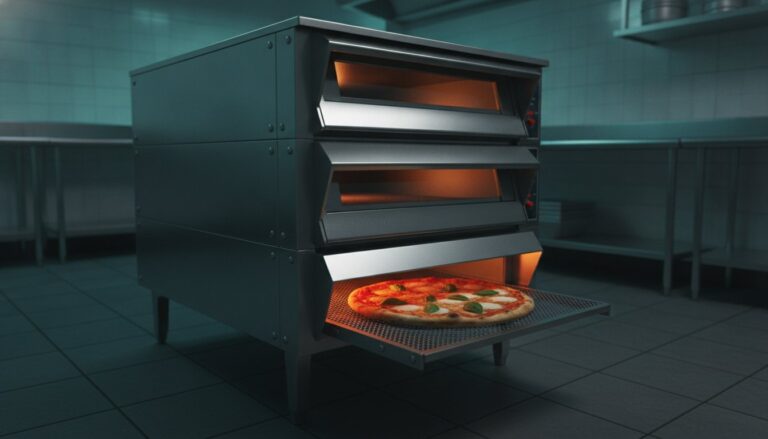
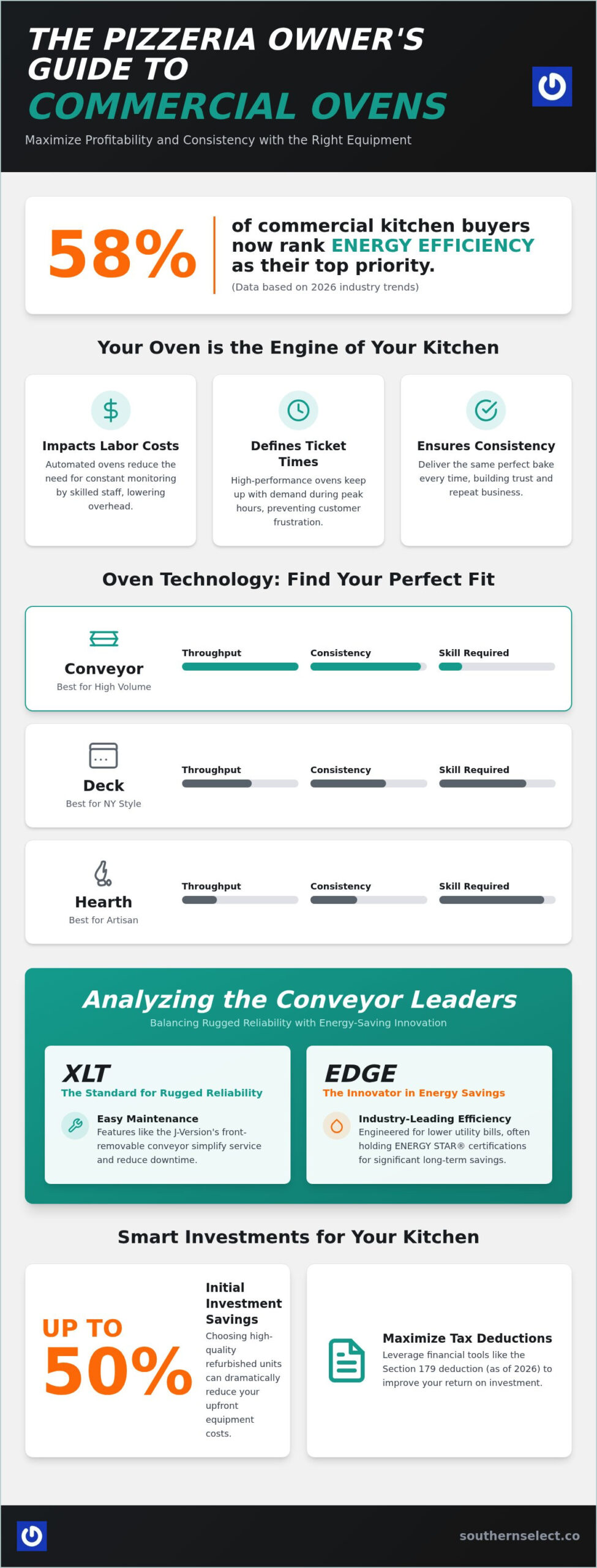
Did you know that over 58% of commercial kitchen buyers in 2026 now rank energy efficiency as their top priority? When you’re managing a high-volume pizzeria, you don’t just need an oven; you need a reliable partner that keeps pace with your busiest Friday night rush without draining your bottom line. We understand the frustration of inconsistent bakes and rising utility bills that eat into your hard-earned margins. Choosing between XLT vs EDGE pizza ovens often feels like a high-stakes decision because, in this industry, it truly is. Both brands represent the gold standard of reliability, but the right choice depends on your specific kitchen footprint and production goals.
We’ve crafted this guide to help you master the complexities of modern pizza production with the warmth and expertise you’d expect from a trusted guide. You’ll learn how to leverage the latest technology, like the XLT J-Version’s front-removable conveyor or the industry-leading energy savings found in EDGE units. We’ll walk you through sizing, stackable configurations to maximize your space, and even how to utilize the 2026 Section 179 tax deduction. Our goal is to ensure you have the knowledge to achieve a perfect bake every time while significantly reducing your labor and overhead costs.
Key Takeaways
- Understand why your oven selection serves as the engine room of a profitable kitchen by directly impacting labor costs and peak-hour ticket times.
- Evaluate the performance differences between traditional deck ovens and modern conveyor systems to determine which technology best supports your production volume.
- Compare the industry’s top contenders in our detailed breakdown of XLT vs EDGE pizza ovens to balance rugged reliability with energy-saving innovation.
- Learn how to navigate complex installation requirements, including utility load calculations for triple-stack configurations and current ventilation safety codes.
- Discover the financial advantages of specialized sourcing, including how choosing high-quality refurbished units can reduce your initial investment by up to 50%.
Why Your Choice of Commercial Pizza Oven Defines Your Profitability
In the high-stakes world of food service, your oven is much more than just a piece of equipment. It’s the engine room of your entire operation, and we like to think of it as the heart that keeps your business’s revenue pumping. When you select a commercial unit, you’re making a choice that directly impacts your labor costs, ticket times, and your daily peace of mind. A reliable oven ensures that every guest receives the same high-quality experience, whether they’re the first order of the day or the last one during a chaotic Friday night rush. We’ve seen how the right equipment can transform a stressful kitchen into a seamless, welcoming environment where your staff can truly shine.
Choosing the wrong model can lead to a cascade of problems that affect your bottom line. If your oven can’t keep up with demand, your ticket times stretch, leading to frustrated customers and lost repeat business. Plus, ovens that require constant monitoring by a highly skilled chef increase your labor expenses significantly. In 2026, the industry is moving away from traditional artisan hearths toward automated systems that offer predictable results with less oversight. While wood-fired ovens have a certain romantic appeal, they often struggle with the throughput required for modern delivery and carry-out models. You should also keep in mind that residential ovens are a major liability in a professional setting. They lack the insulation and power to maintain temperature during back-to-back bakes, which can lead to soggy crusts and potential safety hazards that no business owner wants to face.
Identifying Your Production Needs
Before you dive into specific brands, you need to be clear about your expected volume. An artisan shop doing forty pizzas a night has very different requirements than a delivery-focused franchise doing four hundred. One of the most critical factors to consider is recovery time. This is the period it takes for the oven to return to its optimal cooking temperature after a pizza is removed. High-volume models are designed to minimize this gap, ensuring that every crust is perfectly crisp. When you invest in energy-efficient models, you’re also reducing your long-term overhead. Lower utility bills might seem small on a daily basis, but they add up to significant savings over the fifteen-year lifespan of a quality machine.
The Shift Toward Automated Consistency
We’re seeing more pizzerias move toward conveyor technology because it removes the guesswork from the baking process. Unlike deck ovens, which require a staff member to rotate pies and check for hot spots, a conveyor belt moves the pizza through a controlled environment at a precise speed. This is where the comparison of XLT vs EDGE pizza ovens becomes essential, as both brands lead the market in providing this “set it and forget it” reliability. These systems often utilize advanced pizza oven technologies to ensure heat is distributed evenly across the dough. Specifically, impingement technology is high-velocity hot air stripping the cold boundary layer from food. By using this method, you can achieve faster bakes and a more consistent product, which is exactly what you need to keep your kitchen running like a well-oiled machine during peak hours.
Comparing Oven Technologies: Conveyor vs. Deck vs. Hearth
Selecting the right technology for your kitchen is about more than just heat; it’s about matching your equipment to your menu’s soul. While an artisan hearth oven offers undeniable visual charm and is perfect for Neapolitan styles, its slower bake times can be a bottleneck during a heavy rush. Conversely, deck ovens are the traditional choice for New York style pies. They produce a beautiful crust but require a skilled hand to tend the fire and manage hot spots. For most high volume pizzerias, the conveyor oven is the undisputed king of throughput. It provides a level of ease that other technologies simply can’t match.
The debate for modern operators often centers on XLT vs EDGE pizza ovens. Both brands utilize conveyor technology to ensure your thin crust or delivery style pizzas come out perfectly every time. This consistency is vital for building trust with your community. If you’re looking for ways to maximize your kitchen’s efficiency, choosing ENERGY STAR certified kitchen equipment is a smart move that benefits both the planet and your monthly utility statement. We believe that reliable equipment is the foundation of a hospitable kitchen where your team can truly thrive.
The Power of Impingement
Air impingement technology has revolutionized the modern kitchen. It uses high-velocity jets of hot air to blast away the cold halo surrounding your food. This allows it to cook up to 35% faster than standard convection models. This speed doesn’t come at the cost of quality. You can achieve that perfect crisp on the bottom of the dough without charring your delicate toppings. Brands like Lincoln Impinger and XLT have perfected this process, making them staples in kitchens that value speed and precision.
Labor and Training Considerations
One of the biggest hurdles in any restaurant is staff turnover. Conveyor ovens offer a set it and forget it simplicity that makes training new team members a breeze. You don’t need a specialized pizzaiolo to manage the bake; the machine handles the timing and temperature for you. This is a stark contrast to deck ovens, where the high cost of specialized expertise can eat into your profits. Maintenance is also more straightforward with modern conveyors. While deck ovens need frequent stone cleaning and flue checks, units like the XLT are designed for easy internal access. If you’re ready to upgrade your performance, you might want to explore our curated selection of commercial ovens to find the perfect fit for your team.
Analyzing the Leaders: XLT vs. EDGE vs. Lincoln Impinger
Choosing the right equipment is a significant milestone for any pizzeria owner. When you look at the leaders in the conveyor market, the conversation usually centers on the comparison of XLT vs EDGE pizza ovens. These brands have earned their reputations by solving the most common headaches in high-volume kitchens: inconsistent bakes and high utility costs. XLT is the undisputed workhorse, known for mechanical simplicity and a rugged design that stands up to 24/7 operation. EDGE, on the other hand, has carved out a niche as the innovator in energy efficiency and kitchen comfort. Lincoln Impinger remains a versatile classic, often found in smaller footprints or kitchens that require a diverse menu beyond just pizza.
For growing businesses, stackability is the ultimate floor-space hack. You don’t need a larger building to triple your production; you just need to go vertical. Both XLT and EDGE offer stackable configurations that allow you to maximize your square footage. This approach gives you the flexibility to run one oven during slow afternoons and fire up all three for the Friday night rush. If you’re planning a major upgrade, we recommend reviewing the FEMP acquisition guidance for commercial ovens to ensure your new setup meets federal efficiency benchmarks.
XLT: The Franchise Favorite
There’s a reason major national chains rely on XLT. Their J-Version, released in February 2026, features a front-removable conveyor and an “error-proof” finger system that makes reassembly after cleaning virtually foolproof. This simplicity is vital in kitchens with high staff turnover. XLT also offers the industry’s most reassuring warranty, providing seven years of parts and labor coverage, which can be extended to ten years when purchased with a matching hood. For startups looking for Select quality on a tighter budget, refurbished XLT units provide the same legendary reliability at a more accessible price point.
EDGE: Quiet Power and Efficiency
If you’ve ever worked in a cramped kitchen, you know how oppressive the heat and noise can be. EDGE ovens address this directly with their i-Series innovation. These units are designed for quiet operation and feature advanced insulation that keeps the heat inside the baking chamber rather than exhausting it into your workspace. This reduces the load on your air conditioning and can save you hundreds in monthly utility bills. To see how these units fit into a broader operational strategy, you can read more in our guide on The Modern Restaurant Kitchen: A 2026 Guide to High-Volume Efficiency. Choosing an EDGE oven means prioritizing a better environment for your team while maintaining a perfect bake.
Infrastructure and Installation Requirements
Preparing your kitchen for a new oven is like preparing a home for a new family member; it requires careful planning, a bit of foresight, and a welcoming environment. Once you’ve decided on the winner between XLT vs EDGE pizza ovens, the focus shifts to the infrastructure supporting it. A common mistake we see is underestimating the utility load of a triple-stack configuration. While one oven might run fine on your existing setup, three units pulling power or gas simultaneously can cripple an unprepared system. We want your opening day to be a celebration of your hard work, not a series of emergency calls to the electrician.
Gas Pressure and Electrical Phases
Electric ovens typically demand three-phase power for maximum efficiency during peak hours. If your facility only supports single-phase service, you’ll need to factor in the cost of a transformer or a significant service upgrade. For those choosing gas models, the volume of the supply line is critical. A surge in demand during a Friday night rush can cause pressure drops that lead to inconsistent bakes and “cold” spots in your production line. Your gas line must be sized to handle the peak BTU output of every deck in your stack. For more detailed insights on layout and power requirements, you can read The Professional Guide to Equipping a High-Volume Commercial Kitchen in 2026.
Ventilation and Heat Management
Ventilation is where most fire code issues arise, and it’s a vital part of keeping your team safe. Most conveyor systems require a Type I hood to manage grease-laden vapors and intense heat. Under the NFPA 96 2024 edition, high-volume restaurants are mandated to have their exhaust systems cleaned quarterly to prevent fire hazards. Stackable ovens require specialized venting to ensure proper airflow for each deck. This setup prevents heat from the bottom units from interfering with the sensitive electronics of the top units. Keeping the air moving also keeps your staff comfortable, which is a core part of providing true hospitality in a high-stakes kitchen environment.
Finally, consider your physical workflow. You need ample space for landing areas where pizzas exit the conveyor, alongside nearby prep tables for boxing and garnishing. If your landing zone is too small, you risk a pile-up during your busiest hours. We’ve seen kitchens lose hundreds in wasted product simply because the “out-feed” wasn’t planned correctly. Professional installation is the final, vital step in this journey. Manufacturers like XLT and EDGE offer some of the best protection in the industry, but those warranties often depend on a certified technician performing the initial startup. If you’re ready to map out your new kitchen footprint, browse our inventory of commercial pizza ovens and let us help you find the perfect fit for your space.
Sourcing Your Equipment: The Southern Select Advantage
Choosing where to buy your equipment is just as vital as the equipment itself. While a mass-market retailer might offer a lower initial sticker price, they often lack the specialized knowledge and neighborly support that a dedicated partner provides. We see ourselves as your trusted guide, even on a national scale. Our team understands that every dollar counts when you’re scaling a business, which is why we offer both new and meticulously refurbished options. By choosing a refurbished unit, you can often save 30% to 50% on your initial investment. This allows you to allocate those funds toward other critical areas like staffing or marketing while still securing top-tier performance.
When you’re navigating the nuances of XLT vs EDGE pizza ovens, you need more than a spec sheet. You need a partner who can explain how each model will perform in your specific environment. We’ve spent years refining our inventory to include only the most reliable brands, ensuring that every piece of equipment we ship meets our high standards for integrity and performance. We don’t believe in cold transactions. Instead, we focus on building a long-term partnership that supports your growth through every stage of your business journey.
Nationwide Shipping and Logistics
We know that downtime is the enemy of profitability. That’s why we prioritize same-day dispatch on most in-stock items, ensuring your kitchen remains productive and your ticket times stay low. Handling heavy machinery like a triple-stack conveyor oven requires more than just a pallet jack. Our logistics team employs expert crating and freight management techniques to protect your investment during transit. We treat every shipment with the care it deserves, ensuring a seamless arrival so you can get back to what matters most: serving your community. Whether you’re on the Gulf Coast or across the country, our national reach ensures your equipment arrives ready for action.
The Value of Pre-Owned and Refurbished
Our refurbished program isn’t just about cleaning up old machines. Every conveyor oven that enters our facility undergoes a rigorous 10-point inspection process. We test every motor, sensor, and heating element to ensure they perform like new. This commitment to quality extends beyond ovens. We also specialize in sourcing Hobart mixers to complete your pizza prep line, providing you with the reliable tools needed for consistent dough production. For a deeper look at why these machines are the industry standard, explore our guide on Investing in Excellence: The Definitive Guide to Hobart Mixers for 2026. At Southern Select Equipment, we combine professional excellence with genuine hospitality to ensure you have everything you need to succeed.
Elevate Your Pizzeria’s Potential in 2026
Building a successful pizzeria requires more than just a great recipe; it demands an engine room that can handle the heat of a busy Saturday night. We’ve explored how the right technology can reduce your labor costs and ticket times, ensuring every guest leaves satisfied. Whether you find the winner of XLT vs EDGE pizza ovens to be the rugged simplicity of the J-Version or the quiet efficiency of the i-Series, your choice will define your kitchen’s workflow for years to come. Remember that your infrastructure, from gas lines to ventilation, must be ready to support the high-volume output of these professional machines.
At Southern Select, we’re proud to be a family-owned partner trusted nationally by chains and independent shops alike. We provide nationwide same-day shipping to keep your operations seamless and employ an expert 10-point refurbishing process for our pre-owned units to guarantee “select” quality. Your vision for a thriving community hub is within reach, and we’re here to help you secure the equipment that makes it possible. We invite you to Explore Our Current Inventory of XLT and EDGE Pizza Ovens today. Let’s work together to make your next bake your best one yet.
Frequently Asked Questions
What is the difference between a convection and an impingement pizza oven?
Impingement technology uses high-velocity jets of hot air to strip away the cold boundary layer surrounding your food, while standard convection relies on the natural circulation of air. This focused airflow allows impingement ovens to cook up to 35% faster than traditional convection models. It’s the most effective way to ensure your crust is perfectly crisp while your toppings remain juicy and flavorful.
How many pizzas per hour can a triple-stack XLT oven produce?
A triple-stack XLT configuration is a high-volume powerhouse capable of producing between 210 and 300 large pizzas per hour depending on the specific model size and your bake times. This vertical setup allows you to triple your production capacity without expanding your kitchen’s physical footprint. It’s an ideal solution for pizzerias that experience intense demand during peak weekend rushes.
Do I need a commercial hood for a ventless pizza oven?
Most commercial conveyor ovens require a dedicated Type I hood to manage grease-laden vapors and significant heat output. While some smaller electric models are marketed as ventless, local fire codes and NFPA 96 standards often mandate a hood to ensure staff comfort and fire safety. You should always consult with your local building inspector before finalizing your equipment installation plan.
Is it better to buy a new or refurbished commercial pizza oven?
Choosing a new oven provides you with the security of a full manufacturer warranty, which can extend up to ten years for certain models. However, purchasing a refurbished unit from a specialized guide like Southern Select can save you 30% to 50% on your initial capital investment. Our 10-point inspection process ensures that every refurbished machine meets the same high standards of reliability as a new unit.
What are the electrical requirements for a 3-phase commercial oven?
Three-phase electrical service provides a more stable and efficient power supply for the heavy heating elements and motors found in commercial ovens. Most large-scale units require 208V or 240V three-phase power to maintain consistent temperatures during continuous back-to-back bakes. If your facility only supports single-phase power, you’ll likely need to factor in the cost of a transformer or a significant utility service upgrade.
Can a conveyor oven bake more than just pizza?
Conveyor ovens are incredibly versatile tools that can handle a wide variety of menu items beyond pizza. You can use them to bake chicken wings, toast sub sandwiches, melt cheese on appetizers, or even bake cookies and brownies with perfect consistency. This flexibility allows you to expand your menu offerings without needing to invest in multiple specialized pieces of kitchen equipment.
How often does a commercial conveyor oven need professional maintenance?
Your team should perform basic cleaning daily, but professional maintenance and deep cleaning are typically required every three to six months. High-volume operations often schedule these inspections quarterly to stay in compliance with NFPA 96 safety standards and prevent grease buildup. Regular professional checks on belts, bearings, and motors are vital for avoiding unexpected downtime during your busiest shifts.
What is the typical lifespan of an EDGE or XLT pizza oven?
A well-maintained EDGE or XLT oven has a typical lifespan of 10 to 15 years in a demanding professional environment. These machines are engineered with rugged, industrial-grade components designed to endure the stresses of 24/7 operation. When evaluating XLT vs EDGE pizza ovens, you’ll find that both brands are recognized for their long-term durability and ability to provide a consistent bake for over a decade.