


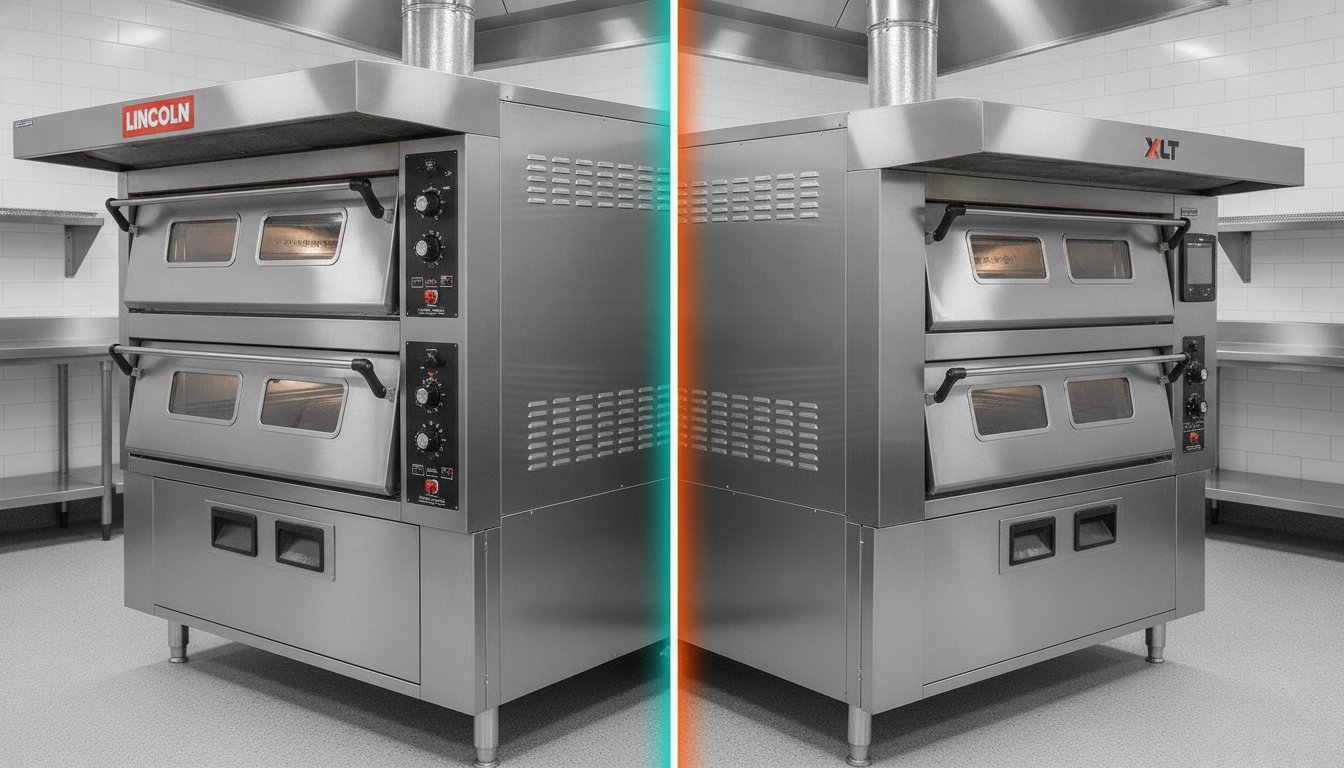
Imagine it’s a bustling Friday evening, the dining room is full, and your kitchen is in perfect rhythm until your main conveyor suddenly falters. That moment of uncertainty feels heavy when you’re responsible for both your team’s success and your guests’ experience. You’ve likely spent hours weighing the lincoln impinger vs xlt oven choice, wondering if a simple repair will suffice or if a full replacement is the only way to protect your bottom line from rising utility costs.
We believe you deserve a trusted guide who understands the pressure of the peak rush and the importance of keeping your pizza line at peak efficiency. It’s common to feel frustrated by confusion over part compatibility between the Lincoln 1100 and 1400 series or the financial drain of aging equipment. The team at Southern Select Equipment knows you need a solution that offers stability and a long-term partnership to keep your operations seamless.
In this 2026 comparison, we’ll provide a clear look at the ROI for both brands to help you make an expert decision. You’ll gain a diagnostic guide to catch failing parts early and the professional confidence to decide whether to repair or replace your equipment. Let’s ensure your kitchen remains a reliable pillar of your community with equipment that never lets you down.
Deciding on the right equipment for your pizzeria is a high-stakes choice that shapes your daily rhythm. When you compare the lincoln impinger vs xlt oven, you’re looking at two titans that have defined the high-volume pizza industry for decades. One offers a deep-rooted legacy of consistency, while the other pushes the boundaries of modern, quiet efficiency. Both rely on conveyor oven technology to deliver that perfect, four-minute bake your customers expect. This decision isn’t just about the heat; it’s about how that heat is managed and how easily your team can maintain the machine under pressure.
Air impingement revolutionized the industry by using high-velocity “fingers” of hot air to strip away the cold boundary layer surrounding the dough. This process ensures a crisp crust and perfectly melted toppings in a fraction of the time required by traditional deck ovens. While both brands utilize this technology, their control systems offer different paths to success. Lincoln often leans into digital precision with advanced programming, whereas XLT focuses on mechanical straightforwardness to ensure that any operator can dial in the perfect bake with minimal training.
Lincoln has long been the gold standard for high-output environments. Their 1400 series is legendary for its reliability, often serving as the backbone of national chains for years. We see many legacy kitchens stick with Lincoln because their technicians already have a deep familiarity with the parts and internal layout. For those looking to expand their offerings, the Lincoln Aperion series targets modern, flexible menus by allowing for varied cook times and temperatures. If your kitchen needs to pivot from pizzas to toasted sandwiches or wings quickly, Lincoln’s established versatility is a significant asset. Their FastBake technology is particularly impressive, as it can reduce cook times by up to 35% without sacrificing quality.
XLT has built its reputation on the philosophy of simplicity and operator ease. They’re frequently preferred for their “tool-less” cleaning design, which allows your staff to disassemble and clean the oven without a single wrench. This focus on simplicity extends to their “H Version” models, which are engineered for exceptionally quiet operation. In the 2026 market, energy efficiency is a non-negotiable priority. XLT ovens are designed to meet the rigorous ENERGY STAR Version 3.0 specifications that became effective on January 12, 2023. By achieving a cooking energy efficiency of at least 49% for gas models, these ovens can save an operator approximately $2,000 annually on utility bills. It’s a choice that respects both your kitchen’s environment and your long-term overhead.
When the kitchen is in full swing, your oven is the heartbeat of your operation. A sudden failure doesn’t just halt production; it tests your patience and your promise to your customers. Whether you’re weighing the lincoln impinger vs xlt oven for a future upgrade or keeping your current line running, understanding common failure points is the first step toward reliability. We believe that a well-maintained oven is the key to a stress-free Friday night, and the team at Southern Select Equipment is here to help you spot the warning signs before they turn into downtime.
If your oven won’t heat up, the first suspects are usually the hot surface igniter or the gas valve. A cracked igniter won’t glow, and a sticking valve prevents fuel from reaching the burner. For uneven bakes or “cold spots,” inspect the air fingers for debris or misalignment. If the blower motor health is declining, it won’t push air with enough velocity to create that signature impinged crust. A jerking conveyor belt is often a sign of worn bushings or an impending drive motor failure. Thermocouples are equally important; they serve as the internal thermometer, ensuring temperature accuracy across the entire deck so every pizza comes out identical.
Speed pots and control boards act as the brain of your equipment, but they have a mortal enemy: electrical surges. These sensitive components require a stable environment to function correctly. Cooling fans play a vital role here by preventing heat buildup that causes control board burnout. If you catch a faint “burnt” smell near the control panel, a relay or contactor likely needs immediate replacement. Staying proactive with these small electrical checks keeps your operation running like a well-oiled machine while you navigate the lincoln impinger vs xlt oven maintenance landscape.
Conveyor drive motors often show signs of weakening, such as unusual whining or excessive heat, before they fail completely. Regular maintenance includes checking belt tension to decide when to replace the belt versus just the drive gear. A faulty speed pot directly impacts food consistency by causing erratic conveyor timing that leaves pizzas undercooked or burnt. Keeping these critical components in top shape ensures your kitchen stays as hospitable as a Sunday dinner. If you’re looking for expert guidance on maintaining your conveyor ovens, our team is here to help you stay ahead of the rush.
When you’re managing a busy kitchen, every penny counts. It’s tempting to look for cost savings on replacement parts, especially when comparing the long-term upkeep of a lincoln impinger vs xlt oven. However, the precision engineering required for high-velocity air impingement leaves very little room for error. Tight component tolerances ensure that heat is distributed exactly as the manufacturer intended. Using a part that’s “close enough” can disrupt that delicate balance, leading to the uneven bakes or cold spots we identified in our diagnostic guide. We’ve seen how small deviations in airflow can derail an entire shift’s consistency.
Choosing genuine components from a reliable source of commercial restaurant equipment is about more than just a brand name. It’s about safety. High-heat gas ovens demand components that can withstand extreme temperatures without failing or becoming a fire hazard. There are hidden risks in using non-certified electrical parts; they often lack the thermal protection found in OEM versions. Beyond safety, using aftermarket parts can immediately void your existing service contracts or manufacturer warranties. That small initial saving could lead to a very expensive out-of-pocket repair later when you most need reliability.
Commercial kitchen components must meet strict UL and NSF certifications to ensure they’re safe for food environments and won’t fail under load. Heat-resistant materials are non-negotiable for sensors and igniters that live inside the baking chamber. While generic parts might look identical, they rarely use the same grade of alloys or ceramics. Investing in genuine parts increases your long-term ROI by extending the total lifespan of your equipment and reducing the frequency of repeat repairs. We believe in providing a level of quality at Southern Select Equipment that ensures your kitchen remains a safe, productive space for your team.
No one wants to tell a customer they can’t have a pizza because of a $50 fuse. We recommend keeping a “Critical Spares Kit” on-site that includes igniters, fuses, and temperature sensors. Having these professional restaurant supplies ready prevents Friday night disasters and keeps your line moving. Whether you’re maintaining a legacy unit or deciding between a new lincoln impinger vs xlt oven, sticking to OEM parts protects your investment. When vetting a parts supplier, look for authenticity, a deep inventory, and fast shipping speeds. A partner who understands the urgency of your business is just as important as the part itself.
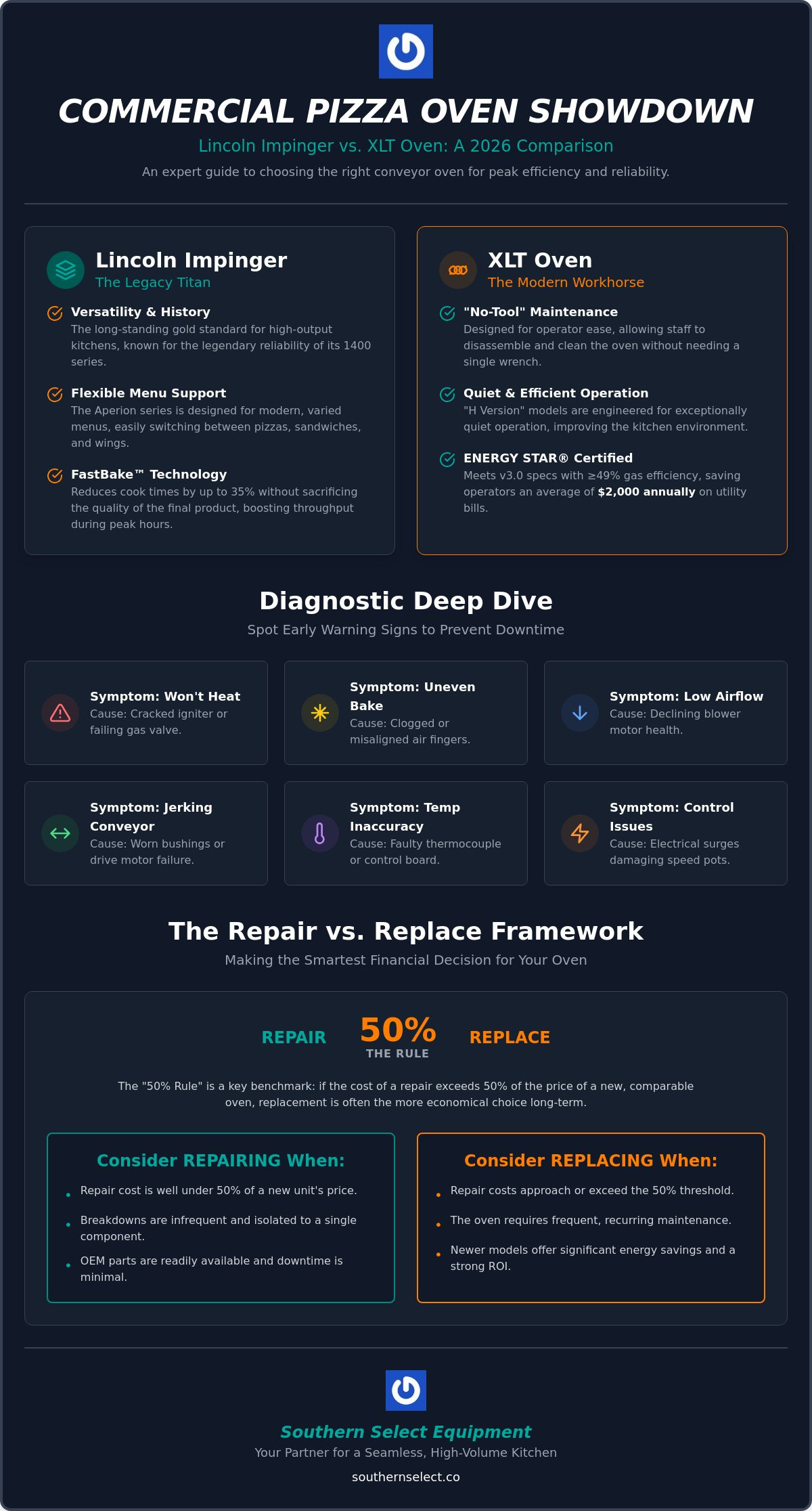
Deciding whether to salvage an old unit or invest in a new one is a crossroad every operator eventually faces. When evaluating the lincoln impinger vs xlt oven debate for your own kitchen, the decision often hinges on long-term sustainability rather than just the immediate fix. We suggest applying the “50% Rule” as a professional benchmark. If a repair estimate for an aging Lincoln exceeds half the value of a brand-new unit, your capital is likely better spent on an upgrade that comes with a fresh warranty and modern efficiency. This approach protects your cash flow from the “sunk cost” trap where you keep pouring money into a machine that will inevitably fail again.
Newer technology drastically improves high-volume efficiency by reducing the need for constant “oven watching.” While older models might require staff to manually rotate pans or check for uneven bakes, modern XLT and EDGE systems provide consistent results with minimal oversight. Beyond labor, the utility savings are substantial. Transitioning to an ENERGY STAR certified gas oven can save you approximately $2,000 annually on utility bills, effectively paying for a portion of the upgrade through reduced overhead. It is a strategic move that turns a monthly expense into a long-term investment for your business.
The true cost of a breakdown isn’t just the technician’s invoice; it’s the missed opportunities. You must factor in the “Lost Revenue” formula: your average order value multiplied by the number of orders you turn away during peak hours. If a failing blower motor takes you offline for four hours on a Friday, the loss can easily reach thousands of dollars. Frequent breakdowns also erode staff morale and damage the neighborly trust your community places in your brand. If your equipment is consistently failing, it may be time for a commercial kitchen audit to identify systemic issues before the next rush. We invite you to view our current inventory of conveyor ovens to find a more reliable partner for your kitchen.
Many operators are transitioning from older Lincoln units to XLT for simplified part sourcing and “no-tool” maintenance. These stackable systems allow your kitchen to grow vertically without increasing your floor footprint. It’s also vital to recognize that years of extreme heat cause cumulative thermal stress that eventually makes old metal elements and internal chassis unrepairable. Moving to a new XLT or EDGE system ensures you aren’t just patching a sinking ship, but building a foundation for future growth with equipment that is engineered for the demands of 2026 and beyond.
At Southern Select, we understand that your kitchen is more than just a workspace; it’s the heart of your community and your livelihood. Choosing between a lincoln impinger vs xlt oven is a significant strategic decision, and you don’t have to make it in a vacuum. We bring a genuine sense of Southern hospitality to every conversation, ensuring you feel like a valued partner rather than a number in a database. Our team provides expert guidance tailored to your specific menu and volume needs, helping you move from legacy equipment to modern powerhouses with absolute confidence.
While we’re deeply rooted in our regional identity, our support extends across the country. We offer national shipping and dedicated support for premium brands like XLT and EDGE to ensure your high-volume line stays operational. As a family-owned business, we prioritize integrity and long-term stability. We know the high stakes of a busy Friday night rush, and we’re committed to being the reliable partner you can call when you need honest advice. This neighborly approach ensures you get the right equipment for your specific kitchen layout and growth goals.
Our focus is strictly on heavy-duty machinery that can handle the rigors of the hospitality and restaurant industries. We’ve intentionally chosen to carry XLT, EDGE, and Hobart mixers because of their proven track records for durability and performance. You won’t find residential-grade items here; we only offer professional tools that we would trust in our own businesses. If you’re feeling overwhelmed by the options, we provide expert advice on restaurant equipment supply to simplify your sourcing process. We focus on the people behind the properties, making sure every piece of gear serves your long-term vision.
Scaling your business requires more than just a new oven; it requires a look at your entire workflow. We help you evaluate your current line for bottlenecks that might be hindering your efficiency during peak hours. A high-performance oven is a great start, but it must be paired with reliable commercial refrigeration and prep equipment to keep your ingredients fresh and your staff moving. If you’re ready to upgrade your lincoln impinger vs xlt oven setup or expand your capacity, contact us for a professional consultation. We’ll help you build a kitchen that is sophisticated, approachable, and ready for whatever the next rush brings.
Managing a high-volume pizza line is a demanding journey, but you don’t have to walk it alone. We’ve explored how proactive maintenance and the use of genuine OEM parts protect your kitchen from the hidden costs of downtime. Whether you are currently troubleshooting a legacy unit or finalizing your lincoln impinger vs xlt oven comparison, the goal is always the same: a seamless, reliable bake that keeps your community coming back for more. Knowing when to apply the 50% rule for repairs ensures your capital is always working as hard as your team does.
At Southern Select, we pair our expert knowledge in high-volume pizza operations with the warm, family-owned hospitality you deserve. We offer reliable professional advice and national shipping on premium brands like XLT and EDGE to ensure you have the best tools for the job. Our commitment is to provide a curated experience that values the people behind the properties as much as the equipment itself. It’s time to trade the stress of aging machinery for the confidence of a modernized kitchen.
Browse our selection of high-performance commercial ovens and equipment to find the perfect fit for your menu. We’re here to help you scale your success with integrity and expert care.
You’ll typically find the serial number on the data plate located on the side or rear panel of your Lincoln Impinger. In some models, this plate is tucked inside the control box door for protection. Having this number ready is essential for ensuring you receive the correct components for your specific series. It’s a small but vital step that ensures your maintenance remains seamless and your kitchen stays productive during the busiest weekend rushes.
Swapping a Lincoln blower motor for a generic alternative is not a recommended practice for high-volume kitchens. Lincoln ovens rely on specific RPMs and torque ratings to maintain the air impingement process correctly. Using a non-certified motor can lead to uneven bakes and may void your existing warranty or service contracts. Sticking with OEM parts ensures your equipment performs with the integrity you expect from a premium brand that supports your livelihood.
If your XLT oven is slow to reach temperature, the most common culprits are a failing thermocouple or a build-up of debris in the burner assembly. A worn gas valve can also restrict fuel flow, preventing the unit from heating efficiently. Regular cleaning of the burner area helps maintain the quiet operation and performance your staff depends on. Addressing these early signs of wear prevents a total failure during your most critical dining shifts.
We recommend removing and cleaning the air fingers in a Lincoln 1400 at least once a month to prevent cold spots and uneven cooking. If your shop handles exceptionally high volumes or uses heavy flour, a bi-weekly cleaning schedule is even better for maintaining peak efficiency. Keeping these passages clear ensures the high-velocity air can reach your dough without obstruction. It’s a simple task that protects your food quality and the neighborly trust of your customers.
A hot surface igniter functions by heating a silicon element until it glows to light the gas, while a spark igniter uses an electric arc to create combustion. Most modern conveyor ovens use one or the other based on their specific ignition control board design. Understanding which system your oven uses is vital when comparing the lincoln impinger vs xlt oven maintenance requirements. Both systems are reliable, but they require different troubleshooting steps when the oven fails to fire.
Operating your Lincoln oven while the cooling fan is making a grinding noise is not safe for the longevity of your equipment. This fan is responsible for protecting the sensitive control boards from heat damage and electrical surges. If the fan fails completely, the resulting heat buildup can cause an expensive control board burnout. Replacing a noisy fan now is a small investment that prevents a much larger repair bill and keeps your kitchen running smoothly.
In a high-volume pizzeria, a conveyor drive motor typically has an average lifespan of five to seven years. This duration can vary based on how well the belt tension is maintained and whether the bushings are regularly inspected for wear. Keeping your motor clean and ensuring it isn’t straining against a stuck belt will help you reach the upper end of that range. It’s all about providing that reliable, steady rhythm your kitchen depends on every day.
Yes, Southern Select provides national shipping for our curated range of XLT and EDGE ovens. We understand that high-quality lincoln impinger vs xlt oven solutions are needed across the country, so we ensure our professional equipment reaches you wherever your kitchen is located. Our team is dedicated to offering reliable professional advice and support during every step of your purchase. You can trust us to handle your equipment with the same care we’d give our own neighbors.




Leave a Reply