


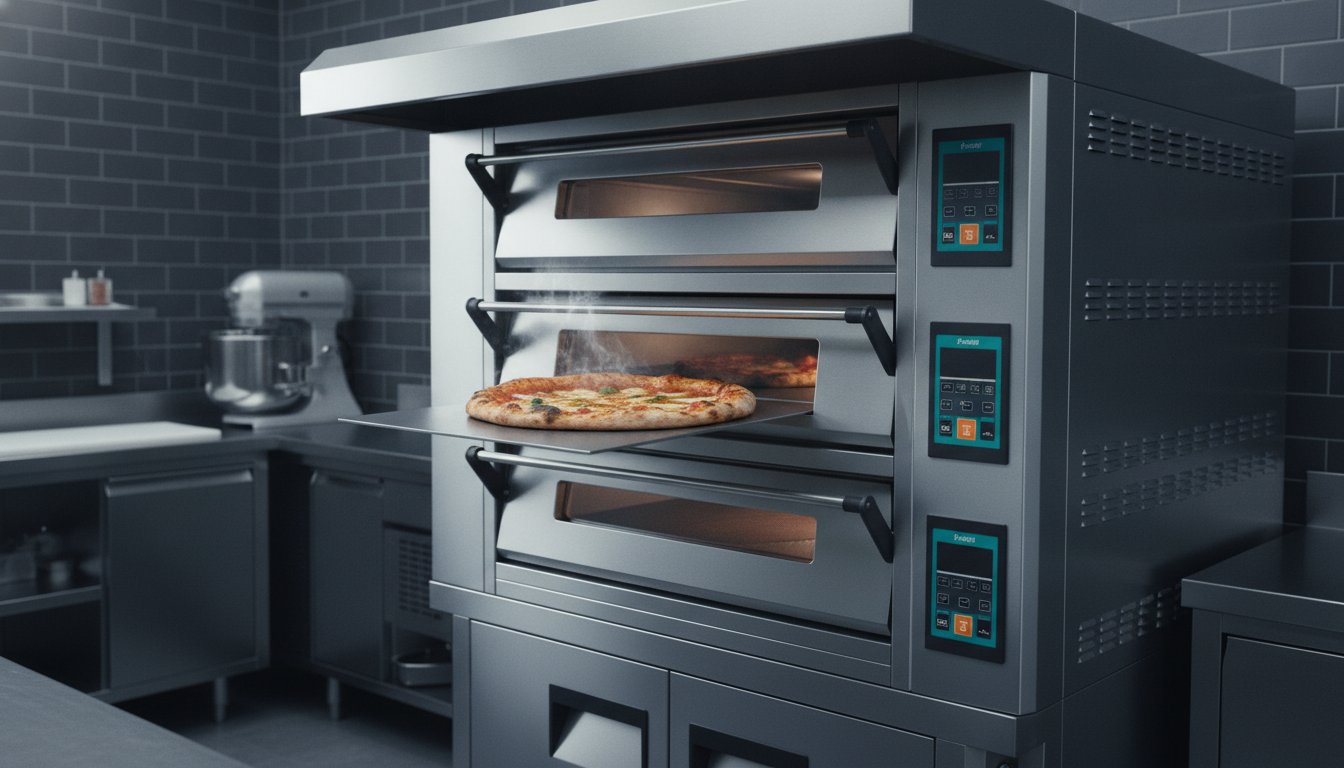
Imagine it is a bustling Friday evening and your lobby is filled with the local community waiting for a taste of your signature crust. Just as the orders peak, an unreliable oven or a finicky mixer threatens to stall your entire operation. Scaling a successful shop requires more than just a great recipe; it demands professional pizzeria equipment that can keep pace with your ambition. When you are managing a high-volume kitchen, the difference between a record-breaking night and a service disaster often comes down to the reliability of your machinery.
We believe that your kitchen should be a place of confidence, not stress. You deserve a setup that produces consistent results without the constant fear of downtime or rising energy costs. In this guide, you will discover the heavy-duty machinery required to scale a high-volume pizzeria, from industry-leading conveyor ovens to the legendary durability of Hobart mixers. We will explore the latest 2026 refrigeration regulations and the essential components needed to maintain a seamless, high-throughput operation that delivers a perfect bake every time.
Building a pizzeria is a labor of love, but scaling it into a local staple is a feat of engineering. You’ll often hear the terms “restaurant-grade” and “high-volume commercial” used interchangeably, but for a busy shop, they represent two different worlds. Standard equipment might handle a quiet Tuesday lunch, but it won’t survive the “Friday Night Test.” This is the only metric that truly matters: the ability of your gear to perform under the relentless pressure of a three-hour rush without a single hiccup. High-volume pizzeria equipment is built for these high-stakes moments, ensuring your last bake of the night is just as crisp and consistent as the first.
Choosing premium brands like XLT and Hobart provides a long-term ROI that far outweighs the initial cost. While the history of pizza ovens shows us how far we’ve come from simple stone hearths, the modern focus is on automated consistency. You need a kitchen that runs like a well-oiled machine so you can focus on your guests and your craft. By investing in elite machinery, you’re buying peace of mind and the certainty that your doors will stay open when the demand is highest.
Success in a high-volume environment starts with a clear understanding of your peak-hour pizza count. High-volume equipment is machinery capable of 100+ bakes per hour without temperature recovery lag. If your oven loses heat every time you open the door or slide in a new pie, your throughput will plummet. In 2026, energy efficiency has moved from a “nice-to-have” feature to a core profit driver. Efficient machinery keeps your utility bills manageable while maintaining the intense heat required for a perfect crust.
At Southern Select Equipment, we act as your trusted local guide to ensure your pizzeria equipment line has no weak links. We curate our selection to include only the most reliable brands because we know your livelihood depends on them. Transitioning from a small startup kitchen to a commercial restaurant equipment powerhouse requires a partner who understands the hospitality industry’s unique demands. We’re here to help you build a foundation that supports your growth and honors the community you serve.
Choosing the right oven is the most significant decision you’ll make for your kitchen’s workflow. While deck ovens offer a traditional appeal, high-volume shops almost exclusively rely on conveyor ovens to maintain pace. This choice ensures that every guest receives the same quality, whether they order at 5:00 PM or 10:00 PM. Unlike deck ovens, which require a skilled operator to rotate pies and manage “hot spots,” a conveyor system provides a set-it-and-forget-it solution that drastically reduces labor costs and training time. High-quality pizzeria equipment should simplify your life, not complicate it.
XLT Pizza Ovens have earned their reputation as the gold standard for airflow and quiet operation. If you’ve ever worked in a loud, sweltering kitchen, you’ll appreciate how these machines transform the environment. EDGE Pizza Ovens offer a different advantage with their precision control and modular design. They’re perfect for expanding kitchens that might start with a single unit and need to add capacity later without replacing their entire line. Meanwhile, Lincoln Impinger Ovens remain a staple for their legacy of consistent crusts through advanced air technology that has set the industry standard for decades.
Impingement technology is the secret behind the speed and consistency of modern pizzeria equipment. Instead of relying on slow-moving hot air, these ovens use pressurized jets to strike heat directly onto the food. This process strips away the cold boundary layer of air surrounding the dough, leading to faster bakes and better texture. XLT ovens are engineered to deliver industry-leading bake times with significantly reduced decibel levels. This efficiency doesn’t just speed up your service; it also plays a role in Protecting Your Cold Chain by ensuring ingredients spend less time in the “danger zone” during the cooking process and reach safe internal temperatures quickly.
Scaling your throughput often means looking up, not out. Single, double, and even triple stack configurations allow you to triple your output without increasing your kitchen’s footprint. You’ll also need to match your belt width to your menu variety. A 32 inch belt is standard, but high-volume shops often opt for 38 inch or 55 inch belts to accommodate extra-large pies or multiple side dishes simultaneously. By 2026, Smart controls have become standard, allowing you to monitor energy usage and bake cycles from your phone. If you’re ready to upgrade your line, you can explore our curated selection of commercial pizza ovens to find the perfect fit for your space.
While the oven is the stage where the magic happens, your mixer is the engine room of the entire operation. Pizza dough is notoriously demanding. It requires significantly more torque than standard pastries or breads because of its low hydration and dense structure. If you try to run a high-volume shop with a standard bakery mixer, you’ll likely face motor burnout before your first anniversary. This is why professional pizzeria equipment must prioritize raw power and mechanical integrity from day one.
The legacy of Hobart Mixers is built on the fact that these machines are engineered to last decades, not just years. In the hospitality world, a Hobart is a badge of honor. It signals that you take your craft seriously and understand the value of reliability. Beyond the daily performance, these mixers hold incredible secondary market value. If you ever decide to expand or move to a new location, a well-maintained Hobart often fetches a significant portion of its original cost, making it a stable asset for your business rather than a sunk expense.
When choosing your mixer, you’ll likely decide between planetary and spiral models. Planetary mixers are the versatile workhorses of the kitchen. They handle everything from heavy dough to whipped sauces with ease. Spiral mixers, however, are dedicated specialists. They’re designed specifically for large batches of dough, keeping the friction low so the dough temperature doesn’t rise during the mix. Your specific crust style, whether it’s a delicate Neapolitan or a heavy Detroit deep dish, will dictate which path is right for your kitchen.
The secret to Hobart’s dominance lies in its gear-driven transmission. Unlike belt-driven models that can slip or snap under pressure, gears provide a constant, unyielding flow of power to the bowl. This ensures that even the stiffest dough is incorporated perfectly every time. A Hobart mixer is often the single most reliable piece of restaurant kitchen equipment a pizzeria will ever own. These machines also feature robust safety guards and ergonomic bowl lifts to keep your staff safe and comfortable during long prep shifts.
To keep your investment running smoothly, daily cleaning is vital. Flour dust is fine enough to settle into the motor housing, which can lead to overheating over time. We recommend a strict schedule for lubricating the planetary head and checking the gear oil levels to prevent wear. If you notice the motor straining or if your production needs have outgrown your current bowl size, it’s a sign to look for a higher-capacity model. Keeping your pizzeria equipment in top shape ensures your kitchen never misses a beat during the Friday rush.
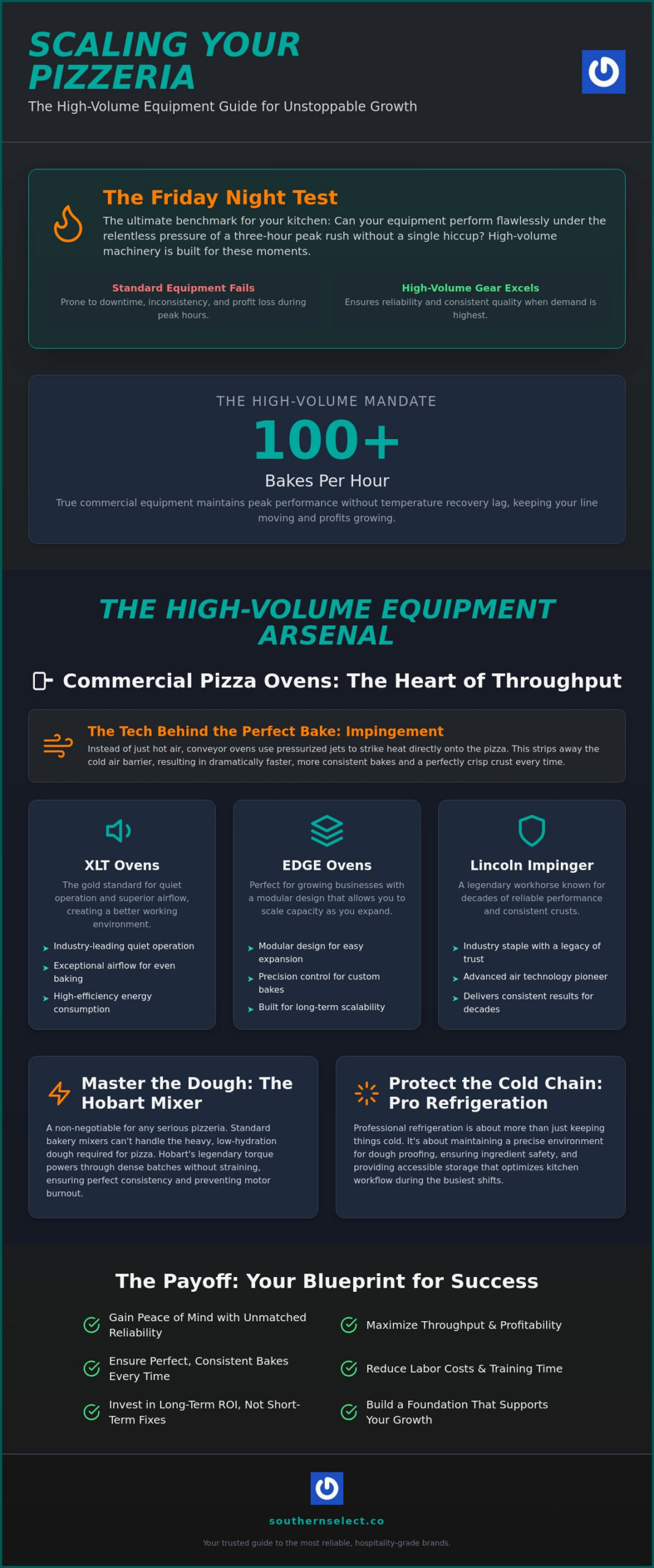
While the oven gets all the glory, the silent partner in any high-volume shop is the cooling system. Managing your cold chain isn’t just about food safety; it is about the science of the dough. High-quality pizzeria equipment must include robust commercial refrigerators that double as retardation chambers. This controlled environment allows your dough to ferment slowly. This process develops the complex flavors and airy texture your customers crave. Without precise temperature control, your dough becomes unpredictable, leading to inconsistent bakes and wasted product.
Designing your storage depends heavily on your delivery frequency and volume. If you’re receiving large shipments of cheese and flour twice a week, a walk-in cooler is essential. However, reach-ins are vital for quick access during a rush. You must also consider the extreme heat of a pizzeria kitchen. With conveyor ovens running at high temperatures, your refrigeration units face high-ambient conditions that can cause lesser models to fail. Choosing equipment with heavy-duty compressors ensures your ingredients stay at safe temperatures, even when the kitchen is at its hottest.
Specialized pizza prep tables are the heart of your assembly line. Look for features like insulated pan rails and extra-wide, heavy-duty cutting boards. These provide enough space for large pies and withstand constant use. Airflow is the most critical factor here. While conductive cooling systems keep the bottom of the pans cold, forced-air systems wrap the ingredients in a blanket of cold air. This is often superior for meeting strict health codes in high-volume environments. It ensures that your toppings stay fresh and safe from the first order to the last.
For high-volume shops, commercial freezers are necessary for bulk protein storage and specialty ingredients. Rapid temperature recovery is non-negotiable. Your staff will be opening these doors constantly during prep, and the unit must bounce back quickly to prevent freezer burn. Starting January 1, 2026, new systems must comply with the American Innovation and Manufacturing (AIM) Act. This regulation limits the Global Warming Potential (GWP) of refrigerants. Additionally, the EPA has lowered the leak detection threshold to 15 pounds for certain systems. This makes choosing modern, compliant pizzeria equipment a legal necessity for your business. If you’re ready to upgrade, you can view our full range of professional refrigeration to find a solution that fits your floor plan.
Finding the right partner for your kitchen build-out is about more than just comparing spec sheets. It’s about finding a team that understands the rhythm of your community and the high-stakes pressure of a Friday night rush. At Southern Select Equipment, we position ourselves as your Trusted Local Guide with a reach that extends across the country. We believe that professional pizzeria equipment should be a source of confidence, allowing you to focus on the hospitality and craft that make your shop unique. Our approach is rooted in integrity and a deep respect for the people behind the business, ensuring you never feel like just another transaction.
We see our role as curators of excellence. By integrating Southern hospitality into our business model, we move beyond the cold exchange of machinery to build long-term partnerships. Whether you are opening your first coastal shop or managing a growing regional chain, we provide the steady, confident guidance you need to make informed decisions. We’re here to help you navigate the complexities of modern regulations and high-volume demands with a sense of calm and competence that is rare in the fast-paced world of food service.
Every piece of gear we offer undergoes a rigorous vetting process. We focus on industry leaders like XLT, EDGE, and Hobart because they represent the pinnacle of reliability and performance. These brands are the “Select” offerings in our inventory, chosen because they outperform lower-tier alternatives in every category from energy efficiency to torque. Whether you are browsing our brand-new arrivals or exploring our high-quality liquidation inventory, our standards remain unyielding. We serve pizzerias across the United States, bringing elite machinery to operators who refuse to settle for anything less than the best.
Starting your commercial kitchen journey begins with a conversation. We offer expert consultations to help you navigate the complexities of layout, throughput, and equipment selection. If you’re ready to secure a reliable line, we’re here to help you package the perfect combination of ovens and mixers to suit your specific menu. We also provide unique opportunities for financing and liquidation, helping growing brands scale their operations with minimal friction. When you’re ready to invest in your future, you can view our current inventory of elite pizzeria equipment to find the machinery that will power your success for years to come.
Scaling a high-volume shop requires a shift in mindset from simple survival to long-term mastery. You’ve seen how the right pizzeria equipment transforms a stressful Friday rush into a seamless display of efficiency. By prioritizing high-torque Hobart mixers and precision conveyor ovens, you ensure that your quality remains consistent as your community grows. Navigating the new 2026 refrigeration standards doesn’t have to be a burden when you have a partner who understands the high stakes of hospitality.
Southern Select Equipment is proud to be an authorized dealer for XLT and EDGE ovens, bringing you the quiet power and modular growth your kitchen deserves. We are specialists in high-torque Hobart mixers and offer national shipping with expert support that feels like a neighborly handshake. We invite you to Browse Our Curated Selection of High-Volume Pizzeria Equipment and take the first step toward a more reliable kitchen line. Your passion for the perfect pie deserves machinery that works as hard as you do.
Conveyor ovens are the industry standard for high-volume shops because they provide unmatched consistency and throughput. Brands like XLT and EDGE allow you to produce hundreds of pies per hour without the need for constant monitoring or manual rotation. This allows your team to focus on prep and hospitality rather than “tending” the fire.
Hobart mixers are preferred because of their legendary gear-driven transmissions and high-torque motors that easily handle low-hydration pizza dough. Unlike belt-driven models, a Hobart won’t slip or overheat when mixing dense batches. It’s an investment in pizzeria equipment that often lasts for decades with basic maintenance.
The space required depends on the specific model, but a double-stack configuration typically maintains the same floor footprint as a single unit, often ranging from 60 to 90 inches in width. You must also account for “pull-out” space for cleaning and the conveyor belt overhang on both sides. Vertical stacking is a brilliant way to double your capacity without expanding your kitchen’s square footage.
A spiral mixer is often better for large batches of thin-crust dough because it mixes more efficiently without overworking the gluten or raising the dough temperature. However, many shops choose a planetary mixer for its versatility. If you need to whip sauces or shred cheese in addition to making dough, the planetary model is your best bet for a multi-functional kitchen.
XLT ovens are widely recognized for their quiet operation and superior airflow technology, making them a favorite for open-kitchen concepts where noise levels matter. EDGE ovens offer a modular design that makes it simpler to add stacks as your business grows, along with highly precise digital controls. Both brands are elite choices for high-volume environments where reliability is the top priority.
You should schedule professional service for your conveyor oven at least every six months, though high-volume shops often prefer quarterly check-ups. Regular maintenance includes checking the conveyor chain tension, cleaning the blower motors, and inspecting the gas or electrical connections. Staying ahead of these tasks prevents unexpected downtime during your busiest shifts.
No, you shouldn’t use a residential refrigerator for professional pizza toppings because they lack the cooling power and recovery speed required for a commercial kitchen. Residential units aren’t designed to maintain food-safe temperatures when the door is opened dozens of times per hour. Investing in professional pizzeria equipment ensures you stay compliant with health codes and keep your ingredients fresh.
A 3-stack conveyor oven typically requires high-voltage, dedicated circuits, often 208V or 240V, depending on whether the units are gas-powered or fully electric. Each oven in the stack usually needs its own individual breaker and connection to ensure safe operation. It’s vital to consult with a professional electrician to ensure your kitchen’s infrastructure can handle the load of such powerful machinery.




Leave a Reply