
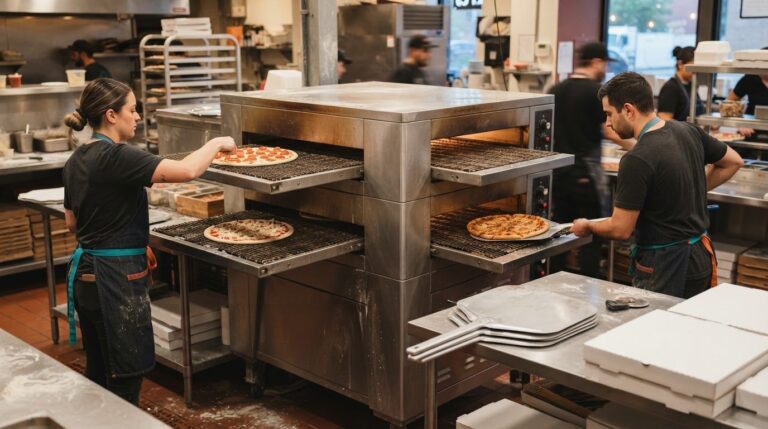
The oven isn’t always the reason a pizza ticket runs late. Effective ticket time reduction strategies for multi-deck pizza kitchens start with tracking both average and 90th-percentile ticket times, then addressing the delays behind the numbers. Staff for peak demand, coordinate expo, make oven use more deliberate, and remove unnecessary steps from the kitchen flow.
It’s easy to focus on the longest wait or busiest station, but an effective fix starts with identifying where delays repeat. A kitchen-wide average can hide a slowdown during peak service or a small group of tickets that take much longer than the rest.
This guide covers five practical ways to improve ticket flow without simply asking your team to work faster. Track times by daypart, order type, and station; prepare staffing and cross-training for peak periods; keep tickets moving through expo; coordinate oven loads; and arrange the kitchen to reduce unnecessary movement. The goal is a steadier service rhythm, clearer handoffs, and fewer avoidable delays.
Key Takeaways
- Break down ticket-time data by rush period, order channel, menu item, and station to pinpoint where delays begin.
- Build schedules around demand patterns and cross-train team members so key stations can keep moving during a rush.
- Use clear call-backs, thoughtful prioritization, and an active expo lead to coordinate modified orders and reduce pass delays.
- Match oven use to the menu and service flow, considering how deck and conveyor ovens fit different production needs.
- Arrange ingredients, tools, and handoff areas to cut unnecessary movement and create a smoother kitchen flow.
1. Tracking ticket times by daypart, order channel, menu item, and station
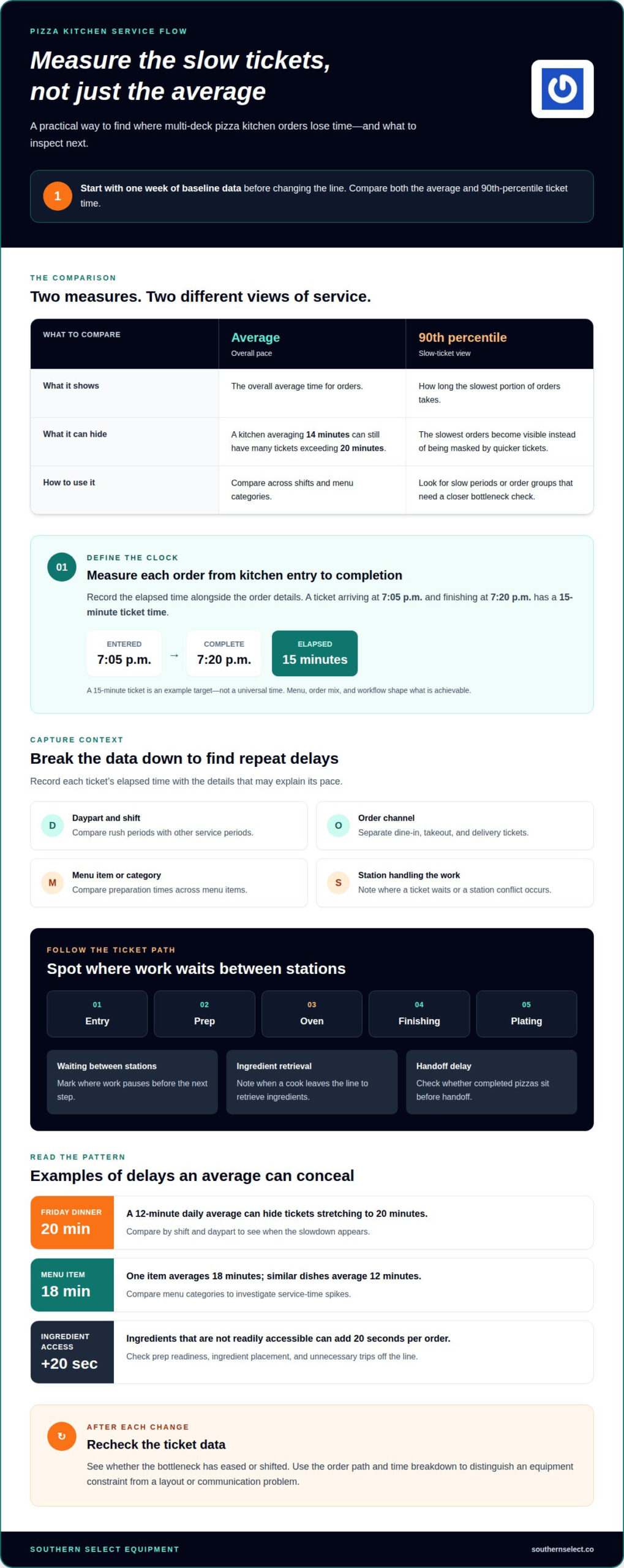
There isn’t one typical ticket time for every multi-deck pizza kitchen. A 15-minute ticket can serve as an example target for a pizza order, but your menu, order mix, and workflow shape what’s achievable.
Measure each order from the moment it enters the kitchen until it is complete. For example, an order arriving at 7:05 p.m. and finishing at 7:20 p.m. has a 15-minute ticket time. To identify bottlenecks, record that elapsed time alongside the daypart, order channel, menu item, and station handling the work. Compare dine-in, takeout, and delivery tickets separately, since different handoffs may affect the timeline.
Start with one week of baseline data before changing the line. Calculate the average ticket time, but don’t let that single figure hide slower orders: a kitchen averaging 14 minutes can still have many tickets exceeding 20 minutes. Track the 90th percentile as well, which shows how long the slowest portion of orders takes. Then compare results by shift and menu category. A 12-minute daily average, for instance, can conceal tickets stretching to 20 minutes during Friday dinner service.
Map each order’s path from entry through prep, oven, finishing, and plating. Mark when work waits between stations, when a cook leaves to retrieve ingredients, and when completed pizzas sit before handoff. Ingredients that aren’t readily accessible can add 20 seconds per order. Note whether the delay comes from prep running short, an oven queue, a station conflict, or a missed call-back. These observations distinguish an equipment constraint from a layout or communication problem.
Before service, use a prep sheet based on the product mix report to set out ingredients and confirm each station is ready. Arrange tools in the order cooks use them, keep frequently used ingredients within reach, and reserve clear plating space beside the pass. Review presets and plating order so each pizza follows a consistent sequence from finishing to boxing or serving. During peak service, watch for crossing paths and blocked work areas, then adjust the layout where these conflicts slow handoffs. Recheck ticket data after each change to see whether the bottleneck has shifted or eased.
Compare average ticket times by daypart, menu category, or staff configuration to investigate service-time spikes. A menu item averaging 18 minutes to prepare takes longer than similar dishes averaging 12 minutes.
During peak service, look for kitchen choke points and adjust the layout to reduce ticket times. Use the product mix report to prepare enough mise en place. Running short can send cooks off the line to prep ingredients and disrupt ticket flow.
2. Scheduling and cross-training staff for peak demand
A schedule built around quiet-period staffing can leave a pizza line short when orders climb. Use recorded ticket and order patterns to identify when demand begins rising, then schedule station coverage before the rush starts. If volume typically climbs at 6:00 p.m., adding kitchen employees at 6:30 p.m. may be too late to prevent a backlog. Staff need time to take positions, check supplies, and prepare for active service.
Plan each shift around the work coming in, not just the total number of employees. Consider which stations handle the most orders, which tasks overlap, and where one absence could interrupt production. Cross-train two or three people per station so trained teammates can step in when the line gets busy. This gives the shift lead more options than relying on one person for a critical task. It’s one of the practical ticket time reduction strategies for multi deck pizza kitchens, because staffing can shift with demand.
Cross-training works best when procedures are clear and repeatable. Teach each role in sequence: where tools and ingredients belong, how orders are called, what a completed task looks like, and when to hand work off. Let employees practice during a quieter period before assigning them to that station during a rush. A short station guide can reinforce consistency, especially when team members rotate among prep, oven, finishing, and packing.
Use consistent communication cues so stations don’t act on different versions of an order. The expo lead can call each ticket, repeat modifications, and name the next station to act. Team members should call back important details, such as a topping change or delayed component, so the whole line shares the same plan. Clear call-backs reduce avoidable errors and staff frustration, and help the lead spot a developing queue before it disrupts service.
Before each shift, confirm who owns each station and who can provide backup. Review expected demand, planned breaks, menu changes, and items that need extra coordination. If an employee moves to another role, make the handoff explicit: who is taking over, which orders are active, and what needs attention next. This reset helps maintain consistency as staffing shifts during service.
Training should make equipment and station procedures straightforward to follow. Demonstrate the correct sequence, explain the reason for each handoff, and watch employees complete the task without rushing. Clarifying steps before peak service is more useful than cutting corners once tickets back up. As ticket time reduction strategies for multi deck pizza kitchens take hold, use service observations to identify where staffing, role clarity, or practice needs further adjustment.
3. Coordinating order modifications, prioritization, and expo
During a Friday rush, clear ticket ownership helps prevent duplicate work and missed modifications. Assign an expediter to monitor incoming orders, call tickets, and coordinate station timing. For each order, call out the pizza, its changes, and any shared sides. Ask the receiving station to repeat unusual requests. That brief exchange gives cooks a chance to catch errors before food reaches the oven or pass.
A kitchen display system (KDS) or physical ticket rail can keep orders visible, as long as the team follows one consistent method. A KDS displays the active queue; an expo lead can use it to spot stacked orders and coordinate the next release. Order throttling means pacing new work to match what stations can handle, rather than letting tickets pile up unseen. The system should make the queue easy to read, while staff manage the flow.
For a large party, divide the order into separate tickets for no more than 8-10 guests per ticket. Label each with the table number and a sequence, so the kitchen can recognize related orders while preparing them separately. This keeps other tables from waiting for every plate in a large order to finish together. It also gives expo a clearer view of what is ready and what still needs attention.
Prioritize by readiness and timing, not by shouting or ticket age alone. The expediter should coordinate cook times across stations, call back changes, and identify which items can finish together. If a pizza is ready but its sides are delayed, call out the missing component and assign a clear next step. Check the pass often: finished food can lose quality while waiting there and block space for incoming orders.
Modifications need a shared shorthand. Use color-coded tickets, screen markers, or concise verbal call-backs, and make sure each station recognizes the same cues. Keep changes attached to the correct order through cooking, finishing, and handoff. This reduces the chance that a removed topping or substituted ingredient gets lost between stations, especially when several tickets arrive close together.
Review ticket flow after service and change one coordination step at a time. One restaurant cut its average ticket time by six minutes over one month by reorganizing its sauté station and having expo call every ticket with time goals. The practical lesson: pair a visible queue with active calls, then observe where orders wait. On Friday nights, this routine helps the team pace new tickets to actual station capacity instead of letting the backlog dictate service.
4. Pizza cooking times with deck and conveyor ovens
Pizza output per hour depends on oven capacity, bake duration, loading rhythm, and the mix of orders. Deck count alone won’t tell you how many pizzas a kitchen can finish. Compare the oven’s working capacity with each pizza’s cook time and the pace of loading and unloading.
Cooking time can change substantially with the oven style. At Twisted Pizza, deck ovens took 17 to 20 minutes per pizza, while XLT conveyor ovens cooked pizzas in 7 to 9 minutes. Those figures illustrate one operation, not a universal bake-time standard. A faster bake may improve throughput when the oven is the bottleneck, but only if prep, finishing, and handoff can keep pace.
Deck ovens require staff to manage placement and removal, so clear loading zones and a steady rotation matter. Follow a consistent sequence: load pizzas with enough room for the planned bake, track each position, and remove finished pies promptly. Don’t let completed pizzas occupy cooking space while another order waits. Conveyor ovens move product along a set path, so staging must be coordinated: have prepared pizzas ready before they reach the loading point.
For consistent results, match oven temperature and bake time to the dough, toppings, and desired finish. Start with the recipe and oven operating guidance, then record adjustments alongside crust color, cheese melt, and ticket timing. Don’t change temperature and bake duration at the same time. Adjusting one variable makes it easier to identify what improved or harmed the result.
To handle volume, coordinate menu items that share cooking times and temperatures. Batch-prep or par-cook suitable staples when quality holds, so cooks aren’t starting from scratch for every order. Portable induction cooking can support compatible sides or sauces near the line, leaving oven space for pizza production. Keep these tasks separate from oven loading, and assign a clear owner to each handoff.
Adding oven capacity or upgrading means balancing equipment investment and kitchen space against potential production headroom. The right choice depends on whether the real constraint is oven availability, staffing, preparation, or finishing. Extra oven capacity won’t clear a queue caused elsewhere. Compare peak demand with the entire workflow, including loading and unloading, before making a change. A faster oven helps only when the rest of the line can keep pace.
There is no single setting for every pizza: use the recipe and oven guidance, then adjust for the dough, toppings, and desired finish. One operation’s bake times were 17-20 minutes in deck ovens and 7-9 minutes in conveyor ovens; change temperature or bake time one at a time to assess the result.
5. Improving kitchen layout and reducing unnecessary movement
Map each pizza’s path from order entry to handoff, then watch the line during peak service. Note where cooks cross paths, reach around one another, or leave a station for tools and ingredients. For example, if a finisher repeatedly walks back to the prep area for a topping, move it closer to the finishing zone. Small layout changes can eliminate repeated workflow interruptions.
Arrange stations in the order work happens: ingredient prep, dough and topping assembly, oven loading, finishing, then packing or plating. Keep the pass clear for completed orders, and avoid routing incoming ingredients through the same space as finished pizzas. A clear, one-way flow reduces collisions and lets each handoff happen without blocking the next station.
Keep frequently used tools and ingredients within easy reach of the station that uses them most. Store toppings in the order cooks apply them, keep utensils beside their ingredients, and position boxes near the packing area. Use consistent containers and labels so staff can find what they need at a glance. During service, check for empty pans, misplaced tools, or clutter that makes cooks stop and search.
Measure wasted movement as part of the ticket-time review. Reducing unnecessary movement by 15 seconds across 200 orders saves approximately 50 minutes of activity. The benefit comes from repeated small improvements, not from asking staff to rush. Track a specific task, such as retrieving a topping or carrying a finished pizza to the pass, then adjust its location and observe whether the extra steps disappear.
Keep the oven approach and unloading area clear of traffic. A cook loading pizzas shouldn’t have to reach across the finishing station, and finished pies need a direct route to the next step. Mark distinct work zones for loading, cutting, garnishing, and boxing. If two roles regularly compete for the same counter, relocate one task or move its supplies to a separate surface.
Review the layout after a busy service, when delays and station conflicts are easiest to recall. Choose one recurring obstacle, move the relevant tool or ingredient, and explain the new setup at the next pre-shift. Then observe the same task during service. If the change reduces travel but creates crowding elsewhere, adjust the arrangement again. For equipment placement that supports this workflow, review commercial kitchen equipment options.
Southern Select Equipment
Southern Select Equipment offers commercial pizza ovens and restaurant equipment for kitchens assessing capacity, workflow, or equipment fit. Its range includes XLT Pizza Ovens, EDGE Pizza Ovens, conveyor ovens, and dough preparation machinery. If ticket-time tracking shows that oven capacity or equipment setup is limiting service, these options may be relevant to your operation. The right choice depends on how your menu, staff, and kitchen flow work together, not on bake speed alone. For a broader equipment need, consider how preparation and cooking equipment fit into the same production plan. To discuss equipment for your kitchen, contact Southern Select Equipment.
Build a More Reliable Service Rhythm
Start your next improvement with one clear operational priority: identify where the kitchen needs more capacity, smoother preparation, or stronger coordination. Set a practical goal, make one change, and observe its effect on service. This steady approach makes ticket-time improvement part of kitchen management, rather than a one-time push during a busy shift.
When equipment is part of the solution, Southern Select Equipment offers XLT Pizza Ovens, EDGE Pizza Ovens, and Hobart Mixers for commercial foodservice environments. The right fit depends on your menu, production needs, and kitchen setup. Focus on the constraint you’re trying to solve, and choose equipment that supports the wider workflow. With thoughtful ticket time reduction strategies for multi-deck pizza kitchens, your team can work toward a more consistent pace without cutting corners on hospitality.
Contact Southern Select Equipment today to discuss equipment for your operation. Take the next step toward a kitchen flow that serves your team and guests well.
Frequently Asked Questions
How should pizza stations be organized to reduce ticket times?
Arrange stations in the same sequence as a pizza’s journey: dough shaping, topping, baking, finishing, and handoff. Keep the cutting and boxing area separate from active oven loading so finished orders don’t obstruct incoming pizzas. For example, place the landing space beside the oven exit, with finishing tools and packaging within reach. Clear task boundaries help prevent staff from reaching across one another during a rush.
How can dough prep, portioning, and topping setup speed up pizza orders?
Prepare dough portions and topping quantities before service based on the expected menu mix. Consistent portions help each pizza move through assembly without repeated measuring or adjustments. Arrange toppings in recipe order and group ingredients used together so cooks can build each pizza in a steady sequence. Make it easy to flag low or depleted ingredients so prep staff can replenish a station before cooks have to pause an active order.
How should kitchens prioritize and batch tickets during rush periods?
Prioritize tickets by promised timing, preparation needs, and which items can finish together without sacrificing quality. Batch compatible pizzas only when they share suitable oven conditions and can be staged without delaying other orders. Keep special modifications visible from assembly through handoff, and avoid holding finished food while waiting for an unrelated item. The expediter can adjust release order as the queue changes and explain the reason to the line.
What staffing levels and roles reduce ticket times in a high-volume pizza kitchen?
Set staffing according to the work each station must complete during the busiest periods, rather than using the same headcount for every shift. Assign clear ownership for dough and toppings, oven loading, finishing, and expo; combine roles only when the workload allows. A shift lead can use order patterns and station queues to decide where another trained person will help most. Cross-trained staff can cover when a station becomes overloaded or someone steps away.
What oven temperature and bake time produce fast, consistent pizza results?
Deck ovens took 17 to 20 minutes, while XLT conveyor ovens cooked pizzas in 7 to 9 minutes.