
Imagine it’s a humid Friday evening and your kitchen is at capacity. You watch as the ticket rail fills up, but your current equipment just can’t keep pace. This often leads to those dreaded inconsistent crusts that frustrate your loyal guests and your staff alike. It’s a common struggle for growing pizzerias where the kitchen footprint doesn’t match the community’s appetite. Choosing the right Commercial Pizza Ovens isn’t just about raw heat; it’s about engineering a seamless flow that survives your busiest hours without skyrocketing your energy bills or sacrificing the quality your brand is known for.
We believe that your kitchen should feel like a well-oiled machine, not a source of stress. This professional guide will help you master the technical specifications and throughput requirements needed to select the perfect oven for your high-volume operation. You’ll learn about the latest 2026 industry standards, including the updated NSF/ANSI 4-2025 regulations regarding food-contact surfaces. We will also preview how industry-leading technology from XLT and EDGE can help you maximize production and maintain a steady, hospitable rhythm even during the most demanding shifts.
Key Takeaways
- Understand why a high-capacity thermal engine is the backbone of any professional kitchen and why residential units fall short of safety standards.
- Discover how modern air impingement technology in conveyor systems can maximize your throughput without increasing your labor costs.
- Master the technical specifications of Commercial Pizza Ovens, from BTU ratings to power sources, to ensure your bake quality remains consistent during peak hours.
- Evaluate the unique advantages of top industry brands like XLT and EDGE to find the right balance of energy efficiency and quiet operation.
- Learn how a curated equipment partnership rooted in Southern hospitality provides a reliable foundation for your long-term business growth.
The Role of Commercial Pizza Ovens in Professional Kitchen Throughput
Think of your oven as the steady heart of your kitchen. In a professional setting, Commercial Pizza Ovens act as high-capacity thermal engines. They are engineered to run for 12 to 18 hours a day without losing a single degree of performance. While residential appliances are fine for a family dinner, they simply cannot meet the rigorous production standards or safety certifications required in a professional environment. A home oven will lose heat the moment you open the door, but a commercial unit is built to recover almost instantly. This rapid recovery time is what ensures your crust has that perfect, consistent crunch even during a heavy rush. When your equipment fails to maintain its temperature, your product suffers, and that can quietly damage the trust you’ve built with your community. For a deeper look at the technical evolution of these tools, you can explore the history and types of pizza ovens to see how professional standards have shifted over the decades.
Identifying Your Peak Hourly Demand
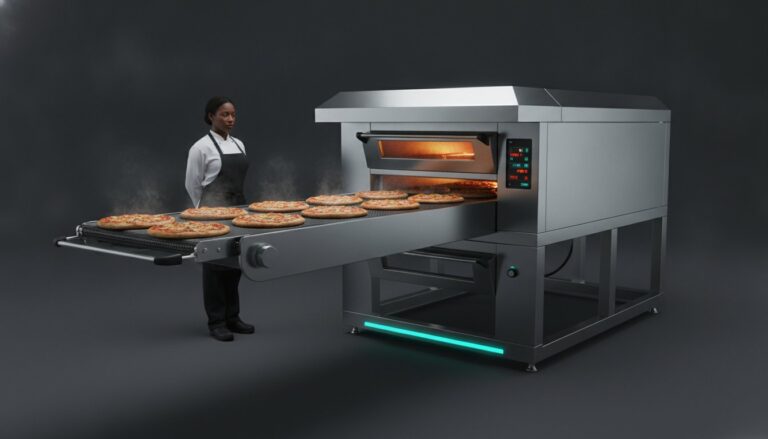
Calculating your Pizzas Per Hour (PPH) is the first step toward a seamless kitchen. Don’t make the mistake of sizing your equipment for your average daily volume. You must plan for your “peak of the peak,” which is usually that frantic Friday night window. If your menu features a large 18-inch or 20-inch signature pie, your conveyor belt width must accommodate that size without crowding. A belt that’s too narrow creates a physical bottleneck. This forces your team to wait on the oven rather than the other way around. By choosing Commercial Pizza Ovens with the right capacity, you ensure that your kitchen throughput remains steady no matter how many tickets hit the rail.
Thermal Stability vs. Raw Heat
It’s easy to confuse raw heat with baking efficiency. Simple heat is static, but managed airflow, or impingement, is dynamic. This technology uses pressurized hot air to blast away the cold air surrounding a fresh dough ball. This allows the pizza to cook faster and more evenly. High-quality insulation is just as important as the heating element itself. It keeps the thermal energy locked inside the baking chamber. This consistency is what allows a chef to walk away from the oven with confidence. Superior insulation also prevents your kitchen from becoming uncomfortably hot. This reflects the hospitality we value, ensuring your staff stays focused and comfortable while they serve your guests. Using high-grade stainless steel in the construction also guarantees that the unit can withstand the daily wear and tear of a high-volume environment.
Evaluating Oven Technologies: Conveyor vs. Deck Systems
Choosing between a deck oven and a conveyor system is one of the most significant decisions you’ll make for your business. It’s a choice that impacts your daily labor costs, your staff training, and the ultimate consistency of your product. While a traditional deck oven offers a certain charm, Commercial Pizza Ovens that utilize conveyor technology are the undisputed champions of high-volume performance. They replace the need for constant “tending” with a reliable, mechanical flow that ensures every guest receives the same high-quality meal. This transition from manual labor to automated precision allows your team to focus on hospitality rather than just managing the heat.
Modern conveyor units have evolved far beyond the simple heating systems of the past. The integration of advanced air impingement technology allows these ovens to bake up to 35% faster than traditional deck models. This isn’t just about speed; it’s about precision. By blasting away the layer of cold air that naturally clings to dough, impingement ovens create a crisp crust and perfectly melted cheese in a fraction of the time. This makes them ideal for New York-style or thicker crusts that need deep, penetrating heat without burning the toppings. It’s a seamless way to maintain quality during your busiest hours.
The Dominance of Conveyor Pizza Ovens
If your goal is to serve hundreds of pies during a weekend rush, consistency is your best friend. Conveyor systems, such as those from XLT, remove the variable of human error from the equation. Once you set the belt speed and temperature, the oven does the rest. This “set-and-forget” mentality is why high-volume franchises almost exclusively use this technology. It allows your kitchen staff to focus on topping and boxing rather than worrying about rotating a pie to prevent a burnt edge. Additionally, these units often feature cooler exterior surfaces, helping your kitchen meet OSHA safety standards for thermal protection and worker comfort.
When to Consider a Deck Oven
Deck ovens still hold a special place in the hearts of artisan bakers. If your brand is built on the theater of an open kitchen or the specific char of a thin-crust Neapolitan, a deck might be the right fit. However, you must account for the steep learning curve. Tending a deck oven is a skill that takes months to master. You’ll need a dedicated operator to move, rotate, and check every pizza constantly. This often leads to higher labor costs and a higher risk of waste during training. If you’re looking for a balance of speed and reliability, you can explore our curated inventory to see which technology aligns with your kitchen’s unique personality and production goals.
Critical Specifications for Professional Pizza Ovens
Choosing the right equipment for your kitchen involves more than just picking a brand; it’s about understanding how technical specifications meet your daily operational needs. When you evaluate Commercial Pizza Ovens, the BTU rating is your first indicator of raw power. High BTU ratings translate directly into faster recovery times. This means your oven won’t lose momentum when you’re loading pie after pie during a rush. While gas models currently lead the market with a 35.13% share in 2026, electric alternatives are growing in popularity. Electric units are expanding at a rate of 11.05% annually because they offer precise temperature control and often simplify the installation process in buildings where gas lines aren’t accessible. We’ve found that matching the power source to your existing utility infrastructure is the first step in a seamless setup.
Ventilation is another non-negotiable factor. High-output ovens generate significant heat and grease laden vapors that must be managed to keep your kitchen safe and comfortable. Proper hood sizing and airflow are critical for maintaining foodservice equipment industry standards and ensuring your staff doesn’t overheat. Beyond performance, you must consider daily maintenance. Modern designs now feature easy-to-clean components and removable crumb trays. These features aren’t just for convenience; they’re essential for meeting the updated NSF/ANSI 4-2025 safety standards that took effect in February 2026. Keeping your equipment clean ensures a long life for your investment and a healthy environment for your community.
Stackable Configurations and Space Optimization
In many coastal kitchens, space is at a premium. Stackable configurations allow you to double or even triple your production capacity without taking up a single extra square inch of floor space. Engineering a multi-stack system requires careful planning to manage heat discharge and ensure the floor can support the weight of heavy units like EDGE or XLT ovens. By stacking your Commercial Pizza Ovens, you can dedicate different levels to different products, such as using the top deck for appetizers while the bottom handles your high-volume signature pizzas.
Advanced Control Systems
The industry is moving toward digital touchscreens that allow you to save programmable bake profiles for every item on your menu. This level of control is vital when you’re managing a varied menu that includes everything from thin crust to deep dish. Independent top and bottom heat controls allow you to fine-tune the bake, ensuring the cheese is bubbly while the crust remains perfectly crisp. To achieve this, modern units rely on impingement, which is the pressurized delivery of hot air to break the cold boundary layer around food. This technology ensures that every bake is identical, regardless of who is operating the kitchen.
Top Industry Brands: XLT, EDGE, and Lincoln Impinger
XLT Pizza Ovens: Engineering for Consistency
XLT has become an industry favorite by focusing on the details that chefs care about most. Beyond their patented air-impingement technology, they are widely recognized for their quiet operation. A loud kitchen adds stress. XLT’s engineering keeps decibel levels low, allowing your team to communicate clearly. Their “tool-less” cleaning design is another significant advantage. Your team can easily remove the conveyor and fingers for cleaning without searching for a wrench. This level of accessibility makes daily maintenance a seamless part of your routine. It is an essential component when Scaling your kitchen for success and protecting your investment over the long haul.
EDGE and Lincoln: Specialized Performance
While XLT focuses on quiet reliability, EDGE ovens have built their name on innovative energy management. They utilize modulated burners that intelligently adjust gas consumption based on the actual baking load. This means you aren’t paying for full power during the slow mid-afternoon hours, yet the heat is there the moment you need it. Lincoln Impinger ovens offer a different kind of value, carrying a long legacy as the pioneers of rapid-bake technology. They are often the preferred choice for kitchens with smaller footprints that still require the power of a full-sized conveyor. Their design allows for high-speed production in a compact frame. This makes them ideal for tight coastal kitchen layouts where space is at a premium.
Comparing these top-tier brands often comes down to your specific kitchen workflow and local utility costs. All three offer robust warranties and excellent parts availability. This ensures that a minor issue doesn’t turn into a weekend-long shutdown. Downtime isn’t an option. We believe in providing equipment that acts as a stable foundation for your business, allowing you to focus on the people and the community you serve. If you’re looking for guidance on which brand best suits your unique production needs, you can view our professional oven collection to compare models side-by-side.
The Southern Select Approach to Professional Equipment
Investing in Commercial Pizza Ovens represents a major milestone for any growing hospitality business. It’s a decision that moves you away from the limitations of smaller units and toward a future of high-volume success. At Southern Select, we don’t believe in the “one size fits all” approach you might find at a big-box restaurant supply store. Instead, we offer a curated inventory of heavy-duty machinery that we’ve vetted for reliability and performance. This isn’t just about selling a machine. It’s about ensuring your kitchen has the heart it needs to serve your community with excellence. We treat every equipment partnership with the care it deserves, looking beyond the numbers to the people behind the properties.
Our approach is rooted in the values of Southern hospitality. We know that when your oven is down, your business stops. That’s why we emphasize the synergy between your cooking line and your prep area. For example, pairing a high-capacity conveyor with industry-standard Hobart mixers ensures that your dough quality matches your bake speed. If your dough isn’t consistent, even the best oven in the world can’t produce a perfect crust. This holistic view of your kitchen workflow is what sets a professional operation apart from the rest. We aim to make you feel like you’re in capable, friendly hands rather than just engaging in a cold transaction.
Beyond the Transaction: A Trusted Local Guide
We take pride in acting as a trusted local guide for our clients. By focusing only on “Select” brands like XLT and EDGE, we ensure that every piece of equipment we offer has the durability to survive a coastal kitchen’s toughest shifts. You need a partner who understands the high-stakes nature of food service, especially during peak seasons or holiday rushes. We’re here to provide the expert guidance you need to navigate these choices with confidence. If you’re currently in the planning stages, The professional guide to sourcing equipment offers deeper insights into building a reliable supply chain for 2026.
Next Steps for Your Kitchen Upgrade
Preparing for a kitchen upgrade requires more than just making room on the line. You need to consider the electrical loads, gas line capacities, and ventilation requirements we’ve outlined throughout this guide. We invite you to request a professional consultation to discuss your specific throughput goals. Our team will help you walk through the technical specifications to ensure your facility is ready for the arrival of your new machinery. When you’re ready to see the difference that high-performance engineering can make, Explore our curated selection of commercial pizza ovens and take the first step toward a more efficient, hospitable kitchen.
Elevate Your Kitchen Capacity for the Future
You’ve explored how matching your peak hourly demand with the right conveyor technology can transform a stressful Friday night into a seamless display of hospitality. From mastering the nuances of air impingement to choosing between gas and electric configurations, the path to consistency is built on technical precision. Selecting high-performance Commercial Pizza Ovens ensures your brand reputation remains as crisp as your crust, regardless of how many tickets hit the rail. It’s about more than just heat; it’s about creating a reliable rhythm that supports your staff and delights your guests.
At Southern Select, we combine decades of expertise in high-volume hospitality equipment with a curated selection of XLT, EDGE, and Lincoln Impinger units. We offer national shipping on professional-grade restaurant machinery to ensure you have the tools you need, wherever your kitchen calls home. You don’t have to navigate these complex technical specifications alone. We’re here to provide the reassurance and expert guidance that turns a high-stakes investment into a long-term partnership.
Browse Our Professional Commercial Pizza Oven Inventory
We’re here to help you build a kitchen that serves your community with pride and reliability for years to come.
Frequently Asked Questions
What is the difference between an impingement oven and a standard convection oven?
An impingement oven uses pressurized jets of hot air to blast away the cold boundary layer surrounding your food, whereas a standard convection oven simply circulates hot air throughout the chamber. This focused airflow allows impingement models to cook up to 35% faster than traditional methods. This technology is a hallmark of high-quality Commercial Pizza Ovens, ensuring that your toppings are perfectly seared while the crust achieves a consistent, crispy finish every time.
How many pizzas can a double-stack conveyor oven produce per hour?
A double-stack conveyor oven can typically produce between 100 and 200 large pizzas per hour, depending on the specific model and belt width. For instance, stacking two high-capacity units allows you to double your throughput without expanding your kitchen’s footprint. This setup is ideal for high-volume environments where Friday night rushes demand maximum output. By utilizing both decks, your team can manage signature pies on one level and appetizers or side dishes on the other.
Do I need a vent hood for a commercial conveyor pizza oven?
Yes, most local building codes and safety standards require a professionally installed vent hood for any commercial conveyor oven. These units generate significant heat and grease-laden vapors that must be properly exhausted to maintain a safe and comfortable working environment. Proper ventilation also helps regulate the ambient temperature of your kitchen, which protects your other refrigeration equipment from overworking. Always consult with your local health department to ensure your hood meets specific regional requirements. To maintain these systems effectively, you can learn more about Hassle Free Restaurant Cleaners and their professional exhaust cleaning services.
Which is better for a high-volume pizzeria: gas or electric ovens?
Gas ovens are often preferred for high-volume pizzerias because they provide powerful heat for continuous operation. However, electric models are a fantastic alternative if your facility lacks gas lines or if you require precise, digital temperature control. Electric units are gaining popularity due to their compliance with stricter emission regulations and faster heat-up times. Your choice should ultimately depend on your building’s existing utility infrastructure and your long-term energy cost projections for your specific region.
What maintenance is required for a commercial conveyor belt oven?
Daily maintenance involves clearing the crumb trays and wiping down the exterior to meet health safety standards. On a weekly basis, you should remove the conveyor belt and the internal fingers to clear away any accumulated debris or grease. Many modern units feature tool-less designs that make this process seamless for your staff. Regular professional inspections of the motor and heating elements will also ensure your investment remains reliable and safe for your team to operate.
Can I bake items other than pizza in a commercial conveyor oven?
You can absolutely bake a wide variety of menu items beyond pizza, including wings, toasted sandwiches, and even certain desserts. The programmable bake profiles found in Commercial Pizza Ovens allow you to adjust belt speeds and temperatures for different products. This versatility makes the conveyor oven a multi-functional tool that can handle almost any item requiring consistent, high-heat baking. It is an excellent way to maximize your equipment investment across your entire menu offerings.
Why should I choose XLT or EDGE over cheaper alternatives?
Choosing XLT or EDGE means investing in long-term reliability and superior engineering rather than just a lower upfront price. These brands are known for their quiet operation and innovative energy management, such as modulated burners that reduce gas consumption during slow hours. Cheaper alternatives often lack the insulation and build quality required for high-volume performance, leading to higher repair costs and frequent downtime. A curated brand provides the peace of mind that your kitchen will stay running.
How do I determine the right belt width for my pizza menu?
You should determine your belt width based on the diameter of your largest signature pizza plus a small buffer for airflow. If you serve an 18-inch pie, a 32-inch belt allows you to run two large pizzas side-by-side, significantly increasing your hourly capacity. Choosing a belt that is too narrow creates a permanent bottleneck in your production flow. We recommend sizing your belt for your peak demand periods to ensure your kitchen never falls behind your ticket rail.