


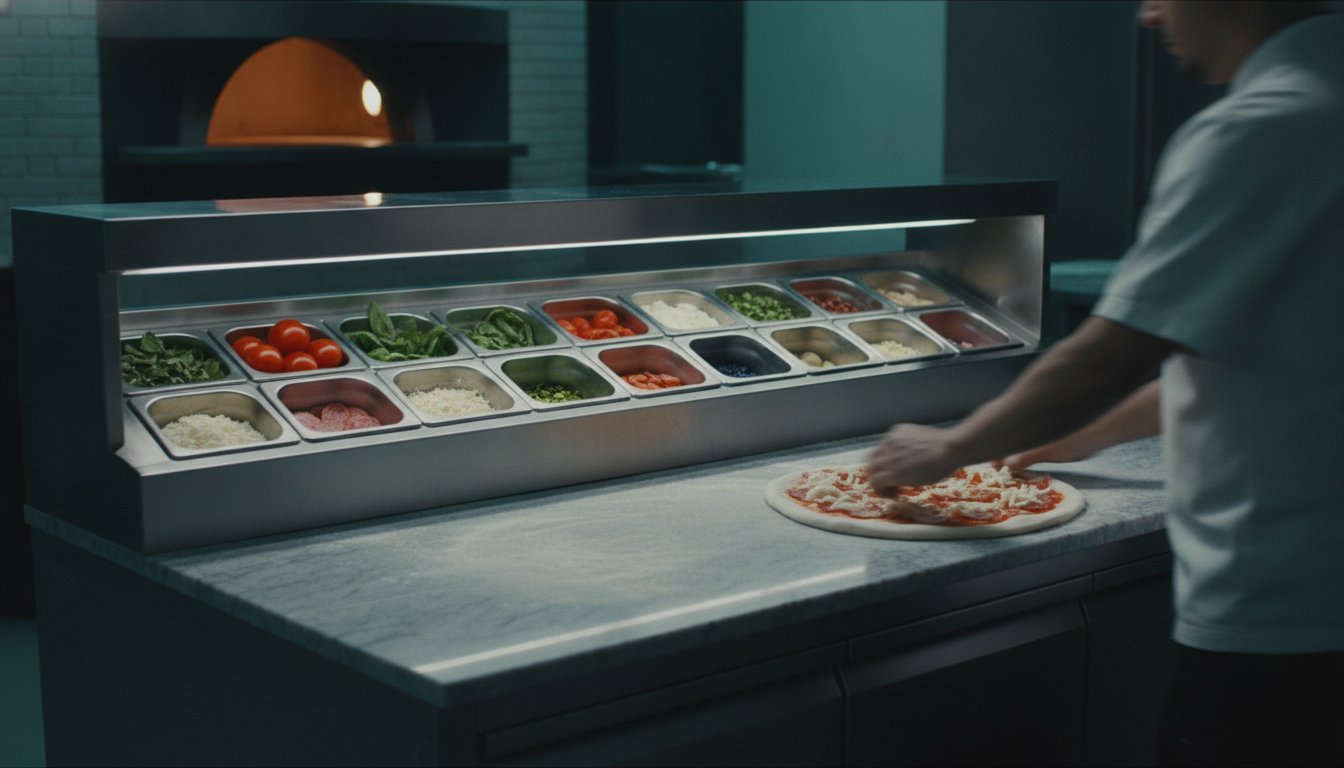
Your oven might be the heart of the kitchen, but your commercial pizza prep table is the steady hand that ensures every slice meets the gold standard of safety and quality. You likely know the frustration of watching ingredients lose their edge during peak hours or dealing with a workspace that just isn’t built for your largest signature pizzas. It’s a common challenge, but your equipment should be a reliable partner that supports your craft rather than a source of worry when the tickets start stacking up.
We’ve put together this guide to help you master your pizza line efficiency by selecting, configuring, and maintaining heavy-duty tables that thrive under pressure. You’ll learn how to maintain strict NSF temperature standards between 33°F and 41°F while protecting your investment from the silent threat of flour dust accumulation. We’ll walk through the essential steps to increase your dough-to-oven speed and reduce long-term maintenance costs, giving you the peace of mind to focus on what you do best: serving your community with excellence.
In a busy pizzeria, your commercial pizza prep table acts as the command center where speed meets precision. It’s likely the most utilized piece of equipment in your kitchen, serving as the bridge between your dough mixer and the oven. While some view it as simple storage, professional operators understand that a high-performance prep station is essential for maintaining throughput. If your work surface is too warm, high-hydration dough becomes sticky and difficult to stretch. This leads to torn crusts and slower service. A refrigerated worktop keeps that dough manageable, ensuring your team can move from ball to build in seconds.
Balancing ingredient accessibility with strict food safety standards is a daily challenge for any hospitality professional. You need toppings within arm’s reach, yet they must remain within the safe temperature zone of 33°F to 41°F. Moving beyond standard refrigeration to professional-grade equipment means investing in units designed for the relentless pace of a high-volume line. These stations don’t just hold food; they protect your reputation by ensuring every topping stays fresh and safe throughout the longest shifts.
Placing your prep table near high-output XLT Pizza Ovens or EDGE Pizza Ovens creates a demanding thermal environment. Standard units often struggle when ambient kitchen temperatures climb above 100°F. We recommend “overbuilt” refrigeration systems that can handle these high-heat zones without failing. These heavy-duty systems also prevent the “sweating” effect on stainless steel surfaces. Excess moisture can ruin your dough’s texture, so maintaining a dry, cold work surface is non-negotiable for a professional finish.
A seamless workflow depends on how well your equipment fits your team’s movements. While standard 19-inch cutting boards are common, extra-deep custom surfaces provide the space needed for 18-inch or 20-inch pizzas without overhang. Optimizing the reach-in height is another expert touch that reduces staff fatigue during a dinner rush. By integrating condiment rails for smooth ingredient transitions, you create a station that feels like a natural extension of the chef’s hands. This allows for a faster, more comfortable build every time.
When the lunch rush hits and your kitchen temperature begins to climb, the cooling system inside your commercial pizza prep table has to work overtime. It’s not just about maintaining a steady temperature; it’s about how quickly the unit recovers. Every time your team reaches for pepperoni or extra cheese, cold air escapes. This is why the choice between forced-air and cold-wall refrigeration is one of the most important decisions you’ll make for your line’s efficiency. In the context of NSF-7 standards, forced-air cooling is a refrigeration method that uses high-velocity fans to create a continuous blanket of chilled air over the ingredient pans, maintaining temperatures below 41°F even during active assembly.
For high-volume pizzerias, forced-air systems are generally the superior choice because they circulate air more effectively than cold-wall units, which rely on refrigerated copper tubing inside the walls. To keep that cold air where it belongs, look for units featuring high-density, CFC-free polyurethane insulation. This material acts as a thermal shield, protecting your ingredients from the radiant heat of nearby equipment. If you’re looking for a setup that pairs industrial strength with reliable performance, our curated selection of commercial refrigerators offers the heavy-duty engineering your kitchen deserves.
The heart of your prep station is the compressor. In a professional environment, “economy” compressors often fail because they aren’t designed for the high BTU (British Thermal Unit) requirements of a pizza kitchen. You need a system with a high BTU rating to ensure rapid recovery times after the lids have been open for an hour-long rush. A heavy-duty compressor doesn’t just keep food safe; it reduces the strain on the entire system, leading to a longer lifespan for your equipment.
Hot spots in the corners of an ingredient rail can lead to spoiled produce and health code violations. Professional-grade tables use recessed pan designs to drop the ingredients deeper into the refrigerated “cold zone,” shielding them from ambient kitchen heat. When the shift ends, using thick, insulated lids is essential for overnight storage efficiency, as they prevent the compressor from running constantly when the kitchen is closed.
Flour dust is the silent assassin of kitchen motors. Since pizza dough prep involves constant flour usage, we recommend units with slide-out compressor racks for easy cleaning and national serviceability. Whether you choose a front-breathing or side-breathing unit depends on your footprint, but ensuring the motor is protected from airborne particles is vital for long-term endurance. A well-placed, ventilated compressor ensures your line stays moving without unexpected downtime.
Choosing the right commercial pizza prep table is a balancing act between your available floor space and your peak production needs. You don’t want a unit so small that your team is constantly stopping to refill pans, yet a table that’s too large can disrupt your kitchen’s natural rhythm. Generally, we see high-volume shops matching their table width to their daily dough count. While a 44-inch unit might serve a small boutique spot, pizzerias pushing hundreds of pies a day often find that 93-inch or 119-inch configurations are the professional standard for keeping the line moving without interruption.
Beyond width, you’ll need to decide between doors and drawers. Doors are excellent for bulk storage, allowing you to keep stacks of dough boxes chilled and ready for the next round of stretching. Drawers, however, offer superior speed during a rush because they provide immediate access to prepped pans of cheese and protein without the need to reach deep into a cabinet. Balancing these two can significantly impact your prep-cycle frequency. If you’re managing a 150-cover service, industry data suggests you may need up to 10 meters of total prep space across your kitchen to ensure everything stays organized and accessible. For mobility, always opt for heavy-duty casters. They make it simple to reposition equipment for deep cleaning, which is vital in a flour-heavy environment.
Your kitchen’s layout should feel like a well-choreographed dance. Positioning your prep table to create a straight-line flow toward your conveyor ovens eliminates unnecessary steps and cross-traffic. This setup is a cornerstone of high-volume efficiency, ensuring your staff can build a pie and slide it into the heat in one fluid motion. You might even consider creating dedicated stations. Use one section for your standard cheese and pepperoni pies and another for specialty builds to prevent ingredient cross-contamination and keep your fastest movers flying off the line.
In a high-stakes kitchen, the build quality of your equipment determines its lifespan. We recommend 16-gauge stainless steel as the minimum standard for any work surface that sees heavy use. It resists the dents and scratches that can harbor bacteria over time. An all-stainless interior is equally important for both sanitation and cooling consistency. Don’t overlook the smaller details like heavy-duty hinges and high-quality door gaskets. These components take the most abuse during a shift, and a failed gasket can lead to temperature fluctuations that put your ingredients at risk.
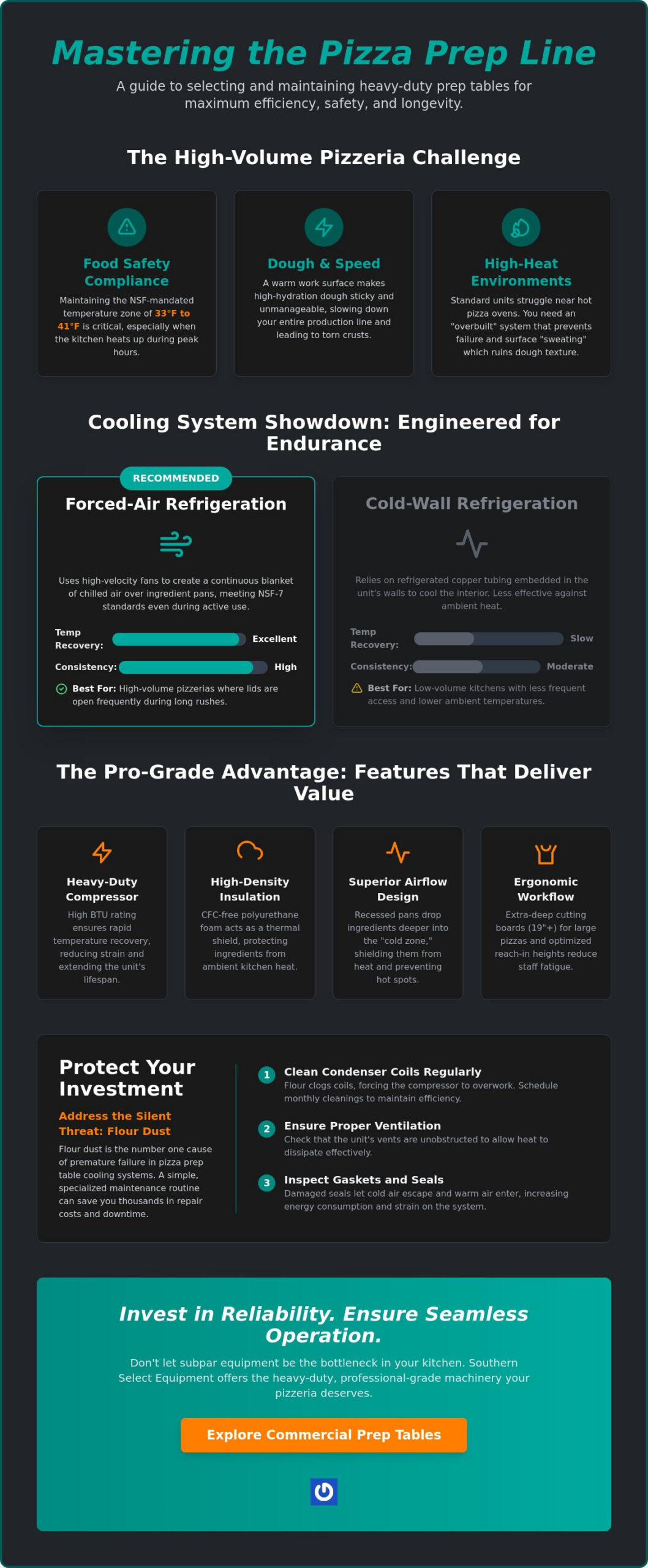
Maintaining a commercial pizza prep table in a high-volume kitchen is uniquely challenging because of the “Flour Factor.” While standard reach-in units primarily contend with ambient heat, your pizza station is constantly exposed to fine flour dust. This dust is a silent threat that can clog vital components in days rather than months. Neglecting a specialized cleaning routine leads to motor fatigue and eventually costly downtime. We recommend a proactive approach to ensure your equipment remains a reliable partner in your kitchen. Start by identifying early warning signs of system fatigue, such as unusual humming, ice formation on evaporator coils, or temperatures that slowly creep above 41°F during a rush.
Consistency is the secret to equipment longevity. Your team should follow a tiered maintenance schedule to protect the cooling system. Daily tasks include wiping down door gaskets and clearing debris from the pan rail. Weekly, you should inspect the air filters for dust buildup. Monthly, a deep clean of the condenser coils is essential. These steps ensure your unit stays compliant with NSF-7 standards, which mandate that open-top prep units maintain food-safe temperatures even while the lids are open for service. If you’re looking for units designed with easy-access components for simpler upkeep, explore our latest restaurant equipment options.
Cleaning your condenser coils is the most effective way to prevent motor burnout. When flour dust coats these coils, the compressor must work twice as hard to dissipate heat, leading to premature failure. Many professional-grade tables now include dedicated air filters to protect these sensitive parts. Don’t forget the gaskets; in flour-rich environments, dust can settle in the folds of the door seals, making them brittle or preventing a tight closure. A simple wipe with a damp cloth daily preserves the seal and keeps the cold air where it belongs.
Precision matters when it comes to food safety. We suggest using independent digital thermometers alongside the unit’s built-in display to verify accuracy. High-temp alarms are also a wise investment, alerting your staff the moment a door is left ajar or a cooling cycle fails. Proper pan loading is another critical factor. Never overfill pans or stack them in a way that blocks the airflow vents in the rail. By integrating these habits into your broader commercial kitchen maintenance schedule, you create a culture of reliability that protects both your ingredients and your bottom line.
Choosing a commercial pizza prep table shouldn’t feel like a gamble. At Southern Select Equipment, our philosophy is simple: we only curate heavy-duty, high-performance machinery that we’d trust in our own kitchens. We’ve seen how the high-stakes environment of a professional pizzeria can chew through standard equipment. That’s why we prioritize industrial-grade solutions built to withstand the radiant heat of a conveyor oven and the constant intake of flour dust. It’s about providing you with a seamless experience that lets you focus on your craft rather than your repair bill.
We’ve made a conscious choice to avoid residential-grade or “economy” units for professional spaces. While a lower price point might look attractive on a balance sheet today, these units often lack the recovery speed and insulation thickness required for high-volume throughput. This focus on performance mirrors the approach of specialists like The BBQ Experts, who provide professional-grade outdoor cooking equipment and premium fuel for those who refuse to compromise on quality. Our commitment to national reliability means Southern Select Equipment only sources machinery that meets the rigorous demands of 2026 food service standards. When you partner with us, you’re gaining an insider’s knowledge of what actually works on a busy line, ensuring your investment is grounded in professional reality.
Our sourcing expertise is designed to prevent the kind of costly downtime that can derail a successful weekend. We prioritize brands with proven track records in high-volume environments because we know that reliability is the true measure of value. A cohesive kitchen suite is more than just a collection of machines; it’s a synchronized system. For instance, integrating your prep table with Hobart Mixers ensures a complete dough-prep solution where every step of the process is supported by excellence. We help you build a kitchen where every piece of equipment works in perfect harmony.
We bring expert-level guidance to restaurant operators across the country, blending professional authority with the warmth of Southern hospitality. Our dedication to integrity and long-term partnerships means Southern Select Equipment is with you for the journey, not just the transaction. Whether you’re opening your first location or planning a major expansion, we provide the steady hand and reliable advice you need to succeed. Explore our full range of commercial restaurant equipment to see how we can help you scale your kitchen for success. We’re here to ensure your expansion is grounded in quality and supported by people who truly care about your results.
Your journey to a more efficient line starts with understanding that your commercial pizza prep table is more than just a surface; it’s a precision instrument. By prioritizing thermal stability through forced-air cooling and choosing a configuration that mirrors your specific workflow, you’ve already taken the biggest steps toward high-volume success. Remember that consistent maintenance is the final piece of the puzzle, protecting your equipment from the unique challenges of a flour-rich environment and ensuring your station remains a reliable partner for years to come.
At Southern Select Equipment, we’re dedicated to helping you find the perfect match for your kitchen’s unique needs. We specialize in high-performance brands like XLT, EDGE, and Hobart, providing an expert-curated inventory built for professional-grade reliability. With our national shipping and commitment to hospitality, you can trust that your equipment will arrive ready to perform under pressure. View our curated selection of professional-grade pizza prep tables and refrigeration to find the thermal anchor for your next successful shift. We’re here to help you build a legacy of quality, one perfect slice at a time.
Pizza tables feature a deeper cutting board and larger 1/3 size pan capacity compared to the shallower 1/6 size pans found on sandwich units. This extra depth is essential for stretching and topping large-diameter crusts without the dough hanging over the edge. While sandwich tables are designed for speed in tight spaces, a dedicated commercial pizza prep table provides the heavy-duty cooling and physical space needed for a high-volume line.
A depth of 19 inches is the professional standard for most cutting boards on these units. This provides enough clearance for a standard 18-inch pizza to sit fully on the work surface during assembly. If you frequently serve extra-large or specialty pies, you might look for custom surfaces that offer even more room to work comfortably. Having that extra space prevents mess and ensures your team can move quickly during a dinner rush.
Yes, you should always place your refrigeration equipment on a dedicated circuit to prevent power surges or tripped breakers. High-volume tables have powerful compressors that pull a significant load when they kick on to recover temperatures after the lids have been open. Using a shared circuit can lead to inconsistent cooling or even motor damage over time. It’s a simple step that protects your investment and ensures your kitchen stays operational.
You should clean your condenser coils at least once a month to prevent flour dust from choking the motor. In a busy pizzeria, airborne flour accumulates much faster than in other restaurant environments. Regular cleaning ensures the system breathes easily, which keeps your energy costs down and prevents unexpected compressor failure. Keeping your commercial pizza prep table clean is the most effective way to extend its lifespan and maintain food safety standards.
You can store dough balls in the refrigerated cabinet below, but never leave them in the top rail overnight. The bottom section is designed for stable, long-term storage of dough boxes and bulk ingredients. The top rail is meant for active service and won’t provide the consistent environment needed for a slow, overnight proof. Always transfer your dough to sealed boxes in the base to maintain its texture and quality.
The ideal ambient temperature for your kitchen should stay below 80°F for maximum efficiency and equipment longevity. While many professional units are rated to perform in environments up to 100°F, they’ll work much harder and consume more energy to maintain safe internal zones. Keeping your kitchen well-ventilated helps your refrigeration system last longer and perform more reliably. It also creates a more comfortable environment for your staff to work during peak hours.
NSF-7 certification verifies that your unit can maintain internal food temperatures between 33°F and 41°F during active use. For a restaurant inspector, this certification is proof that your equipment is engineered to keep perishable toppings safe even when the lids are open for service. It’s a vital mark of quality that ensures you’re meeting strict health and safety regulations. Investing in certified equipment gives you peace of mind during every surprise inspection.
Doors are generally better for pizzerias because they allow you to stack full-size dough boxes in the refrigerated base for easy access. Drawers are helpful for quick access to individual ingredient pans, but they often sacrifice the vertical clearance needed for bulk dough storage. Most high-volume operators prefer a door configuration to keep their next round of crusts chilled and ready. This setup ensures you have the bulk capacity needed for a busy shift.




Leave a Reply