
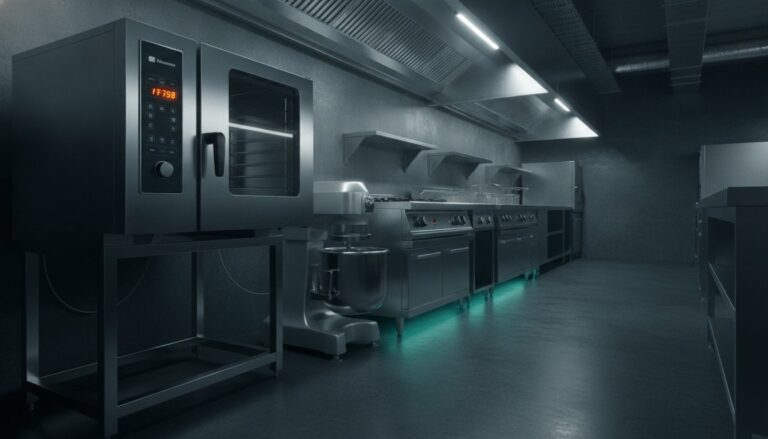
Imagine it is the peak of a Saturday dinner rush and your primary oven suddenly goes dark. That heavy silence doesn’t just stall your service; it threatens the reputation you’ve worked so hard to build. Avoiding these high-stakes failures requires a robust commercial kitchen equipment checklist that prioritizes heavy-duty durability over short-term savings. You need a kitchen that reflects your commitment to excellence, where every piece of machinery supports your team’s hard work through every high-volume shift.
We agree that the constant worry of equipment downtime is a burden no restaurateur should carry. You want a workspace that flows naturally and equipment that lasts a decade, not just a season. This guide offers a professional roadmap for selecting high-performance machinery designed for long-term success. We will walk through the essential ovens, mixers, and cooling solutions you need to maintain maximum throughput while meeting the latest 2026 safety standards with confidence. It is time to build a kitchen that serves your vision as faithfully as you serve your guests.
Key Takeaways
- Learn how to align your machinery choices with your specific menu to ensure your kitchen remains efficient and profitable during the most demanding rushes.
- Discover why a professional commercial kitchen equipment checklist must prioritize heavy-duty durability over the lower upfront costs of light-duty appliances.
- Understand the critical metric of “recovery time” in refrigeration and how it protects your inventory and food safety during peak operating hours.
- Identify why investing in “Select” brands like Hobart and XLT provides a superior long-term ROI through better performance and higher resale value.
- Gain a clear framework for deciding when to purchase brand-new machinery versus when high-quality used equipment is the smarter choice for your workflow.
The Strategic Foundation: Planning Your Kitchen for High-Volume Output
Before you look at floor plans or browse catalogs, look at your menu. Every item you serve is a promise to your guest, and your equipment is what allows you to keep that promise during the Saturday rush. A successful commercial kitchen equipment checklist starts with the food, not the machinery. If your menu features high-volume pizza or baked goods, your needs differ wildly from a small coastal bistro. You must choose tools that handle your specific peak throughput without breaking a sweat. We believe that a kitchen should be a place of hospitality, not a place of stress.
There is a vast difference between light-duty appliances and high-volume machinery. While a residential oven might look similar to a professional one, it lacks the insulation and recovery speed needed for a Commercial Kitchen Overview. In 2026, labor efficiency is paramount. Choosing durable, “Select” brands ensures your team isn’t fighting with the equipment while trying to serve customers. This hospitality-first approach to design means your staff feels supported by their tools, which directly impacts retention and morale. When your equipment works as hard as your people do, the entire atmosphere of the restaurant shifts from frantic to focused.
Analyzing Your Menu Requirements
Identifying bottlenecks is the first step in creating your commercial kitchen equipment checklist. If your signature dough takes hours to prep, a heavy-duty Hobart mixer becomes the heartbeat of your operation. You need to match your bowl size to your largest batch requirements to avoid constant reloading. Regarding cooking, you must decide if the artisanal touch of a deck oven outweighs the sheer consistency and speed of a conveyor system like an XLT or EDGE. For high-volume environments, automation often wins by reducing the need for constant monitoring.
Defining Kitchen Work Zones
A well-oiled kitchen relies on smart zoning. The Prep Zone is your starting point, where Hobart mixers and slicing equipment require ample power and space. Next, the Hot Line should be positioned for maximum flow; conveyor ovens are excellent here because they create a predictable “in and out” rhythm for orders. Finally, the Cold Chain must be managed with expert care. Position your refrigeration so it’s accessible to the line but far enough from the heat of the ovens to prevent the compressors from overworking. This logical flow creates a seamless experience for your culinary team, ensuring every plate leaves the kitchen with integrity.
The Cooking & Prep Core: Heavy-Duty Essentials for Professional Kitchens
Once you’ve mapped out your kitchen’s flow, it’s time to select the heavy-duty machinery that serves as the engine of your business. A truly effective commercial kitchen equipment checklist focuses on machinery that can withstand back-to-back double shifts without a hiccup. In high-volume environments, the cost of a mid-service breakdown far exceeds the initial price of a premium unit. We prioritize “Select” brands because they offer the reliability you need to keep your promises to your guests. Choosing stainless-steel-only appliances is particularly wise in 2026; while glass-integrated components saw price increases of over 12 percent recently, stainless steel remains a more stable investment for your bottom line.
Consistency is the hallmark of a professional kitchen. Whether you are baking hundreds of pizzas or roasting proteins, your equipment must deliver the same result every single time. This level of precision requires commercial-grade power that residential-style appliances simply can’t provide. Beyond the heat, your prep tools like slicers and food processors must be rated for 12-hour shifts. When your team has the right tools, they can focus on the art of hospitality rather than the frustration of failing gear. If you are looking to upgrade your current setup, you can explore our curated inventory of professional ovens and mixers designed for high-capacity output.
Mastering the Bake with Conveyor Ovens
For pizzerias and high-volume bakeries, conveyor ovens like those from XLT or EDGE are the gold standard. These machines remove the guesswork from the cooking process, ensuring every item moves through the heat at a precise speed. Lincoln Impinger ovens take this a step further by using air impingement technology. This process uses high-velocity jets of hot air to strip away the cold “boundary layer” around food, resulting in faster cook times and more even browning. To keep these systems running smoothly, your commercial kitchen equipment checklist should include a monthly inspection of the conveyor belt tension and a deep clean of the finger assemblies to maintain optimal airflow. Staying compliant with the latest NSF/ANSI 2-2025 standards for food equipment is also vital for passing your next inspection, as detailed in this Official Equipment Compliance Checklist.
High-Volume Dough and Prep Solutions
If dough is central to your menu, a heavy-duty planetary mixer is a non-negotiable asset. Hobart mixers are legendary in this space for their longevity and torque. For smaller batches or specialized pastry work, a 20-quart countertop model might suffice, but high-volume pizzerias often require 60-quart or 80-quart floor mixers to keep up with demand. These professional-grade machines are built with all-gear transmissions, which prevents the slipping and breaking common in belt-driven light-commercial alternatives. To help you make the right choice for your specific needs, we’ve put together The Definitive Guide to Hobart Mixers for 2026. Investing in this level of quality ensures your dough production remains seamless, allowing your kitchen to run like a well-oiled machine even during the busiest coastal holiday weekends.
Precision Refrigeration: Managing the Professional Cold Chain
Maintaining a seamless cold chain is about more than just keeping ingredients from spoiling. It’s about integrity. In a high-volume kitchen, your refrigeration units are the silent partners that protect your inventory and your reputation. While the previous sections focused on the heat of the line, the way you manage your cooling is what ensures your ingredients arrive at the prep station in peak condition. We believe that professional-grade refrigeration should offer you peace of mind, acting as a reliable safeguard for your business.
A critical part of your commercial kitchen equipment checklist is the “Recovery Time” metric. In a busy environment, your staff might open a reach-in door 100 times in a single hour. A standard compressor will struggle to keep up with that constant air exchange, leading to temperature fluctuations that can compromise food safety. Professional compressors are designed for this exact stress, pulling temperatures back down to safe levels within seconds. This helps you stay compliant with the latest food safety standards while keeping your energy bills manageable.
Evaluating Reach-In and Walk-In Solutions
Maximizing the efficiency of your space often requires a blend of different cooling styles. Walk-in coolers are essential for bulk inventory management, providing the storage capacity needed for high-volume orders. On the other hand, reach-ins and undercounter units keep your most frequent ingredients right where they are needed. This keeps the kitchen flow moving without unnecessary trips to the back. Look for features like self-closing doors and high-density insulation to maintain a steady environment. For a deeper look at your options, explore our Commercial Refrigerators: The Ultimate 2026 Professional Buying Guide.
Freezer Essentials for High-Volume Safety
When we look at the freezer section of your commercial kitchen equipment checklist, we must distinguish between simple storage and the needs of a high-capacity production line. Storage freezers are perfect for holding, but you might also benefit from a blast chiller. These units rapidly pull heat out of cooked foods, preserving texture and meeting strict 2026 health codes. Digital temperature monitoring and IoT capabilities are also becoming standard. These “smart” systems provide preventative maintenance alerts and remote data collection, helping you avoid catastrophic inventory loss during off-hours. By choosing ENERGY STAR® certified equipment, you’re not just being neighborly to the environment; you’re making a smart investment in your kitchen’s long-term stability.
Smallwares and Sanitation: The Unsung Heroes of Workflow
While high-performance ovens and mixers often take center stage, the smaller tools in your kitchen act as the connective tissue of your operation. A well-curated commercial kitchen equipment checklist must include the pans, utensils, and storage solutions that allow your staff to move with grace and speed. We believe that hospitality isn’t just about the food; it’s about the care you take in maintaining a clean, organized environment where your team can thrive. When your smallwares are standardized and your sanitation stations are efficient, the entire kitchen feels more like a home and less like a battlefield.
Organization starts with your shelving. In 2026, NSF-certified epoxy-coated shelving remains the industry standard for a reason. These units resist rust and corrosion in the humid environments typical of coastal kitchens and walk-in coolers. By using high-quality shelving, you ensure that your ingredients stay off the floor and away from potential contaminants. This helps you meet the strict active managerial control requirements expected in the 2026 FDA Food Code updates, which may also require handwashing sinks to maintain a minimum water temperature of 85°F. Every detail matters when you’re building a business based on trust and integrity.
Optimizing Smallwares for Speed
Standardization is your best friend when it comes to prep and staging. By sticking to universal pan sizes, such as full, half, and third pans, you ensure that every container fits perfectly into your prep tables and conveyor ovens without a second thought. Speed racks are another vital component, providing a mobile staging area for cooling baked goods or holding prepped items during peak volume. This level of organization prevents the chaotic searching that leads to burnt food and frayed nerves. If you’re ready to stock your kitchen with the best, check out The Ultimate Guide to Professional Restaurant Supplies in 2026.
Sanitation and Dishwashing Logistics
Your warewashing station is the final stop in your kitchen’s flow, and it must keep up with your peak hourly plate count. When choosing between high-temp and low-temp commercial dishwashers, consider your utility goals. High-temp machines use heat to sanitize, often resulting in faster drying times, while low-temp machines rely on chemicals. Beyond the machine itself, your janitorial setup should include dedicated chemical dispensing systems and mop sinks to keep the workspace pristine. Creating a “Clean Flow” ensures that dirty dishes never cross paths with clean ones, protecting your guests and your reputation. If you need help selecting the right equipment to keep your kitchen spotless, browse our selection of high-volume restaurant equipment to find the perfect fit for your operation.
Sourcing Strategy: Investing in Reliability and Longevity
Your final sourcing decisions will define your kitchen’s financial health for years to come. While a lower sticker price on a budget brand might seem tempting, it often masks a higher total cost of ownership. A truly professional commercial kitchen equipment checklist accounts for resale value and repair frequency. We’ve seen that “Select” brands like Hobart and XLT hold their value far better than generic alternatives. In the first quarter of 2026, while some new equipment prices saw modest increases of 3 percent, the median price for used professional cooking equipment remained a stable asset for many operators. This stability makes high-end machinery a safer investment for your business’s future.
Choosing the right equipment is about finding a partner who understands the high stakes of hospitality. You need more than just a vendor; you need an expert who knows that a broken oven on a Friday night is a crisis. We believe in building long-term relationships based on integrity and shared success. By prioritizing heavy-duty machinery, you ensure that your kitchen runs like a well-oiled machine, allowing you to focus on the people and the community you serve. Maintenance is an asset, not just a chore. Creating a preventative care schedule for your heavy machinery protects your investment and ensures your throughput remains high even after a decade of service.
The Case for Professional-Grade Used Equipment
For many startups and expanding pizzerias, professional-grade used equipment offers the perfect balance of performance and value. Refurbished Hobart mixers are often the smartest choice for new bakeries because their all-gear transmissions are nearly indestructible. When you are inspecting used conveyor ovens, pay close attention to the motor and belt systems. A well-maintained XLT or EDGE oven can provide the same consistency as a new model at a fraction of the initial cost. To help you make these critical choices, we have developed a guide on Navigating Restaurant Equipment Supply: A Professional Sourcing Guide for 2026.
Long-Term Serviceability and Parts
Ensuring that parts are readily available is vital for national high-volume operators. Sticking to major brands like Lincoln or EDGE is a safer strategy because their components are standardized and easy to source. A local service network can be the difference between a one-hour delay and a three-day closure. Before you finalize your commercial kitchen equipment checklist, use this 10-point summary to evaluate your distributor:
- Does the equipment meet 2026 NSF/ANSI safety standards?
- Are replacement parts stocked locally?
- What is the documented “recovery time” for the refrigeration compressors?
- Does the oven capacity match your peak hourly throughput?
- Is the shelving NSF-certified for humid environments?
- Can the mixer handle your heaviest dough batches without overheating?
- Is there a preventative maintenance plan included?
- Does the equipment have a high resale value in the current market?
- Are the controls intuitive enough for new staff to learn quickly?
- Does the supplier offer expert guidance on kitchen workflow and zoning?
Building Your Kitchen for a Decade of Success
Building a kitchen that stands the test of time requires more than just a list of appliances; it requires a vision for your restaurant’s future. We have explored how aligning your menu with high-volume machinery creates a foundation for efficiency that lasts. By prioritizing heavy-duty brands like Hobart, XLT, and EDGE, you protect your operation from the costly downtime that often plagues lesser equipment. This commercial kitchen equipment checklist serves as your professional roadmap to a workspace that runs with the steady, inviting rhythm of true hospitality.
At Southern Select Equipment, we treat your business with the same care and integrity we bring to our own. Our family-owned team offers an expertly vetted inventory of XLT, EDGE, and Hobart machinery, ensuring you receive only the most reliable tools for your trade. We provide national shipping for high-volume restaurant operators who demand excellence and a partner they can trust. It’s time to invest in a kitchen that supports your team and delights your guests for years to come. Browse our curated selection of high-performance commercial kitchen equipment today. We look forward to helping you build a legacy of quality in your community.
Frequently Asked Questions
What is the most important piece of equipment for a high-volume pizzeria?
A high-performance conveyor oven is arguably the most critical component on your commercial kitchen equipment checklist. Brands like XLT or EDGE ensure that your bake remains consistent even during peak Saturday rushes. While mixers are vital for prep, the oven is the heartbeat of the line. It directly determines how many pizzas you can serve per hour, making it the primary driver of your restaurant’s revenue and guest satisfaction.
Should I buy a new or used Hobart mixer for my restaurant?
Choosing between a new or used Hobart mixer often depends on your initial budget and long-term goals. Because Hobart machines are engineered with all-gear transmissions and heavy-duty components, a well-maintained used model can provide decades of reliable service. Startups often find that refurbished units offer a superior return on investment. Whether new or used, sticking with this “Select” brand ensures your dough production remains seamless and professional.
How much power does a commercial conveyor oven typically require?
Commercial conveyor ovens typically require a dedicated electrical connection, often 208V or 240V with three-phase power. Gas models still need electricity to run the conveyor belt and blowers. It is essential to consult with a licensed electrician to ensure your kitchen’s infrastructure can handle the load. Proper power management prevents mid-service outages and protects the sensitive electronic controls found in modern high-performance ovens like those from Lincoln or EDGE.
What is the difference between an impinger oven and a standard convection oven?
The primary difference lies in how heat is delivered to the food. A standard convection oven uses a fan to circulate hot air, while an impinger oven uses high-velocity jets to strip away the cold “boundary layer” around ingredients. This air impingement technology, found in Lincoln Impinger models, cooks food significantly faster than traditional methods. It is the ideal choice for high-volume environments where speed and uniform browning are paramount.
How often should I perform maintenance on my commercial refrigeration units?
You should clean your refrigeration condenser coils at least once a month to ensure optimal airflow and compressor health. Quarterly professional inspections are also recommended to check refrigerant levels and door seals. Staying ahead of maintenance is a core part of your commercial kitchen equipment checklist. Regular care prevents the catastrophic inventory loss that occurs when a unit fails, especially during the humid summer months common in coastal regions.
What are the essential smallwares I need for a commercial kitchen startup?
Your startup needs a standardized set of stainless steel steam table pans, professional-grade knives, and accurate digital scales. Don’t forget NSF-certified thermometers to comply with 2026 food safety regulations. High-volume kitchens also rely on speed racks and heavy-duty mixing bowls to keep the prep line moving. Investing in durable smallwares from the start prevents the frequent replacement costs associated with lower-quality kitchen supplies that can’t handle professional use.
Do I need a walk-in cooler, or is a reach-in refrigerator enough?
A walk-in cooler is generally necessary if you manage large quantities of fresh ingredients or perform extensive scratch cooking. Reach-in units are better suited for immediate access on the prep line. Many high-volume operators use a combination of both to balance bulk storage with service speed. If your menu relies on daily deliveries and high turnover, a large reach-in might suffice, but most professional kitchens eventually require the expanded capacity of a walk-in.
Can I use residential appliances in a commercial kitchen for light-duty tasks?
You should avoid using residential appliances in a professional setting. Most local health and fire codes strictly require NSF-certified, commercial-grade equipment for safety and sanitation. Residential units lack the insulation and powerful compressors needed to maintain safe temperatures when doors are opened frequently. Using a home appliance in a commercial kitchen typically voids the warranty and can lead to expensive equipment failure during your busiest hours.