
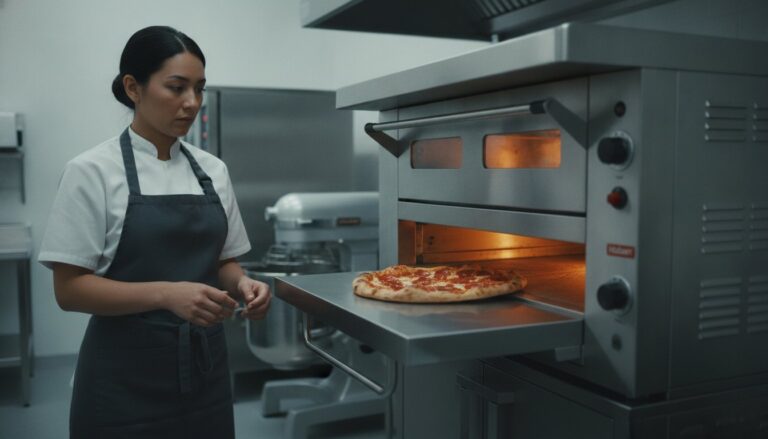
What if the difference between a seamless Friday night rush and a kitchen full of frustrated customers isn’t your secret dough recipe, but the reliability of your oven? You’ve likely felt the stress of a mounting ticket rail and the sudden, sinking realization that your current setup just can’t keep up with the demand. It’s difficult to maintain that signature Southern hospitality when you’re battling inconsistent bakes or soaring energy costs. We understand that you need more than just tools; you need a partnership with machinery that works as hard as you do.
This 2026 professional guide provides the definitive pizza restaurant equipment list for owners who refuse to settle for anything less than high-performance excellence. We’ll help you distinguish between boutique gadgets and the select, heavy-duty machinery required for high-volume success, ensuring you make an expert investment for your business. From the steady reliability of XLT and Lincoln conveyor ovens to the legendary durability of Hobart mixers, we’re outlining exactly what you need to create a kitchen that’s both profitable and dependable. You’re about to gain a clear, curated map of the essential equipment that will keep your community coming back for more.
Key Takeaways
- Learn why 2026 industry standards prioritize energy efficiency and automated consistency to help your kitchen run more smoothly.
- Discover why a heavy-duty Hobart mixer is the most critical investment for achieving a consistent, high-quality crust every single time.
- Identify the high-performance machinery on your pizza restaurant equipment list that eliminates peak-hour downtime, specifically focusing on XLT and EDGE conveyor ovens.
- Understand the vital role of specialized commercial refrigeration and prep tables in preserving the freshness of your toppings and dough.
- Gain confidence in your brand selection by learning why working with an expert distributor provides a more reliable foundation than generic e-commerce options.
Defining the Essential Pizza Restaurant Equipment List for 2026
Building a kitchen that stands the test of time requires more than just picking items from a catalog. Your pizza restaurant equipment list is a strategic blueprint for your future success. By 2026, the standard for professional excellence has evolved to prioritize energy efficiency and automated consistency. This means choosing machinery that reduces human error and lowers your monthly overhead. It’s helpful to distinguish between your smallwares, such as pans and cutters, and your heavy machinery, like ovens and mixers. While smallwares are easily replaced, your machinery is the heart of your investment. We always recommend selecting brands with established national service networks. If a part fails, you need to know a technician is just a phone call away, ensuring your doors stay open and your community stays fed.
The High-Volume Pizzeria Mindset
Running a neighborhood favorite means you can’t afford to let your neighbors down. Home-style equipment often lacks the insulation and motor strength needed for back to back orders. When a mixer overheats or an oven loses its temperature, the cost of those lost sales far outweighs any initial savings. Transitioning to high-volume production is about peace of mind. You want to feel confident that your kitchen can handle a hundred orders an hour with the same precision as the first one of the day. Reliability isn’t just a technical spec; it’s a promise of consistency to your customers.
Initial Planning: Space and Power Requirements
Assess your utility needs early to avoid expensive retrofits. Whether you prefer gas or electric, your heavy machinery will have specific requirements that dictate your kitchen’s layout. High-volume equipment in 2026 is defined as heavy-duty machinery engineered to maintain thermal stability and mechanical integrity through continuous, multi-shift operation without performance degradation. Designing your space around the “Golden Triangle”—Prep, Bake, and Serve—creates a seamless environment for your staff. This layout minimizes movement and maximizes output, allowing your team to focus on the craft of the perfect pie. Before finalizing your floor plan, ensure you have the clearance for High-Performance Pizza Ovens that can handle your projected peak volumes.
Selecting the right tools is the first step in creating a legacy of great food and warm hospitality. When you invest in professional-grade machinery, you’re not just buying equipment. You’re securing the future of your business and ensuring that every guest receives the high-quality experience they deserve. By focusing on durability and serviceability, you position your pizzeria to thrive in a competitive market for years to come.
The Foundation of the Crust: Professional Dough Preparation
If the oven is the heart of your pizzeria, the mixer is undoubtedly its soul. While many items on a pizza restaurant equipment list focus on the final bake, the quality of your dough starts long before it hits the heat. A professional mixer isn’t just a convenience; it’s the engine that drives consistency. Choosing the right machine determines whether your crust has that perfect airy crumb or ends up dense and uninspired. We want you to feel confident that every batch of dough you pull from the bowl is identical to the last, regardless of who is operating the machine that day.
Most high-volume shops choose between spiral and planetary mixers. Spiral mixers are the specialists. They rotate both the bowl and the hook, which minimizes friction and keeps the dough cool during the process. This temperature control is vital because excessive heat can kill your yeast or cause premature fermentation. Planetary mixers, on the other hand, offer versatility. They move the attachment around a stationary bowl, making them excellent for shredding cheese or mixing sauces. However, for those focusing on heavy, high-hydration doughs, investing in Hobart Mixers provides the torque and motor strength required to handle the strain without overheating.
Hobart Mixers: The Industry Standard
Professional chefs across the country trust Hobart for its legendary durability. These machines are built with heavy-duty gear transmissions rather than belts, which means they won’t slip when the dough gets tough. This motor strength is particularly important for the thick, chewy crusts popular in Southern pizza styles. To keep your mixer running for decades, we recommend a simple weekly maintenance routine: check the oil levels, tighten any loose bolts, and ensure the bowl guards are clean. If you’re ready to upgrade your prep station, our team can help you find the perfect fit for your kitchen’s specific volume.
Dough Sheeters, Rollers, and Proofing
Consistency at scale often requires moving beyond hand-tossing. Dough sheeters and rollers allow your staff to produce uniform crust thickness in seconds, which is essential for maintaining even bake times. Once the dough is portioned, controlled fermentation becomes the next priority. Proofing cabinets allow you to manage humidity and temperature with precision, ensuring your dough develops the complex flavors your customers love. Adhering to the latest safety guidelines, such as those found in the Commercial Refrigeration and Cold Storage section of the FDA Food Code, ensures your prep area remains as safe as it is productive. Automating the scaling and dividing process further reduces waste, making your operation more efficient and your results more predictable.
The Heart of the Kitchen: High-Performance Pizza Ovens
While your mixer creates the foundation, your oven is where the magic happens. It’s the most significant investment on any pizza restaurant equipment list, and choosing the right model often dictates your entire service model. In recent years, we’ve seen a definitive shift toward conveyor ovens among high-volume pizzerias. This transition isn’t just about speed; it’s about achieving high-volume efficiency without sacrificing the quality your guests expect. Modern conveyor systems use impingement technology, which directs high-velocity jets of hot air at the pizza. This process breaks through the cold boundary layer of air surrounding the dough, resulting in faster cook times and a perfectly crisp crust every time.
XLT and EDGE have emerged as the industry leaders by focusing on what matters most to operators: reliability and ease of use. These brands understand that in a busy kitchen, you need machinery that is both powerful and approachable. By prioritizing consistency through automation, these ovens allow your team to focus on hospitality and assembly rather than constant “oven-watching.”
Conveyor Ovens: XLT vs. EDGE vs. Lincoln
- XLT Ovens: These are widely celebrated for their remarkably quiet operation and simple maintenance. If you’ve ever worked in a loud, frantic kitchen, you’ll appreciate how XLT’s design contributes to a calmer, more focused environment for your staff.
- EDGE Ovens: If energy efficiency is your primary concern for 2026, EDGE is a standout choice. Their ovens offer precise heat control and advanced insulation, helping you manage utility costs while maintaining a high-performance bake.
- Lincoln Impinger: A classic for a reason, Lincoln ovens provide reliable, rapid baking that has set the standard for decades. They’re a dependable workhorse for pizzerias that need a proven track record of performance.
Choosing Between Deck and Conveyor Models
Traditional deck ovens certainly have their place, especially if your brand identity is built around the “artisan” or “boutique” experience. They allow for a level of manual control that some chefs prefer. However, the labor costs associated with deck ovens can be substantial. You need a skilled operator to rotate pies and manage hot spots constantly. Conveyor ovens, by contrast, drastically reduce the need for expert-level supervision. They’re also designed for stackability, allowing you to double or triple your output without expanding your kitchen’s footprint. For a high-volume shop, the ability to “set and forget” the bake ensures that every customer receives the same high-quality product, whether it’s 5:00 PM or the middle of the Friday night rush.
Ultimately, your choice of oven should reflect your volume goals and your commitment to consistency. When you select a high-performance conveyor model, you’re investing in a partner that works as hard as you do to keep your community satisfied and your business growing.
Preserving Quality: Commercial Refrigeration and Cold Storage
While the oven often takes center stage, your refrigeration system is the silent guardian of your kitchen’s integrity. Every item on a professional pizza restaurant equipment list must serve the ultimate goal of flavor and safety. When you’re dealing with hundreds of pounds of premium mozzarella, delicate fresh basil, and house-made sauces, you can’t afford a single degree of variance. Maintaining a strict cold chain from the moment your distributor arrives to the second a topping is placed on the dough is essential for consistency. We want you to feel the same confidence in your cooling systems that you do in your bakes, knowing that your ingredients are as fresh at the end of a double shift as they were at the start.
Choosing the right machinery for storage is about more than just square footage. It’s about how that machinery responds to the frantic pace of a coastal summer or a record-breaking Friday night. For a deep dive into compressor types and insulation ratings, we recommend reviewing our refrigeration buyer’s guide to ensure your technical specs match your operational needs.
Pizza Prep Tables and Reach-Ins
The prep table is the most frequently used piece of refrigeration in any pizzeria. In 2026, the industry standard has moved toward recessed topping rails, which keep ingredients surrounded by cold air even when the lids are open. Sizing your prep table is a balance between your make-line speed and your available floor space. If your team is bumping elbows, your output will suffer. In a high-volume environment where the lid is constantly being opened, the ability of a prep table to recover its target temperature within seconds is the only thing standing between your ingredients and a health code violation. While reach-ins are excellent for quick access, you’ll eventually need to consider a walk-in cooler to manage bulk dough storage and large produce deliveries without overcrowding your line.
Dough Retarders and Cold Fermentation
Great pizza relies on the science of cold fermentation. By slowing down the yeast’s activity in a dedicated dough retarder, you allow complex sugars to develop, resulting in a crust with superior flavor and texture. This process requires more than just a cold box; it requires precise humidity control. If the air is too dry, your dough will develop a “skin” that ruins the stretch. If it’s too humid, the dough becomes sticky and difficult to handle. Investing in specialized refrigeration ensures your dough remains in that perfect window of usability for days. If you’re ready to secure your inventory with reliable cooling, you can explore our curated refrigeration options designed for professional kitchens.
Sourcing Your Pizzeria Equipment: The Southern Select Advantage
Sourcing your machinery shouldn’t feel like a cold, distant transaction. While generic e-commerce sites prioritize automated checkouts and rapid shipping metrics, they often leave you without the expert guidance required to build a truly high-performance kitchen. Your pizza restaurant equipment list is more than just a shopping tally; it’s a blueprint for your business’s endurance and success. We believe that choosing a specialized distributor provides a level of security that a website algorithm simply can’t match. By focusing on brands with proven track records like XLT, Hobart, and Lincoln, we help you eliminate the guesswork and reduce the risk of equipment failure during your busiest hours.
We act as a trusted guide for national procurement, ensuring that the heavy-duty machinery you select is engineered for the rigors of a high-volume environment. Reliability is the cornerstone of Southern hospitality in the kitchen. When you know your oven will hold its temperature and your mixer won’t fail under the strain of a double batch, you can focus on what really matters: serving your community with pride and consistency.
Navigating the 2026 Equipment Market
The market has shifted significantly toward smarter, more connected kitchens. Modern trends now emphasize automation and remote monitoring, allowing you to track the health of your ovens and refrigeration from anywhere. This technology helps you catch minor issues before they become expensive repairs. Balancing the purchase of new machinery with high-quality refurbished units is a practical way to manage your initial investment. For a more detailed look at these strategies, we suggest reading our professional sourcing guide to maximize your long-term ROI.
Expert Consultation and National Support
Expertise is most valuable when it’s paired with a neighborly touch. We take the time to ensure your pizza restaurant equipment list aligns perfectly with your specific menu and projected volume goals. A boutique shop in a quiet coastal town has different needs than a high-volume franchise, and your machinery should reflect that. We’re here to help you move beyond the numbers and look at the people and places behind your property. Your next step is building a custom equipment package that offers both performance and peace of mind. Let’s work together to create a kitchen that serves as a reliable foundation for your business for years to come.
Securing Your Pizzeria’s Future
Your journey toward a profitable, high-volume kitchen begins with a commitment to quality that your customers can taste in every slice. We’ve explored how the right pizza restaurant equipment list serves as the backbone of your operation, from the initial dough prep in a legendary Hobart mixer to the final, perfect bake in an XLT or EDGE conveyor oven. By prioritizing heavy-duty machinery and precise refrigeration, you eliminate the stress of peak-hour downtime and ensure your community always receives your very best. It’s about more than just tools; it’s about building a legacy of hospitality that stands the test of time.
As specialists in the industry’s most reliable brands, we provide the national shipping and professional expertise you need to scale with confidence. Our curated selection of machinery is designed to handle the rigors of a modern professional kitchen while maintaining the warmth of Southern service. Build your high-performance kitchen with Southern Select Equipment and discover the peace of mind that comes from working with a partner who truly understands your goals. You have the vision for a successful pizzeria, and we’re here to provide the reliable foundation you need to make it a reality.
Frequently Asked Questions
What are the most important items on a pizza restaurant equipment list?
The most critical items on your pizza restaurant equipment list include a high-capacity conveyor oven, a professional-grade mixer, and specialized refrigeration like prep tables. These three categories form the foundation of your kitchen’s workflow and output consistency. While smallwares are necessary, these heavy-duty machines are the strategic assets that determine your long-term success and daily profitability.
Is a conveyor oven better than a deck oven for a new pizza shop?
A conveyor oven is generally superior for new high-volume shops because it ensures automated consistency and significantly reduces labor costs. Unlike deck ovens, which require a skilled operator to manage hot spots and rotate pies, conveyor models allow for a “set and forget” approach. This stability is vital when you’re focusing on building a reliable brand and managing a fast-paced service environment.
Why are Hobart mixers recommended so highly for pizza dough?
Hobart mixers are the industry standard because of their legendary durability and high-torque gear-driven transmissions. Pizza dough is exceptionally heavy and can easily burn out the motors of lesser machines. A Hobart is engineered to handle these high-stress loads for decades. It’s an investment that pays for itself through reduced downtime and consistent dough texture batch after batch.
How much space do I need for a commercial pizza kitchen?
While requirements vary based on your menu, a typical high-volume pizza kitchen usually requires between 1,000 and 1,500 square feet for prep, baking, and storage. You must account for the “Golden Triangle” layout to ensure your staff can move seamlessly between the mixer, prep table, and oven. Proper spacing prevents bottlenecks during peak hours and maintains a safe, hospitable working environment for your team.
What is the difference between XLT and EDGE pizza ovens?
XLT ovens are primarily known for their quiet operation and exceptionally simple maintenance requirements. In contrast, EDGE ovens focus heavily on energy efficiency and precise heat control through advanced insulation and burner technology. Both brands are leaders in the conveyor oven space. Your choice often depends on whether you prioritize a quieter kitchen atmosphere or lower monthly utility overhead.
Do I need a walk-in cooler for a small pizzeria?
You’ll likely need a walk-in cooler if your business model involves bulk cold fermentation or high-volume ingredient storage. While small shops can sometimes start with several reach-in units, a walk-in provides the consistent temperature and humidity levels required for professional dough proofing. It also offers better organization for large produce deliveries, which helps maintain the integrity of your ingredients.
How does a dough sheeter improve kitchen efficiency?
A dough sheeter improves efficiency by producing uniform crust thickness in a fraction of the time it takes to hand-stretch. This automation ensures that every pizza has the same bake time and finished quality, regardless of the staff member’s experience level. It’s a vital tool for maintaining a fast make-line speed during your busiest Friday night rushes.
What should I look for when buying used commercial pizza equipment?
When purchasing used machinery, you should prioritize brands with established national service networks and readily available parts, such as Hobart or Lincoln. Check the maintenance records and inspect the motor or heating elements for signs of excessive wear. Buying a used machine with a proven track record is much safer than opting for a generic, off-brand unit that lacks professional support.