
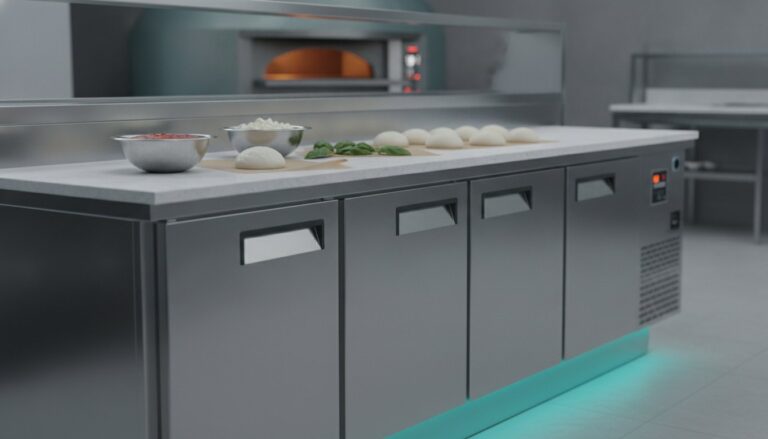
Choosing the wrong cold storage is like trying to bake a perfect Neapolitan in a toaster oven; it simply won’t hold up when the heat is on. You’ve likely felt the sting of watching perfectly proofed dough go to waste because of a minor temperature spike, or the stress of a compressor failing right as the Friday night rush begins. Finding reliable commercial refrigeration for pizzerias requires more than just picking a unit from a catalog. It’s about selecting a partner that can withstand the high-ambient temperatures of a busy kitchen while keeping your ingredients at their peak.
We believe you deserve equipment that works as hard as you do to serve your neighborhood. Our expert guide is designed to help you master your cold storage strategy for 2026, ensuring your kitchen remains a place of hospitality and efficiency. You’ll learn how to navigate the latest EPA refrigerant regulations, size your units for maximum volume, and maintain your equipment to achieve consistent dough fermentation. We’ll also preview the best layouts for prep tables and reach-ins that support high-speed service while significantly reducing your monthly energy costs.
Key Takeaways
- Understand why residential units can’t handle professional kitchen heat and how industrial equipment safeguards your food safety.
- Discover how specialized prep tables with stone surfaces maintain the ideal temperature for high-volume dough handling and consistent results.
- Learn to evaluate durability by prioritizing 304-series stainless steel, ensuring your equipment withstands the daily rigors of a busy shop.
- Design an efficient kitchen layout with proper ventilation to keep your service moving fast and your energy costs low.
- Master the selection of commercial refrigeration for pizzerias to build a reliable foundation that supports your team and your margins.
The Critical Role of Refrigeration in High-Volume Pizzerias
A pizzeria kitchen is an environment of intense extremes. While your oven is the star of the show, your cold storage is the silent partner that makes the performance possible. In a high-volume shop, your equipment isn’t just a convenience; it’s the foundation of your food safety protocol and the guardian of your profit margins. Choosing the right commercial refrigeration for pizzerias means selecting machinery that can thrive while sitting just feet away from a 500°F conveyor oven. It’s a high-stakes decision that impacts everything from the crispness of your crust to the safety of your customers.
When you opt for “Select” equipment, you are choosing a level of durability that protects your most sensitive ingredients. High-volume environments demand a level of resilience that standard catalog units often lack. Spoilage isn’t just a waste of food; it’s a disruption of your service rhythm and a direct hit to your bottom line. Understanding basic refrigeration principles is a great start, but applying those concepts to a kitchen that feels like a sauna requires specialized engineering and a partner who understands the unique pressures of the pizza industry.
Food Safety and HACCP Compliance for Pizza Ingredients
In a busy kitchen, managing the “Danger Zone” between 40°F and 140°F is a constant battle. High-risk items like fresh mozzarella, house-made sausage, and delicate sauces require unwavering temperature control. During peak service, your refrigerator doors might open every thirty seconds. Standard units simply can’t keep up with that level of heat infiltration. Professional-grade commercial refrigeration for pizzerias utilizes high-density, CFC-free polyurethane insulation to maintain a steady internal environment. This ensures that even when the kitchen is at its hottest, your ingredients remain well below the 40°F threshold, keeping you in full compliance with HACCP standards and protecting your guests.
Commercial vs. Residential: The Engineering Gap
Essential Refrigeration Types for Every Pizzeria Workflow
A successful high-volume pizzeria operates like a well-oiled machine, where every second and every degree matters. You can’t rely on a one-size-fits-all approach to cold storage. Instead, you must map your equipment to the specific stages of your production, from the moment your flour arrives to the second the pie hits the box. Investing in the right commercial refrigeration for pizzerias means creating a seamless transition between bulk storage, dough proofing, and active assembly. When your layout is designed with intention, your team can move with confidence even during the most demanding Friday night rushes.
Pizza Prep Tables: The Heart of the Assembly Line
Your prep table is where the magic happens. For pizzerias, a standard sandwich prep unit won’t cut it. You need specialized tables with oversized marble or granite tops. These stone surfaces stay naturally cooler than stainless steel, preventing your dough from sticking or tearing as you stretch it. High-volume shops should look for units with raised ingredient rails that utilize forced-air cooling. This technology ensures your toppings stay within safe USDA food safety guidelines even when the lids are open during a four-hour dinner service. Make sure your workspace is deep enough to accommodate your largest pies, typically ranging from 14-inch to 20-inch diameters, without crowding your ingredient pans.
Reach-In Refrigerators and Dough Retarders
Consistency is the hallmark of a great pizza, and that consistency starts with your dough. Dedicated dough retarders allow you to control the fermentation process with precision. By slowing down the yeast activity at a steady 36°F to 38°F, you develop the complex flavors and airy crust your customers crave. When choosing reach-in units, consider the compressor placement. Bottom-mount compressors are easier to clean and don’t breathe in the hot air rising near your ovens, though they do sacrifice a bit of lower storage space. Solid doors offer the best thermal efficiency, but glass doors can help your team quickly inventory supplies without letting the cold air escape.
Undercounter and Worktop Units
In a crowded kitchen, floor space is a premium commodity. Undercounter units allow you to reclaim that space for secondary prep stations or specialized ingredient storage, like premium cheeses or finishing oils. If you need extra room for small appliances, heavy-duty worktop units can double as equipment stands for your slicers or scales. Choosing drawer units instead of traditional doors can also boost line cook efficiency by allowing for faster access to pre-portioned toppings. If you’re looking to upgrade your line, you might find that a curated selection of restaurant equipment tailored to your specific footprint makes all the difference in your daily operations.
Evaluating Durability: Critical Specs for Pizzeria Kitchens
Choosing your equipment is a moment that balances your current budget with your future peace of mind. While it’s tempting to focus solely on the initial sticker price, the most successful operators look at the Total Cost of Ownership (TCO). In the intense heat of a kitchen, a cheaper unit often becomes the most expensive one you’ll ever own due to frequent repairs and lost inventory. Selecting high-quality commercial refrigeration for pizzerias means prioritizing 304-series stainless steel. This professional standard offers the best resistance to the corrosive combination of high humidity and flour dust that defines the pizza-making environment.
As of 2026, durability also means future-proofing your business against regulatory shifts. The transition to low-GWP refrigerants like R290 is no longer just a choice; it’s a necessity for new installations under the EPA’s AIM Act. These eco-friendly refrigerants are more efficient, helping you maintain a cooler kitchen while staying compliant with the latest mandates. When you pair these modern refrigerants with digital controls and remote monitoring, you gain a level of integrity in your operations that allows you to sleep better at night, knowing your dough is safe and your equipment is running at peak performance.
Compressor Strength and Heat Tolerance
The compressor is the heart of your unit, and in a pizzeria, it needs the stamina of a marathon runner. Variable speed compressors are a game-changer for high-volume shops because they adapt their cooling power to match the ambient heat of the oven line. This adaptability is a core part of the ENERGY STAR equipment criteria, which now mandate a 15% reduction in energy consumption compared to 2023 models. By choosing certified equipment, you aren’t just being neighborly to the environment; you’re projected to save over $3,500 in utility costs over seven years. We also recommend looking for units with easily accessible coils. Flour dust is a silent killer of compressors, so being able to clean your coils in minutes is vital for long-term reliability.
Gasket Integrity and Door Hardware
In a kitchen where the doors open hundreds of times a shift, the small details become the biggest points of failure. Flour is your best friend and your equipment’s worst enemy. It acts like sandpaper on magnetic door gaskets, causing them to crack and leak cold air if they aren’t properly maintained. You need heavy-duty hinges and self-closing mechanisms that ensure a tight seal every single time. This prevents accidental temperature spikes that can ruin a batch of dough or compromise food safety. When you choose commercial refrigeration for pizzerias with reinforced door hardware, you’re investing in a seamless workflow that keeps your line moving without a hitch during your busiest hours.
Strategic Layout and Workflow Integration
Strategic layout is what separates a chaotic shift from a seamless service. In a pizzeria, your layout must account for an invisible but powerful enemy: radiant heat. While the “kitchen triangle” is a standard design principle, in this high-heat environment, it’s about protecting your cold storage from the constant thermal output of your ovens. Proper placement of your commercial refrigeration for pizzerias can extend the life of your compressors by years and keep your dough at the perfect temperature for stretching. If a refrigerator is tucked too close to a conveyor oven without proper shielding or ventilation, the compressor will run constantly, driving up your energy bills and risking a mid-service breakdown.
Optimizing the Back-of-House Flow
Efficiency starts at the back door. Place your bulk storage and walk-ins near your receiving area to minimize the time doors stay open to the humid outside air. Your workflow should then lead naturally to the prep area. Positioning your prep tables to reduce the steps between your Hobart mixer and the oven line prevents the dough from warming up too quickly during assembly. In tight quarters, ensure you have at least three to four feet of clearance for door swings. This prevents bottlenecks and protects your gaskets from being bumped by heavy dough trays. Inside your units, using speed racks ensures that cold air circulates evenly around every tray of dough balls, preventing “hot spots” that lead to over-proofing.
Maintenance Protocols for Pizzeria Refrigeration
The “Flour Factor” is the most common cause of equipment failure for commercial refrigeration for pizzerias. Fine flour dust is everywhere, and it loves to settle in your condenser coils. When coils are clogged, your unit has to work twice as hard to maintain temperature, which leads to early failure. We recommend a daily wipe-down and a deep coil cleaning every month. Check your magnetic gaskets for any tears or hardened spots. A simple lubrication can keep them supple and airtight, ensuring your cold air stays where it belongs. Finally, calibrate your digital thermometers once a month. Even a two-degree variance can affect the consistency of your fermentation and the safety of your toppings. If you need help designing a layout that stands up to the heat, our team is ready to help you source high-performance restaurant equipment that fits your unique space and supports your long-term success.
The Select Choice: Sourcing Your Pizzeria Refrigeration
Building a high-volume pizzeria is a labor of love and a test of endurance. It requires grit. Selecting your equipment shouldn’t involve sifting through a massive, unvetted catalog that treats every kitchen the same. You need a partner who understands that a pizzeria is a unique ecosystem of high heat and rapid-fire service. We pride ourselves on a curated inventory that prioritizes durability over volume. By focusing on equipment with proven integrity, we ensure that you aren’t just buying a machine; you’re securing the future of your dough and your brand. Choosing the right commercial refrigeration for pizzerias is about more than just cold storage. It’s about finding a foundation you can trust.
The Southern Select approach is rooted in the values of hospitality and expert guidance. We believe in providing a seamless experience that feels like a partnership rather than a cold transaction. When you pair your cooling units with the right commercial restaurant equipment, you create a cohesive system where every component supports the other. Consulting with experts who know the specific demands of pizza production helps you avoid common sizing mistakes. For instance, picking a unit with insufficient airflow for a kitchen that routinely tops 90°F can lead to a total compressor failure during your busiest season.
The Value of a Trusted National Partner
There’s a significant difference between buying equipment and building a business. For those looking to scale their passion with a proven system, the invitation to Own a Russo’s New York Pizzeria & Italian Franchise – Pizza Franchise Opportunity offers a clear roadmap to success. As a family-owned entity with a national shipping reach, we offer the reassurance that you’re in capable hands, no matter where your shop is located. We leverage deep industry knowledge to select brands that survive the rigors of high-volume service. This insider knowledge is something a generic online retailer simply can’t replicate. Our goal is to act as your trusted guide on a national scale, bringing a sense of neighborly care to every equipment sourcing conversation. You’ve worked hard to build your reputation, and we work just as hard to protect it.
Next Steps for Your Pizzeria
Before you make your next move, take a moment to audit your current cold storage capacity against your growth plans for the coming year. Does your current setup allow for the 15% energy efficiency gains mandated by the 2026 standards? If you’re feeling unsure, requesting a professional consultation for your kitchen layout can save you thousands in future labor and energy costs. You can explore our full range of commercial refrigerators to find the units that match your specific volume. Let’s work together to ensure your commercial refrigeration for pizzerias is a source of pride and profit for years to come.
Securing Your Pizzeria’s Future with the Right Cold Storage
Your shop depends on equipment that handles the heat without breaking a sweat. By prioritizing 304-series stainless steel, optimizing your kitchen layout for thermal efficiency, and staying ahead of 2026 refrigerant regulations, you ensure your dough stays perfect and your margins stay healthy. Mastering commercial refrigeration for pizzerias isn’t just about food safety; it’s about creating a kitchen rhythm that supports your team during the heaviest rushes. Every degree of consistency contributes to the hospitality your community has come to expect.
We are here to help you navigate these high-stakes choices with the integrity and warmth of a true partner. Our family-owned business brings specialized expertise in heavy-duty brands like XLT and Hobart, offering a curated inventory focused on the unique durability pizzerias require. We combine this local guide perspective with national shipping to bring top-tier solutions directly to your doorstep. You’re in capable hands with a team that values your success as much as you do.
Ready to upgrade your line? Browse Our Curated Selection of High-Volume Pizzeria Refrigeration. We look forward to helping your business thrive and grow for years to come.
Frequently Asked Questions
What is the best type of refrigerator for pizza dough retarding?
Reach-in units designed specifically for dough retarding are the gold standard for high-volume shops. These units maintain a steady temperature between 36°F and 40°F, which is vital for slowing yeast activity without freezing the dough. Look for models that accommodate standard dough trays and offer digital controls for precision. This setup ensures your crust develops the complex flavors your customers expect every single day.
How much space should be between a pizza oven and a refrigerator?
You should aim for at least three to six feet of clearance between your oven and any refrigeration unit. If your space is tight, installing a heat shield or ensuring robust ventilation is essential to protect your equipment. Radiant heat from a 500°F oven can force a compressor to work twice as hard, leading to premature failure and higher utility bills. Giving your units room to breathe is a simple way to protect your investment.
Why is my pizza prep table struggling to stay cold during peak hours?
High ambient kitchen temperatures are the most common culprit when a prep table loses its chill. If your kitchen is sweltering, the unit simply can’t dump heat fast enough. Clogged condenser coils are another frequent issue in pizzerias. When flour dust blankets the coils, the heat exchange process fails, causing temperatures to rise even when the unit is set to its lowest point.
What is the difference between air-cooled and conductive cooling in prep tables?
Air-cooled tables use fans to circulate cold air around the ingredient pans, while conductive cooling uses refrigerated lines to chill the rail itself. In high-heat environments, conductive cooling is often the preferred choice because it maintains pan temperatures more effectively when lids are open. This technology helps your commercial refrigeration for pizzerias stay within safe food-handling zones during a busy Friday night rush.
How often should I clean the condenser coils in a flour-heavy pizzeria?
In a flour-heavy environment, you should clean your condenser coils at least once every thirty days. Some high-volume shops even prefer a bi-weekly schedule to stay ahead of dust buildup. Flour acts like a thermal blanket on your coils, trapping heat and straining the motor. A quick vacuuming or brushing can save you from an expensive emergency repair call during your most profitable hours.
Is a top-mount or bottom-mount compressor better for a pizzeria kitchen?
A bottom-mount compressor is typically the better choice for a pizzeria because it pulls in cooler air from near the floor. Top-mount units sit where the hottest air in the kitchen collects, especially near conveyor ovens. While bottom-mount units take up a little bit of storage space, the increased efficiency and easier maintenance access make them a reliable partner for your long-term operations.
Can I use a standard sandwich prep table for making pizzas?
You shouldn’t use a standard sandwich prep table because they lack the depth needed for stretching large dough skins. Pizza prep tables are specifically engineered with deeper work surfaces and reinforced stone or heavy-duty steel tops. Using the wrong equipment often leads to torn dough and slower service, as sandwich units aren’t built to withstand the weight and heat of a professional pizza line.
What are the common signs of compressor failure in commercial units?
Frequent cycling or a unit that never stops running are the most common early warning signs of compressor trouble. You might also notice unusual clicking sounds or a sudden rise in internal temperature that doesn’t respond to adjustment. If you spot these signs, it’s best to call a technician immediately to avoid losing your inventory. Reliable commercial refrigeration for pizzerias depends on catching these small issues before they become total failures.