
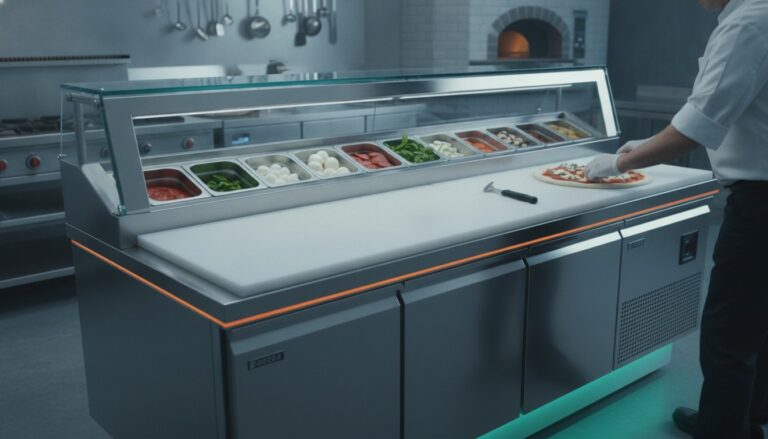
What if your most expensive ingredients were being quietly compromised by just a few degrees of temperature fluctuation? In a high-volume kitchen, your commercial pizza prep table is more than just a refrigerator. It’s a specialized production hub where precision cooling meets ergonomic engineering. We understand that a mid-shift compressor failure or a cramped workspace doesn’t just slow you down; it compromises the quality and hospitality you’ve worked so hard to build for your community.
You likely agree that maintaining consistent rail temperatures and a clear workflow is the backbone of a successful service. This guide is designed to help you select, configure, and maintain the ideal prep station to maximize your kitchen throughput and ensure absolute food safety. We’ll walk you through the latest 2026 equipment standards, the energy-saving benefits of R290 refrigerants, and the specific configurations that lead to faster ticket times and long-term reliability for your business.
Key Takeaways
- Understand the critical engineering differences in insulation and depth that separate professional pizza stations from standard sandwich prep units.
- Identify the specific material standards, such as 304-grade stainless steel, that guarantee long-term durability in high-heat environments.
- Learn how to select the right commercial pizza prep table width—ranging from 44 to 93 inches—to align perfectly with your kitchen’s production volume.
- Discover the essential maintenance steps, including condenser care and flour management, that prevent common compressor failures and protect your food safety standards.
- Explore how a curated selection of high-performance equipment provides a more reliable, seamless experience than searching through unvetted catalogs.
The Essential Role of a Commercial Pizza Prep Table
A commercial pizza prep table is far more than a simple refrigerator with a flat top. It functions as a sophisticated, dual-zone workstation designed specifically for the unique demands of a high-output pizzeria. While most restaurants use pizza preparation tables to assemble their offerings, the quality of that assembly depends on the cooling technology used in the ingredient rail. Whether your unit utilizes a “Cold Wall” system with refrigerated copper lines or a forced-air design, the goal is to create a blanket of cold air that protects toppings from the intense heat of the kitchen. This dedicated station also plays a vital role in food safety by centralizing the assembly process, which significantly reduces cross-contamination risks compared to using multi-purpose counters.
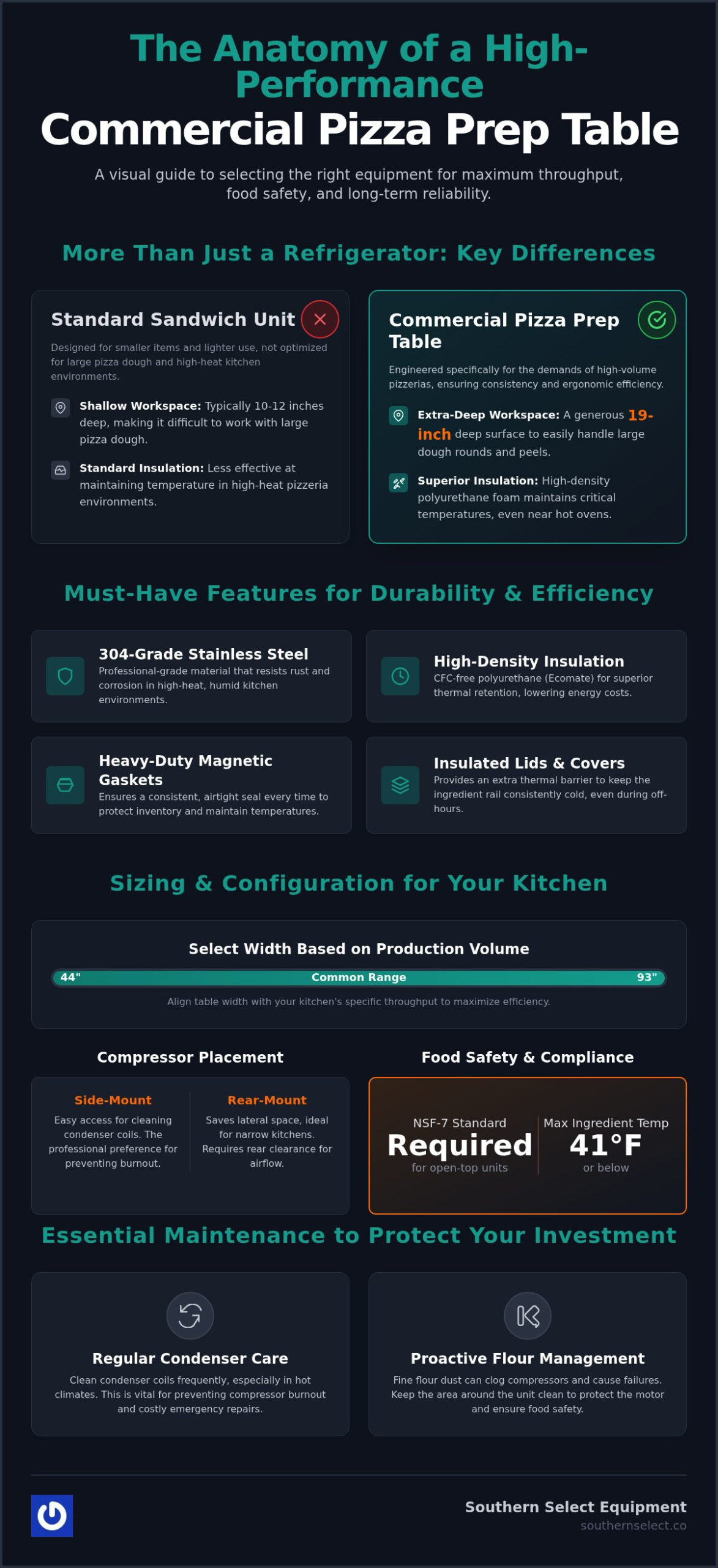
Many newcomers to the industry mistake a standard sandwich prep unit for a pizza station, but the differences are critical for professional success. Pizza tables feature significantly more insulation and a much deeper work surface to accommodate large dough rounds. While a sandwich unit might offer a 10 or 12-inch cutting board, a true commercial pizza prep table provides a generous 19-inch deep work area. This extra space isn’t just a luxury; it’s a necessity for stretching dough and using a pizza peel without hitting the back of the rail or spilling ingredients into the cooling zone.
Why Temperature Stability is Non-Negotiable
Safety in a commercial kitchen is governed by the NSF-7 standard. This regulation requires that open-top refrigerated prep tables keep ingredients at or below 41°F, even when the ambient kitchen temperature climbs. In a busy shop where the oven is constantly radiating heat, your equipment has to work overtime. High-volume environments frequently lead to internal cabinet temperature spikes as doors open and close. This is why we prioritize units with heavy-duty, magnetic gaskets. These components ensure a consistent, airtight seal every time the door clicks shut, protecting your inventory and your bottom line from unnecessary waste.
Ergonomics: Designing for the ‘Pizza Line’
Efficiency on the line is a matter of inches and seconds. A standard 19-inch deep cutting board allows a chef to assemble a large pie with plenty of room for overflow, keeping the workspace clean and organized. Height also plays a major role in staff wellness. A table set at the wrong height can lead to significant back strain over an 8-hour shift. The reach-in depth of the ingredient rail is equally important. If a chef has to overextend their reach hundreds of times a night to grab toppings, fatigue sets in and ticket times slow down. Investing in a well-designed commercial pizza prep table ensures your team stays comfortable and productive through the busiest dinner rush.
Key Features to Evaluate Before Your Investment
Energy efficiency is another area where quality truly shows. High-density, CFC-free polyurethane insulation, sometimes branded as Ecomate, provides superior thermal retention. This keeps your operating costs low and helps you stay in strict compliance with the FDA Food Code. When your kitchen hits 90 degrees during a busy Friday night, that insulation is the only thing standing between a perfect pizza and spoiled ingredients. For added protection, look for insulated lids. These covers provide an extra thermal barrier that maintains consistent rail temperatures even when the unit isn’t in active use.
Compressor Systems: Side-Mount vs. Rear-Mount
Compressor placement is often overlooked, but it dictates how you’ll maintain your commercial pizza prep table. Side-mount systems are generally the professional preference because they allow for easy access to the condenser coils. You can clean them without moving the entire table, which is vital for preventing burnout during sweltering Southern summers. Rear-mount compressors are a smart choice for narrow kitchens where every inch of width is precious. Just remember that these units require a bit of breathing room behind them to ensure proper airflow and prevent the motor from overheating.
Drawer vs. Door Configurations
Your storage choice should match your specific prep style. Refrigerated drawers are incredibly efficient for storing pre-portioned dough balls, as they allow for quick access without letting all the cold air escape. Traditional swing doors, on the other hand, offer more vertical space for bulk items like large sauce containers or blocks of cheese. We often suggest a hybrid configuration for our clients. This “Select” approach gives you the flexibility of drawers for high-frequency items and doors for bulk storage. If you’re looking for a curated setup, the experts at Southern Select can help you map out a footprint that maximizes your kitchen’s potential.
Sizing and Configuration for Maximum Throughput
The physical footprint of your commercial pizza prep table dictates the rhythm of your entire kitchen. You shouldn’t just buy the largest unit that fits against your wall; you should choose the one that matches your specific production goals. For example, if you are running a high-capacity commercial pizza oven, a small prep station will quickly become a bottleneck that leaves your oven empty and your customers waiting. You need to calculate how many pizzas your oven can produce per hour and ensure your prep team has enough rail space and surface area to keep that pace during peak hours.
Pan capacity is the next critical metric for your workflow. Most professional tables use 1/3 size pans for primary ingredients like cheese and sauce, while 1/6 or 1/9 pans handle specialized toppings. Overfilling these pans or using the wrong sizes can lead to temperature issues by blocking the necessary air vents. It is vital to follow safety regulations for refrigerated pizza prep tables to maintain proper airflow across the top of the food. Oversized work surfaces are especially important if you offer 18-inch or 20-inch pies, as they provide the necessary room to rotate the dough without it hanging off the edge and creating a mess.
Small Footprint Solutions (44-60 Inches)
These compact models are perfect for boutique pizzerias or as secondary stations for gluten-free prep. To maximize a tight space, look for units with tall internal shelving or drawer kits that allow for better vertical organization of your backups. Be mindful that smaller compressors can struggle in high-ambient heat. If your kitchen gets exceptionally hot, ensure your compact commercial pizza prep table has a robust cooling system to prevent the motor from overworking during a long Southern summer.
The High-Volume Powerhouse (93+ Inches)
When you are managing a multi-chef line, a 93-inch unit is the gold standard for efficiency. These models allow two or even three people to work side-by-side without bumping elbows or crossing paths. We recommend organizing your ingredient rail for a “left-to-right” flow: dough stretching on the far left, saucing and cheesing in the middle, and final toppings on the right. Keep in mind that these large units often require dedicated circuits. You don’t want your main prep line tripping a breaker in the middle of a Friday night rush because the electrical load wasn’t properly planned.
Maintenance and Food Safety Compliance
Maintaining your commercial pizza prep table is about more than just checking a box for the health inspector. It’s about protecting the heart of your kitchen and the trust of every guest who walks through your doors. You already know that pizzerias are high-stakes environments, but the specific challenges of dough production require a specialized approach to equipment care. A simple daily cleaning checklist should include wiping down the refrigeration tracks and checking for any spills that might compromise the seal of your unit. These small steps prevent food debris from becoming a breeding ground for bacteria or a mechanical hazard.
One of the most cost-effective habits you can adopt is regular gasket care. These rubber seals are the unsung heroes of your kitchen. A cracked or brittle gasket allows cold air to escape, forcing your compressor to run constantly and shortening its lifespan significantly. Replacing a $50 gasket takes minutes, but ignoring it can lead to a $5,000 compressor failure. Additionally, you should calibrate your digital thermometers weekly. This ensures that the temperature displayed on the front of your unit accurately reflects the internal cabinet temperature, keeping your inventory safe and your shop in full compliance. If you’re looking for units designed with maintenance-friendly features, browse our latest professional restaurant equipment today.
Preventing Flour Clogs and Airflow Blockage
Flour is the primary enemy of refrigeration in a pizzeria. As it becomes airborne, it settles in the cooling fans and coats the condenser coils, creating a thick paste that restricts airflow. To prevent burnout, follow this cleaning guide every month:
- Disconnect power to the unit before beginning any maintenance.
- Remove the access panel to expose the condenser coils.
- Loosen debris using a soft-bristled brush, being careful not to bend the aluminum fins.
- Vacuum the coils thoroughly to remove all flour and dust.
For high-volume operators, we recommend a professional service schedule every six months to deep-clean the internal components that daily wipes can’t reach.
Understanding the NSF-7 ‘Open Top’ Rule
The NSF-7 standard is designed to ensure that ingredients held in the top rail remain safe for consumption even during a busy rush. While the lids are open, the unit must maintain a “cold blanket” over the ingredients for at least four hours. In 2026, “Select” models utilize advanced sensors that adjust fan speed based on whether the lid is open or closed, providing more efficient rail cooling than legacy units. Time/Temperature Control for Safety (TCS) foods must be maintained at an internal temperature of 41°F or below to inhibit the growth of harmful pathogens. By choosing a commercial pizza prep table with superior insulation, you ensure these standards are met without overworking your electrical system.
Sourcing Excellence with Southern Select Equipment
Choosing a commercial pizza prep table should be a curated experience rather than a cold transaction with an unvetted catalog. At Southern Select, we believe that professional chefs deserve a partner who understands the high stakes of a busy kitchen. We don’t just list every piece of equipment on the market. Instead, we select only the heavy-duty machinery that meets our standards for durability and performance. This approach ensures that when you invest in your line, you’re getting a tool built to withstand the rigors of a professional environment. Integrating your prep table with other high-end equipment like Hobart mixers ensures your dough production is as consistent as your cooling, creating a seamless workflow from the first mix to the final bake.
Our commitment to your success combines professional authority with the neighborly reliability synonymous with Southern culture. Whether you’re a local staple on the Gulf Coast or part of the growing hospitality scene across the country, we offer national shipping and expert support that reflects our roots in hospitality. We aren’t just selling boxes; we’re helping you build a legacy. Your equipment is the backbone of your community’s favorite gathering place, and we treat every inquiry with the integrity and warmth you’d expect from a trusted guide who knows the industry inside and out.
The Value of Curated Commercial Brands
We focus exclusively on machinery designed for high-volume environments. By sourcing from experts who understand both new sales and the nuances of restaurant liquidations, you gain access to insider knowledge that an outsider simply couldn’t replicate. This expertise is vital when you’re trying to balance long-term reliability with your current budget. Our Southern hospitality translates into better post-purchase support because we value long-term partnerships over quick sales. If a question arises about your commercial pizza prep table after the installation, you’ll find a friendly, capable team ready to assist you rather than a generic support ticket system.
Your Next Steps: Building Your Dream Kitchen
Success in the kitchen starts with a smart layout. Consulting with our team allows you to think through equipment synergy, ensuring that your prep station, ovens, and mixers are positioned for maximum throughput. Before your new unit arrives, we’ll help you prepare your facility for a smooth delivery and installation process. This includes verifying door widths, electrical requirements, and floor leveling to ensure your equipment performs perfectly from day one. When you’re ready to upgrade your kitchen’s cooling capacity, explore our current inventory of commercial refrigeration to find the perfect match for your operation.
Investing in Your Kitchen’s Future
Choosing the right equipment is a commitment to your team’s efficiency and your community’s safety. Throughout this guide, we’ve explored how ergonomic design and precision cooling work together to keep your kitchen running smoothly even during the busiest dinner rush. By focusing on durable materials and proactive maintenance, you ensure that your commercial pizza prep table remains a reliable asset for years to come. These strategic choices do more than just save on repair costs; they provide the peace of mind you need to focus on what matters most: the craft of great pizza.
Southern Select is dedicated to providing an expertly curated inventory of high-performance brands built for professional-grade durability. We pair our technical authority with national shipping and the neighborly hospitality that makes every client feel like a priority. Whether you’re opening your first shop or expanding a local favorite, we have the insider knowledge to guide you toward the right choice for your unique space. We’re here to ensure your kitchen is equipped for long-term success and seamless operation.
View Our Selection of Professional Pizza Prep Tables and take the next step toward a more efficient kitchen today. We’re excited to help you create a workspace where your passion for hospitality can truly shine.
Frequently Asked Questions
What is the difference between a pizza prep table and a sandwich prep table?
Pizza prep tables are deeper and more heavily insulated than sandwich units to handle the specific needs of dough assembly. While a sandwich table typically offers a 10 or 12-inch work surface, a professional pizza station provides a 19-inch cutting board. This extra depth is essential for stretching large dough rounds without the edges hanging over the workspace.
How often should I clean the condenser coils on my pizza prep table?
You should clean your condenser coils at least once a month to ensure long-term reliability. In a high-volume pizzeria where flour dust is constantly in the air, checking the coils every two weeks is a safer habit. This prevents the thick buildup that forces your compressor to work harder and eventually leads to costly motor failures.
Do pizza prep tables come with the pans included?
Most manufacturers include a standard set of pans with a new commercial pizza prep table, but this can vary by brand and model. It’s always a good idea to confirm the exact pan count and sizes with your equipment guide before your delivery arrives. If you are purchasing pre-owned equipment, pans are often sold separately.
What size cutting board is standard for a commercial pizza prep station?
A 19-inch deep cutting board is the industry standard for professional pizza stations. This generous workspace allows you to stretch, sauce, and top a large pie with plenty of room for overflow. It also provides enough clearance to use a pizza peel comfortably without bumping into the ingredient rail or the back of the unit.
Can I store dough balls directly in the refrigerated base of the table?
Storing dough balls in the refrigerated base is a highly efficient way to manage your inventory. Many chefs prefer using drawer configurations for this specific purpose because they allow you to slide out dough trays quickly during a dinner rush. This keeps your dough at a consistent temperature and prevents it from over-proofing in the kitchen heat.
How much clearance does a side-mount compressor need for proper airflow?
Side-mount compressors typically require at least 2 to 3 inches of clearance for proper ventilation and airflow. Keeping this area clear of boxes or other equipment ensures the motor doesn’t overheat. This is especially important during the peak of summer when your kitchen’s ambient temperature is already putting extra stress on your refrigeration system.
Is a 93-inch prep table too big for a small startup pizzeria?
A 93-inch commercial pizza prep table might seem large, but it’s often a smart investment for a growing startup. If your floor plan allows for it, the extra rail space lets two chefs work side-by-side during peak hours. This prevents bottlenecks in your production line and ensures you can scale your output as your customer base expands.
What should I do if the ingredient rail is not staying below 41°F?
If your rail temperatures are rising, check for dirty condenser coils or blocked air vents immediately. Ensure your pans are properly seated in the rail to maintain the “cold blanket” effect. If the unit is still struggling, verify that you aren’t leaving the lids open longer than the NSF-7 four-hour limit, as this can significantly impact cooling efficiency.