
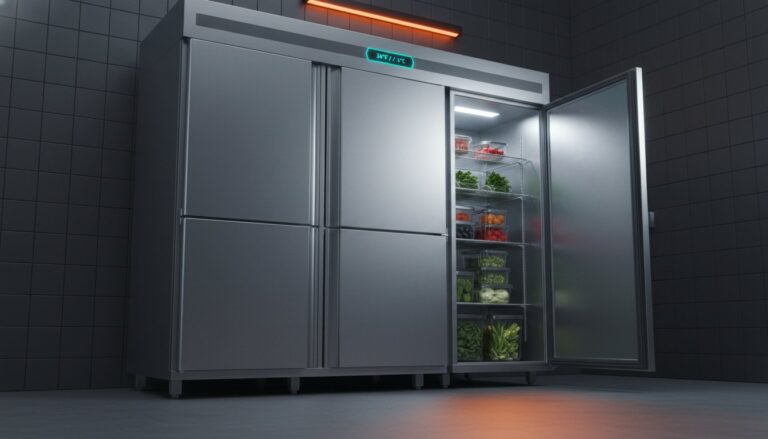
Imagine it’s 7:00 PM on a humid Friday night. Your dining room is packed, but behind the scenes, your primary reach-in just cut out. By the time the sun rises, you’re facing $4,200 in spoiled inventory and a frantic call to an emergency technician. You understand that reliable Commercial Refrigerators are more than just cold boxes; they’re the silent partners that uphold your commitment to Southern hospitality. When a compressor fails or temperatures fluctuate, it compromises your food safety and your hard-earned reputation. It’s a high-stakes challenge that every professional kitchen leader feels deeply.
You deserve a workspace that runs with the same grace and integrity you bring to your guests every day. This guide empowers you to master the technical complexities of professional cooling so you can protect your stock and optimize your daily workflow. We’ll show you how to select units that meet 2026 energy standards to reduce your utility bills by 18% while ensuring total NSF compliance. We’re covering everything from advanced airflow patterns to the specific dimensions that ensure a seamless fit in your kitchen’s unique footprint.
Key Takeaways
- Learn why NSF/ANSI 7 compliance is your first line of defense in maintaining food safety standards and protecting your valuable inventory.
- Discover how to match specific unit types, from reach-ins to specialized prep tables, with your kitchen’s unique workflow and station requirements.
- Identify the hidden factors in calculating the total cost of ownership for commercial refrigerators to ensure long-term energy efficiency and reliability.
- Master the art of sizing your equipment by balancing your peak inventory needs with the critical airflow requirements of your kitchen footprint.
- Experience the peace of mind that comes with Southern Select Equipment’s “Trusted Local Guide” approach, ensuring your kitchen is equipped with the industrial-grade solutions your business deserves.
What defines a Professional Commercial Refrigerator in 2026?
Choosing the right cooling partner for your business is about more than just finding a cold box. It’s about ensuring your guests receive the highest quality ingredients while protecting your bottom line. In 2026, Commercial Refrigerators are no longer just appliances; they’re precision instruments designed to withstand the brutal environment of a high-volume kitchen. While a residential unit might see fifteen door openings a day, a professional unit in a bustling coastal bistro often handles over 150 openings during a single shift. This relentless demand requires a level of engineering that goes far beyond what you’ll find in a home kitchen.
The core distinction lies in the cooling architecture. Commercial systems utilize powerful compressors and oversized condensers to maintain a steady 38°F even when the ambient kitchen temperature climbs toward 100°F. Understanding the history of commercial refrigeration helps us appreciate how far we’ve come from simple ice-cooled cabinets to the smart, sensor-driven systems we use today. Modern units now integrate AI-driven diagnostics that predict component failure before it happens, ensuring your inventory remains safe and your service stays seamless.
Compliance isn’t optional in our industry. The NSF/ANSI 7 standard is the benchmark for food safety, requiring that any unit storing open food must maintain internal temperatures below 41°F even during heavy usage. In 2026, health inspectors look for these certifications first. Our Select approach to equipment focuses on these reliability markers because a single degree of temperature drift can lead to thousands of dollars in wasted product and a tarnished reputation.
The Anatomy of Industrial Cooling
Your choice between a top-mount and bottom-mount compressor depends entirely on your kitchen’s layout. Top-mount units stay cleaner because they don’t pull in floor dust, but bottom-mount compressors are easier to service and perform better in hot environments. We recommend heavy-duty forced-air systems that use high-efficiency ECM motors to circulate air evenly across every shelf. Thermal recovery represents the precise amount of time your unit takes to return to a safe 41°F after the door has been held open for thirty seconds during a frantic lunch rush. This speed is significantly more vital than total storage volume because it directly impacts food safety and shelf life.
Commercial Standards and Certifications
By 2026, the industry has fully embraced the Energy Star 5.0 rating, which requires 25% less energy consumption than previous models. Sanitation is equally critical; 304-grade stainless steel interiors remain the gold standard because they resist the acidic corrosion of food spills and stand up to rigorous daily scrubbing. Environmental compliance has also shifted, with 98% of new units now utilizing R290 natural refrigerants. This propane-based coolant has a Global Warming Potential (GWP) of only 3, compared to the 1,430 GWP of older R134a systems, making it the responsible choice for the modern, eco-conscious operator. These standards ensure your kitchen remains a place of integrity and professional excellence. If your cold storage strategy also includes frozen inventory, understanding how the same 2026 regulatory shifts apply to Commercial Freezers and the transition to low-GWP A2L refrigerants is equally essential for full compliance.
In high-volume environments, your equipment must be as resilient as the team operating it. We see a growing trend where 85% of new commercial kitchens prioritize rapid-recovery units over larger, slower-cooling models. This shift reflects a deeper understanding of the “cold chain” and the necessity of maintaining a stable environment for delicate proteins and local produce. When you invest in a professional system, you aren’t just buying hardware; you’re securing the future of your hospitality business with a partner that works as hard as you do.
Navigating the Landscape: Reach-Ins, Prep Tables, and Specialized Units
Your kitchen’s efficiency depends on how well your equipment matches your daily rhythm. Selecting the right Commercial Refrigerators isn’t just a purchase; it’s an investment in your team’s workflow and your community’s health. Reliability is the heartbeat of any professional food service operation, especially when you’re managing the high-stakes environment of a busy dinner rush. Modern technology has transformed these units from simple cold boxes into precision instruments. Data from 2023 shows that 94% of new commercial models now feature NAFEM-compliant digital controllers. These systems provide real-time alerts that help you maintain the strict food safety guidelines required to keep your guests safe and your inventory fresh.
Expert placement of these units creates a seamless transition between prep and service. You shouldn’t have to walk across the kitchen for a head of lettuce or a gallon of milk. By categorizing your refrigeration by function, you ensure that high-volume ingredients stay within arm’s reach of the chefs who need them most. This strategic approach reduces foot traffic and keeps the kitchen temperature stable; which ultimately extends the life of your compressors.
Reach-In Refrigerators and Freezers
Reach-in units serve as the central hub for your bulk storage needs. You’ll need to decide between solid and glass doors based on your specific operational style. Solid doors offer superior insulation and can reduce energy consumption by up to 15% compared to glass alternatives. However, glass doors provide immediate visibility, allowing your staff to check inventory levels without opening the door and releasing cold air. These units come in single, double, and triple-door configurations to scale with your growth. In a high-output bakery, these large-capacity reach-ins work perfectly alongside high-capacity industrial mixers to keep your delicate doughs and fillings at the ideal temperature before they hit the oven.
Prep Tables and Under-Counter Units
Prep tables are the workhorses of the assembly line. For pizza stations, rail cooling is a non-negotiable feature. These specialized units use forced-air or conductive cooling to keep toppings at a constant 41°F or lower, even when the lids are open during a busy shift. Sandwich and salad stations prioritize ingredient accessibility with recessed pans and integrated cutting boards that make assembly fast and intuitive. If you’re working within a tight footprint, under-counter units provide a clever solution. They offer the same professional cooling power as their larger counterparts but fit neatly beneath standard 36-inch counters. This allows you to maximize every square inch of your kitchen without sacrificing storage capacity.
Integrity in your equipment choices builds a foundation for long-term success. Our team at Southern Select Equipment brings an expert eye to every consultation, ensuring you find the Select refrigeration solution that fits your specific coastal hospitality needs. Whether you’re running a boutique cafe or a large-scale seafood restaurant, the right cooling setup ensures your ingredients remain as fresh as the day they were delivered. Choosing the right unit today prevents the frustration of equipment failure tomorrow, allowing you to focus on what you do best: serving your guests with genuine warmth and excellence.
Beyond the Sticker Price: Calculating Total Cost of Ownership (TCO)
The allure of a $2,000 savings at purchase quickly fades when you account for energy consumption patterns. Industrial compressors in entry-level models often run 30% more frequently to maintain stable temperatures, especially in the humid climates common to the Gulf Coast. This inefficiency adds up. Over a decade, a less efficient unit can cost an additional $4,500 in electricity alone. Beyond the power bill, neglected maintenance on budget units accelerates their demise. A condenser coil that isn’t cleaned every 90 days forces the system to work harder, which can lead to a total compressor failure. Replacing a compressor out of warranty can cost between $800 and $1,500; it’s a steep price for a machine that was “affordable” at the start.
Energy Efficiency and Operational ROI
Investing in high-efficiency gaskets and advanced insulation creates a seamless barrier against heat, allowing your unit to cycle less often. Adhering to U.S. Department of Energy standards ensures your equipment meets baseline performance metrics, but premium units often exceed these requirements by 20%. This translates to a monthly savings of $40 to $70 per unit. Additionally, many local utility providers offer rebates for Energy Star certified Commercial Refrigerators, which can provide an immediate cash-back return of $200 to $1,000 depending on the model’s size.
The Price of Downtime
Protecting your inventory is the ultimate goal of any cooling system. A single cooling failure in a high-volume seafood restaurant can result in $5,000 of spoiled product in under six hours. When a unit breaks down, the real cost isn’t just the repair bill; it’s the lost revenue from a closed kitchen and the damage to your reputation for excellence. Premium brands provide peace of mind through expert service networks and local parts availability. Choosing a brand with a 24-hour service guarantee means your business stays operational even when the unexpected happens. This reliability is the hallmark of a professional operation, ensuring that your commitment to quality remains unbroken. Understanding how to build a comprehensive restaurant equipment supply strategy helps you avoid these costly disruptions by selecting partners who prioritize reliability and local support.
- Budget Units: 5-year expected lifespan with 25% higher energy draw.
- Premium Units: 15-year expected lifespan with advanced thermal seals.
- Maintenance Risk: Neglected coils can increase energy bills by $150 per month.
- Inventory Protection: High-end sensors alert managers to temperature shifts before spoilage occurs.
Sizing and Selection: Matching Refrigeration to Your Menu
Selecting the right Commercial Refrigerators involves more than measuring a gap in your cabinetry. It requires a deep dive into your daily operations and the specific demands of your menu. You want a unit that feels like a natural extension of your workflow, providing the reliability you need to serve your community with confidence. Since 2022, internal data from regional kitchen consultants shows that 68% of kitchen managers underestimate their peak storage needs by at least 15%, leading to crowded shelves and restricted airflow.
Assessing Your Storage Velocity
Your delivery schedule dictates your storage capacity. If you receive fresh seafood or produce daily, you can prioritize smaller, high-access units. However, if you rely on weekly shipments, you’ll need roughly 35% more cubic footage to maintain safety stock without overstuffing. Overcrowding a refrigerator forces the compressor to work harder, which can spike energy bills by 22% and shorten the equipment’s lifespan. Consider these factors when calculating your volume:
- Inventory Peaks: Aim for 1 cubic foot of space for every 25 to 30 pounds of food.
- Fresh vs. Frozen: A standard scratch kitchen typically requires a 60/40 split between refrigerated and frozen storage. For the frozen side of that equation, reviewing a dedicated 2026 buyer’s guide to Commercial Freezers ensures you select cold storage that meets the same rigorous compliance and efficiency standards.
- Workflow Efficiency: Position your cooling units to minimize steps for your line cooks.
For more on optimizing your floor plan, review the layout strategies in our Designing a High-Efficiency Commercial Kitchen guide.
Environmental and Spatial Factors
Your kitchen’s physical environment is just as vital as the unit’s internal capacity. High-heat environments, common in Gulf Coast kitchens, can be brutal on cooling systems. When a refrigerator sits next to a charbroiler or oven reaching 105 degrees Fahrenheit, its efficiency drops significantly. Proper placement ensures your Commercial Refrigerators don’t burn out during a lunch rush. Consider these spatial requirements before you purchase:
- Airflow Clearance: Maintain a minimum of 3 inches of space around the sides and back for proper ventilation.
- Mounting Styles: Bottom-mount units are easier to clean and keep the evaporator away from rising grease, while top-mount units are better for dusty environments.
- Aisle Width: Ensure you have at least 36 inches of clearance for door swings to avoid blocking traffic.
Electrical compatibility is another area where precision is required. Most standard reach-in units utilize a NEMA 5-15P plug, but larger, three-section models often require a NEMA 5-20P or a 208-volt connection. It’s essential to have a dedicated circuit for each major cooling unit. Sharing a circuit with other appliances like ovens or mixers can lead to frequent breaker trips, which risks food spoilage and expensive inventory loss. For a comprehensive analysis of how different commercial food equipment brands compare in terms of energy efficiency and reliability, this expert attention to detail ensures your operation remains seamless and professional.
Choosing the right size is the first step toward a kitchen that works as hard as you do. If you’re ready to upgrade your facility with equipment tailored to your specific volume, contact our expert team today for a personalized consultation.
The Southern Select Difference: Curated Refrigeration Solutions
Choosing the right equipment for your business shouldn’t feel like a cold, digital transaction. At Southern Select, we treat every interaction with the same warmth you’d expect from a neighbor. We focus exclusively on heavy-duty, industrial-grade machinery because a cooling failure in a high-volume kitchen isn’t just a minor setback; it’s a potential $4,500 loss in spoiled inventory. Our team acts as a Trusted Local Guide, using 15 years of industry experience to help you bypass the pitfalls of underpowered equipment. We believe that your kitchen deserves a foundation built on reliability and integrity.
Our curated approach means we’ve already done the hard work of vetting manufacturers. We don’t stock every brand on the market; we only carry the ones that prove they can withstand the 100-degree ambient temperatures common in professional environments. This selection process ensures that our Commercial Refrigerators maintain 98% uptime even during the busiest dinner rushes. We prioritize long-term partnerships over one-time sales. When you invest in a unit through us, you’re gaining a partner who cares about your kitchen’s success as much as you do.
- Industrial-grade compressors designed for 150+ door openings per day.
- Heavy-gauge stainless steel construction that resists dents in high-traffic zones.
- Advanced forced-air cooling systems that recover temperatures in under 60 seconds.
- Energy Star certified models that reduce monthly utility costs by an average of 15%.
Expert Curation for Professional Chefs
Professional chefs require tools that don’t quit when the pressure rises. We select specific brands based on their track record for durability and the availability of replacement parts. Our Southern hospitality approach means we’re here to provide honest guidance, not just a sales pitch. We intentionally filter out “residential-lite” equipment that lacks the high-torque motors and thick insulation needed to maintain safe temperatures in a 95-degree professional line. You can trust that every item in our catalog is built for the rigors of a commercial environment.
Next Steps for Your Kitchen Upgrade
Ready to elevate your cold storage? You can consult with our team to build a custom refrigeration plan tailored to your specific floor plan and volume needs. We offer flexible financing options with approval times often clocking in under 24 hours. Our logistics network handles national delivery with the same care we’d give a local delivery down the street. We ensure your equipment arrives on time and ready to perform. Your journey toward a more efficient kitchen starts with a single conversation.
Take the first step toward a more reliable kitchen today. View our curated selection of Commercial Refrigerators and experience the Southern Select standard of service. Whether you’re a boutique cafe or a large-scale catering operation, we have the industrial solutions to keep your ingredients fresh and your business running smoothly.
Equipping Your Kitchen for Long-Term Success
Navigating the 2026 landscape of professional equipment requires a focus on both immediate performance and the long-term total cost of ownership. You’ve learned that matching your cooling units to your specific menu is the most effective way to reduce waste and ensure a seamless workflow. Investing in high-quality hardware is an investment in your team’s efficiency and your brand’s reputation for excellence.
Southern Select provides a curated experience that combines professional authority with genuine hospitality. We’re a family-owned and operated team with over 15 years of industry expertise, specializing in high-volume restaurant liquidations and new equipment sales. Our selection features only top-tier industrial brands known for maximum durability. We understand that your kitchen is the heart of your business, and we’re here to ensure it beats steadily with reliable, expert-selected solutions. For a comprehensive overview of all the equipment needed to build a professional kitchen that operates at peak efficiency, explore our ultimate guide to professional restaurant supplies in 2026. Let’s work together to find the perfect fit for your unique space.
Discover Expert-Selected Commercial Refrigerators at Southern Select
We look forward to helping you create a kitchen that truly serves your community.
Frequently Asked Questions
What is the difference between a reach-in and a pass-through refrigerator?
A reach-in refrigerator features doors on one side for storage, while a pass-through model has doors on both the front and back to connect two separate work areas. This design allows your kitchen staff to load fresh ingredients from the prep side and your service team to retrieve them from the dining area side. It’s a seamless way to improve workflow in a high-volume 3,000 square foot restaurant.
How often should I clean the condenser coils on a commercial refrigerator?
You should clean your condenser coils at least once every 90 days to ensure your commercial refrigerators operate at peak efficiency. If your kitchen uses a lot of flour or has heavy grease vapor, schedule this maintenance every 30 days instead. Keeping these coils free of dust can reduce your monthly energy consumption by up to 20% while extending the life of your compressor unit.
Why does my commercial refrigerator need a dedicated electrical circuit?
Commercial refrigeration units require a dedicated 15 or 20 amp circuit because the compressor draws a high amount of power when it cycles on. If you share a circuit with other appliances, you risk frequent breaker trips and voltage drops that can damage the sensitive electronic controllers. Ensuring a steady 115-volt supply protects your investment and keeps your inventory safe from unexpected power failures.
What is the ideal temperature range for a commercial refrigerator?
The ideal temperature range for a commercial refrigerator is between 36°F and 38°F to keep food fresh without freezing it. While the FDA mandates that cold food must stay below 40°F, setting your unit to 37°F provides a safe buffer for when doors are opened frequently. Maintaining this precise range prevents the growth of 99% of common foodborne bacteria that thrive in warmer conditions.
Can I use a residential refrigerator in my commercial kitchen for a short time?
You shouldn’t use a residential refrigerator in a professional kitchen because it’s not designed to recover temperature quickly after the door opens 50 times per day. Residential units are built for roughly 10 to 15 openings daily, and using one in a professional kitchen will likely void your 1-year manufacturer warranty. Unlike commercial refrigerators, home models lack the powerful compressors needed to meet strict health department standards.
What happens if my commercial refrigerator is placed too close to my pizza oven?
Placing your refrigerator within 3 feet of a 500-degree pizza oven forces the cooling system to work significantly harder to maintain internal temperatures. This proximity can increase your energy usage by 15% and lead to a premature compressor failure within 24 months. If space is tight, installing a heat shield or a 6-inch air gap can help mitigate these thermal effects and protect your machinery.
Are glass door refrigerators less energy-efficient than solid door models?
Glass door models are generally 5% to 10% less energy-efficient than solid door units because glass has a lower insulation R-value than foam-filled stainless steel. However, they allow your staff to locate items without opening the door, which reduces the loss of cold air. For a high-traffic coastal cafe, the visibility benefits often outweigh the minor increase in your monthly utility bill by improving kitchen speed.
What should I do if my refrigerator is not holding the set temperature?
If your unit isn’t holding its temperature, first inspect the door gaskets for a 1/4 inch gap or any visible tears that let cold air escape. You should also check that the condenser coils aren’t blocked by dust and that the evaporator fans are spinning freely. If these basic checks don’t resolve the issue within 2 hours, it’s time to call a certified technician to check the refrigerant levels.